Tag: reviews

  • Nodame Cantabile (のだめ カンタービレ): An Unexpected Turn Of Endearment, Wackiness, And Destiny

    Nodame Cantabile (のだめ カンタービレ): An Unexpected Turn Of Endearment, Wackiness, And Destiny

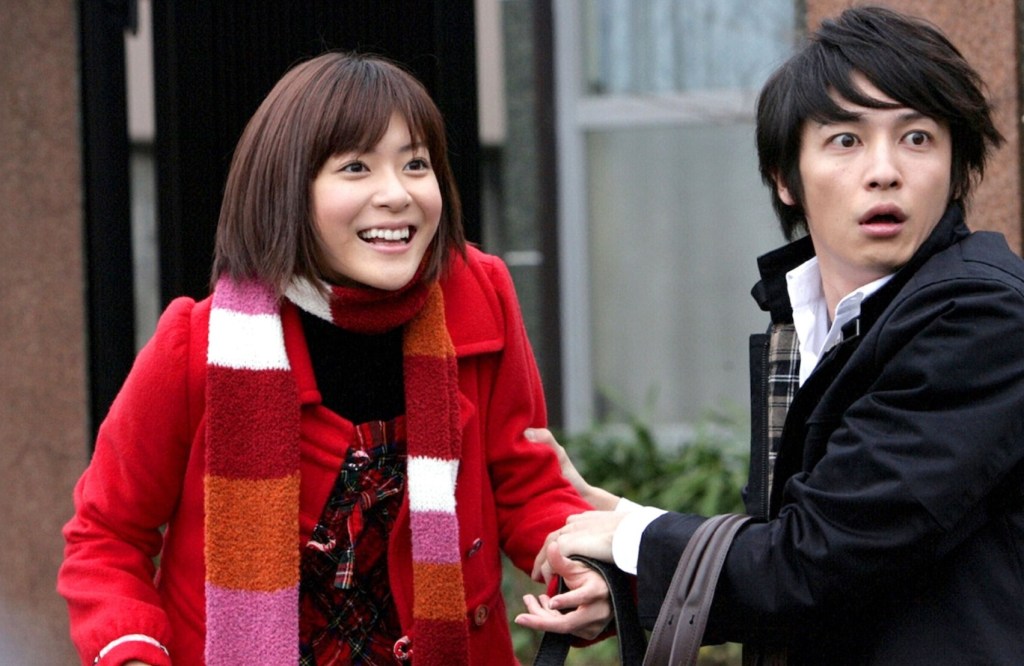
    A music perfectionist from the upper class, Chiaki (above right), meets his complete opposite in Nodame (above left), a disorganized but gifted middle-class musician, setting the stage for an unlikely dynamic.

    As late to the game as I am in watching this award winning mini drama series (11 episodes in total) – which was a 2006 live adaptation of the manga series by the same name – I can nonetheless safely conclude and console myself that my tardiness is all but negligible in that it being a classic case of “better late than never” and also – to my surprise – an unexpected occurrence of “never would I have thought”…

    You see, my initial impressions of the drama series – particularly the first two episodes – was not largely positive. Apart from a recognisable and handsome face in Hiroshi Tamaki, the rest of the characters – Masumi, Mine, Eto, Stresemann, and – yes even – Nodame (played brilliantly by Juri Ueno) – was for a lack of a better term, weird, in hairstyles (Mine’s ostentatious blond hair, Nodame’s bed hair, Masumi’s afro?!), fashion style (outlandish colour configurations), accessories (what’s up with Eto sensei’s paper fan?!), and not to mention, their over-the-top mannerisms [and to be fair, also Chiaki’s (Hiroshi’s) awkward and (in all honesty) amateurish conducting which is a far-cry from how talented conductors conduct (I trained and was once an aspiring conductor and was fortunate enough to be exposed to good conducting)]. This, coupled with the old-fashioned grainy display of old film technology most certainly did not do any favours to the show’s draw especially in this Netflix generation of razor sharp images.

    But as it was, I kept going, perhaps due to the environ of the plot which was based in a music college and its characters being student musicians with the addition of a rather frequent dose of classical music snippets peppered throughout the episodes – all these appealing to a musician and classical music lover – and so I watched on..

    I knew not exactly when but strangely as I progressed in the series, I begun to appreciate and even found myself being tickled by the characters’ over-the-top mannerisms and slap stick style. Also, what I found strange and off-putting in most of the characters (except Chiaki whom I thought was the most “normal”), I slowly loved (?!)…

    In retrospect, was it because of the skilful character development, gradually revealing their vulnerabilities, backstories and “soul”- expressed in acts of kindness and loyalty? Or their erratic-ness, childlike passion, and unabashed authenticity that artists often display and labelled as “crazy” and “weird” for it, which I actually identify and bear affinity with? Or could it be the ongoing ambivalence in the nature of the relationship between the protagonists, Chiaki and Nodame [which only later (the last episode) revealed] that left me, the viewer, in a state of guess work as to whether the odd couple would be together or not, other than it being the case of unrequited love (on poor Nodame’s part)? Yes, I would say that all of the above contributed in somehow striking a chord in me and pulling on my heartstrings…

    And consider this – related to the nature of beauty: can something or someone who might not be at face value attractive grow on the beholder and later become a subject of endearment as he/she/it is gradually revealed petal by petal leading to its full radiant bloom (beauty really, which, as St Thomas would define, the intersection of inner essence and outer radiance)? Well, it was certainly so in my relationship with the drama, and you could say, Chiaki too, with Nodame (?).

    Not to be a spoiler to those who have yet to watch it, but I must say that the drama concludes on a crescendo, on a “high” (the choice of the exuberant fourth movement of Beethoven’s Symphony 7 in the show’s conclusion is wholly fitting in my view) with both protagonists and other supporting characters finding renewed vigour and clarity on their life’s journey after graduation from the music college.

    Could they have landed themselves in such fortuitous unexpected states if not for their encounters with each other, dictating circumstances, and opportunities opening up? Absolutely not, but is it just mere “good luck” or – on the other extreme end – events caused by each individual’s sheer act of willpower and smarts? The latter, in my opinion delusional, and the former meaningless. So perhaps is it after all the mighty sweep of destiny divine working alongside (albeit paradoxically) our loves, passions, desires, and active choices that determine our future?

    厳しくされてもされなくても、ダメになる奴はダメになるし、プロのピアニストになろうと思ってられるものじゃない。そういう世界ですから、成功するかどうかなんてわからない。俺もあいつも。でも、僕はあいつのピアノがすごく好きなんですよ。

    Even if you’re treated strictly — or not — the ones who fail will fail anyway. You can’t become a pro just because you want to. That’s the reality of this world. We can’t know for sure that we will succeed. Neither me nor her (Nodame). But, I love her piano. A lot.

    – Chiaki in Episode 11

    Alas, will destiny bring them together? Watch to find out.

    *Featured Image Source: Netflix
  • Ip Man 2: The Prevails of Mercy and Respect

    Ip Man 2: The Prevails of Mercy and Respect

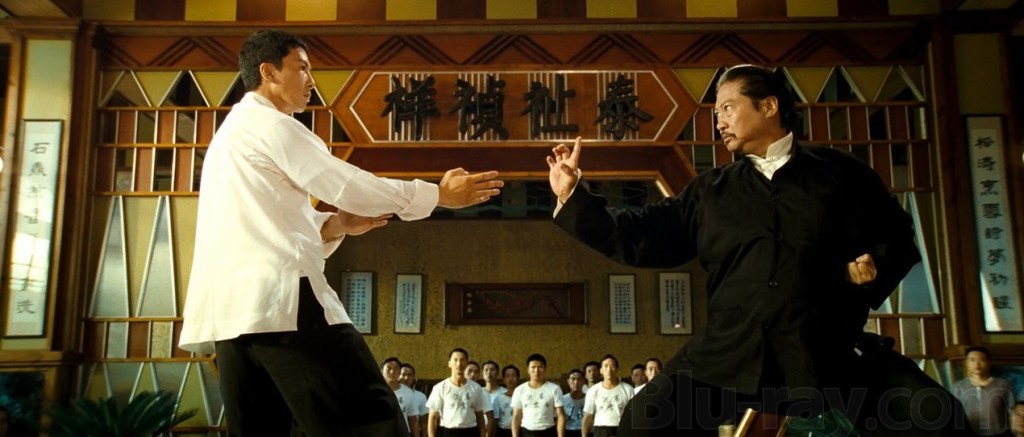
    In this film inspired by a true story, Wing Chun martial arts master Ip Man (Donnie Yen) and his family are moving from Foshan, China, to Hong Kong, where Ip aspires to create a school so that he may teach his fighting techniques to a new generation. However, he finds resistance from an asthmatic Hung Ga master named Hong Zhen Nan (Sammo Hung). Soon, Ip is drawn into a treacherous world of corruption as well as a fateful showdown with a merciless boxer known as the Twister (Darren Shahlavi).

    (Source: Rotten Tomatoes)

    Thanks to Netflix streaming services, I am able to revisit old films and “Ip Man 2” (2010) has been a delight to watch again – and now to write about. At this point of writing, the “Ip Man” series has been concluded and although I have yet to watch the final series in the franchise (i.e. “Ip Man 4”), I would say hitherto “Ip Man 2” is my favourite (with it also amassing 6 wins and 10 nominations in film awards).

    Certainly, it has lived out to its expectation of an action-martial arts movie with not just believable fight scenes set in an array of settings (from the rooftop to a fish market to a boxing ring) but also choreography that is creative, fresh but also true to the varied Chinese martial art forms (the table duel scene between Ip and the other kung fu masters comes especially to mind here). In short, the quality and quantity of kung fu action in this film will undoubtedly satisfy – at least – lovers of kung fu cinema, but if you are not one, there remains still another reason to watch and that is its heart.

    “Ip Man 2” remains one of the few movies that inspires me to be a better person, and it achieves that through – no surprise here – Ip, the protagonist, as a model of mercy and respect (among other virtues of admiration such as his simplicity, modesty, prudence, and sincerity).

    “To say that a person is merciful, is like saying that he is sorrowful at heart (miserum cor), that is, he is afflicted with sorrow by the misery of another as though it were his own.”

    – Thomas Aquinas

    How was Ip portrayed as merciful? There are quite many examples in the film ranging from the trite – in his aiding of the ailing laundry lady to hang out laundry; in his concession to his disciples’ demands to postpone paying their fees due to financial strain – to the unexpected, particularly in his lenient dealings with his retaliatory disciples who ended up costing Ip his martial arts studio place.

    I must admit that I was taken aback as to how Ip dealt with his blameworthy disciples after the ruckus. Most of anyone (as I would expect) under Ip’s shoes would have reacted angrily, lashed out, and possibly evicted his disciples for causing an important part of his livelihood to be lost – not least, for their foolish acts. But instead Ip, sensing his disciples’ regret, gently dealt with them, only requiring them to transport his fighting equipment from the studio to his house.

    Is that merciful act of Ip rather ‘foolish’ and was it even effective? Was he being too merciful to the extent of being soft and thus open to being taken advantage of?

    Well, surely Ip or anybody could be taken advantage of for his mercy but also consider this: mercy shown-sown could also win, soften and mould the hardest of hearts (as with the case of Shun Leong, Ip’s charismatic but troublesome lead disciple), enoble, and also in turn merit mercy for ourselves (“Blessed are the merciful, for they shall receive mercy” teaches Jesus of Nazareth).

    Shun Leong apologising to Ip Man in a scene (Photo capture)

    But what of respect?

    “Respect for the human person proceeds by way of respect for the principle that everyone should look upon his neighbor (without any exception) as another self, above all bearing in mind his life and the means necessary for living it with dignity.”

    – Catechism of the Catholic Church (no. 1931)

    Two scenes in particular stood out for me in the exemplification of respect in Ip.

    The first is the Ip-masters duel where the dignity of the competitors are upheld through bows (with the martial salute), formal addresses (“___ shi fu”, “Qing”), and deferential behaviour (“Thank you for letting me win”; not displaying excessive joy upon victory). The etiquette evinced in the Ip-masters duel is beautiful to witness no matter of it possibly being labelled as “old fashioned” or “overly formal” – no, courtesy and formality has its place and function in promoting respect that is both beautiful and needful (consider that rules not only prevent disorder but also shape character). Incidentally, the scene also led me to think of other such analogous display of respect present in other sports such as Sumo Wrestling, and tennis (Roger Federer‘s restrained behaviour in the Wimbledon locker room with Andy Roddick in sight come to mind here) which are pleasing to behold and hear about.

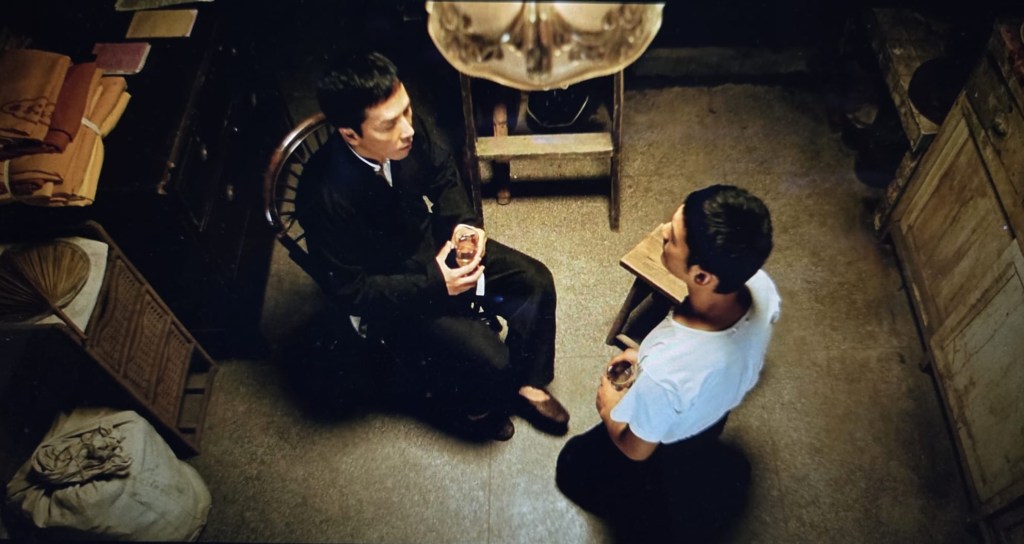
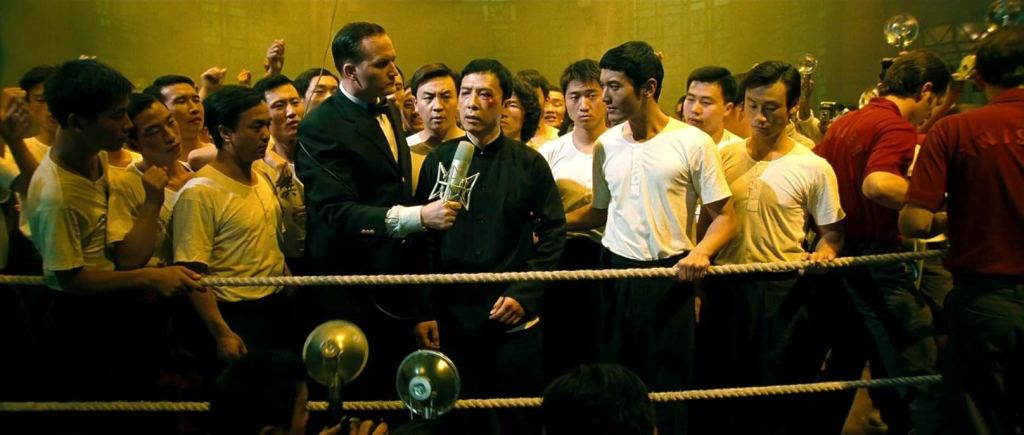
    The other scene has to be the closing fight-and-speech sequence of Ip’s battle with Twister where respect (and also mercy) was beautifully expressed in deed (not annihilating Twister as the now-defeated boxer had previously done to master Hong) and in word:

    Ip making his speech after the win against Twister (Image Source: IMDb)

    “By fighting this match, I’m not trying to prove that Chinese martial arts is better than Western boxing. What I really want to say is though people may have different status in life, everybody’s dignity is the same. I hope that from this moment on, we can start to respect each other.”


    Mercy and Respect,
    Though “soft” as they look,
    More than muscles and brawn,
    Are stronger yet still.

    To break hard hearts,
    And to offer respite,
    To enoble others,
    And to keep the peace,
    Are all up for grabs,
    To all and at once.

    Will you thus join,
    in the prevails of both,
    Simple yet strong,
    Mercy,
    Respect.

    *Featured Image Source: blu-ray.com


  • One-Punch Man (ワンパンマン ): A Rude Awakening in the Face of Greatness

    One-Punch Man (ワンパンマン ): A Rude Awakening in the Face of Greatness

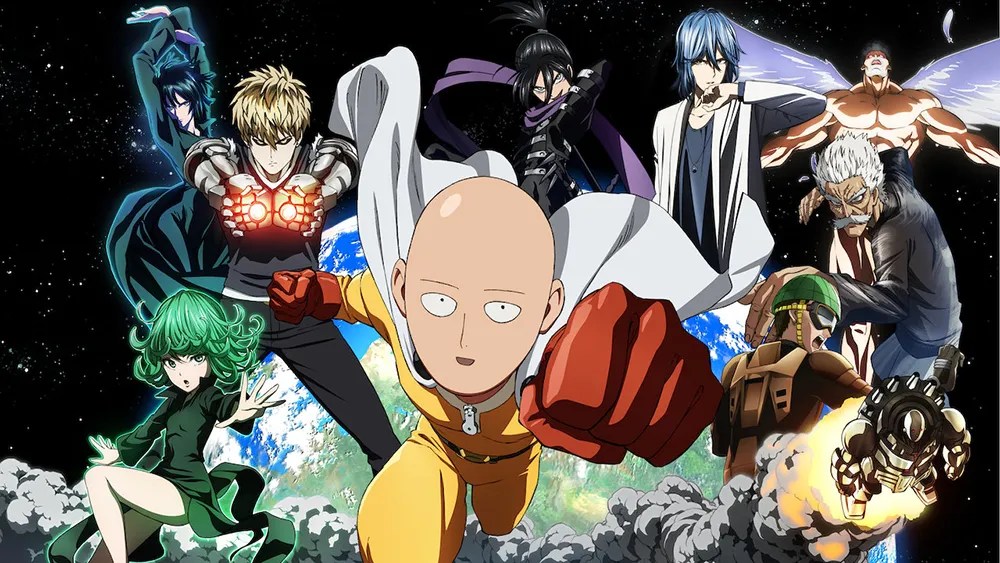
    The story of Saitama, a hero that does it just for fun and can defeat his enemies with a single punch.

    (Source: IMDb)

    Beyond the awesome action scenes, successful comedic moments, attractively rich characters, and, not to mention, a most interesting premise of a human hero with a 100% guaranteed K.O. rate against all his opponents, lies the curious dealings in the face of greatness. Saitama, our hero-protagonist (i.e. the “One Punch Man”), for one, struggles to come to grips with his overwhelming power, not in terms of harnessing it, but in living with it; in making sense of it:

    “I became so powerful, no one is able to beat me. I’m the hero I dreamed of becoming. So, what is this? What’s wrong? Why does my heart feel so empty?… As the days pass, my emotions grow more distant… I used to feel all kinds of emotions whirling inside me when I fought. Fear. Panic. Anger. But now, all I need is one punch to end it.” (Season 1, Episode 1)

    Such – if I may call it so – is the gradual-sudden awakening to the vanity of pursuing greatness (in whatever form: strength, pleasure, riches, experiences, etc) for gain’s sake. For like mist the reward is temporal and thin – it quickly vanishes and leaves one wanting. The inner turmoil that our hero Saitama experiences, needless to say, is neither unique nor fictional for it speaks to our real human ambitions and our universal desire for fulfilment.

    What happens when we reach the top of our ambitions? Strangely, they always disappoint. With Saitama, it was the loss of the kick he got out of battling with monsters – “I mean, I just do the hero-thing as a hobby. In other words, as long as I get a kick out of it, that’s all I care about.” (Season 1, Episode 1). And in a similar vein, so it is with us who thought, “If only I could be the best _______ (teacher, salesman, doctor, etc)/have this ________ (car, house, girl, etc)/be in _______ (Japan, Hawaii, Maldives, etc) I will be fully satisfied”, but – alas – only to be left cheated-empty after we obtain.

    So what is the way forward for Saitama? What is the way forward for us seekers and pursuers of happiness? Perhaps the clue lies in another character in the anime:

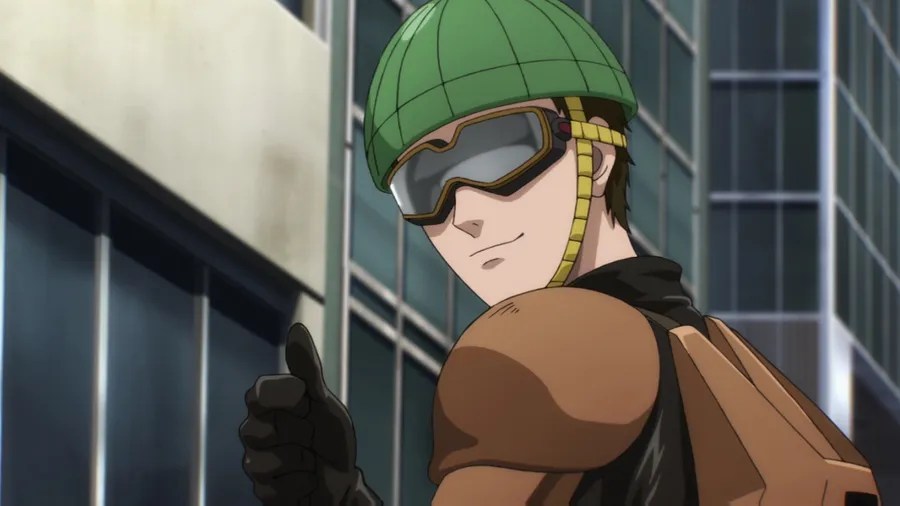
    Mumen Rider

    Mumen Rider (無免ライダー)

    Unlike Saitama, Mumen Rider is weak in strength (he is a Class C hero, the bottom tier of the heroes strength classification) but surpassingly big in heart. He is what you would call a true hero, one who valiantly lives out fully his hero-identity, come what may. A particularly moving scene involving him facing the outrageously evil and powerful “Deep Sea King” beautifully exemplifies this – his dialogue goes:

    “No one expects much from me. They think a Class C hero won’t be much help. I know that better than anyone! I’m not good enough for Class B. I’m weak. I know that much. No one has to tell me I have no chance of beating you. I already know that! And yet I must try. It’s not about winning or losing! It’s about me taking you on right here, right now!” (Season 1, Episode 9)

    Did Mumen Rider the “Cyclist for Justice” prevail? (Go find out!) But for our purposes, the more pressing question is, “Is he fulfilled as a hero?” It seems so in the way he is portrayed as a friendly, well-respected (even among stronger heroes), and enthusiastic hero in spite of his evident weakness (he possess no superhuman strength like the other heroes who are in the upper classes). But why so, despite his failures, weakness and glaring limitations to get stronger? And would he be fulfilled as well if, say, he were to be granted Saitama’s celestial prowess?

    I would believe so for (here lies the reveal) he knows who he is – as a hero – and lives as a hero is meant to be, and therefore – believe it or not – he is great. A square peg in a round hole will never be a good fit, and so does one who has misplaced expectations on what is meant to be, say, a policeman, businessman, wife, and ultimately (we cannot escape this) a human being. Is happiness-greatness found in the abundance of our possessions, achievements, escapades, or rather in being who we are meant to be? So: what does it mean to be human, and – so too our specific vocations – a(n) _______ (etc)? This is the question we need to answer if satiation and greatness is what we want – and also for our hero, Saitama. I end here with (another character:) King’s prompt to Saitama:

    “What does it take to be the greatest hero? Is it an unwavering sense of justice, the power to fight, or the courage to withstand adversity? Until you seek the answer, you have no time to be bored.” (Season 2, Episode 9)

    Featured image source: Variety
    “Mumen Rider” source: Wallpapers.com