Tag: review

  • Nodame Cantabile (のだめ カンタービレ): An Unexpected Turn Of Endearment, Wackiness, And Destiny

    Nodame Cantabile (のだめ カンタービレ): An Unexpected Turn Of Endearment, Wackiness, And Destiny

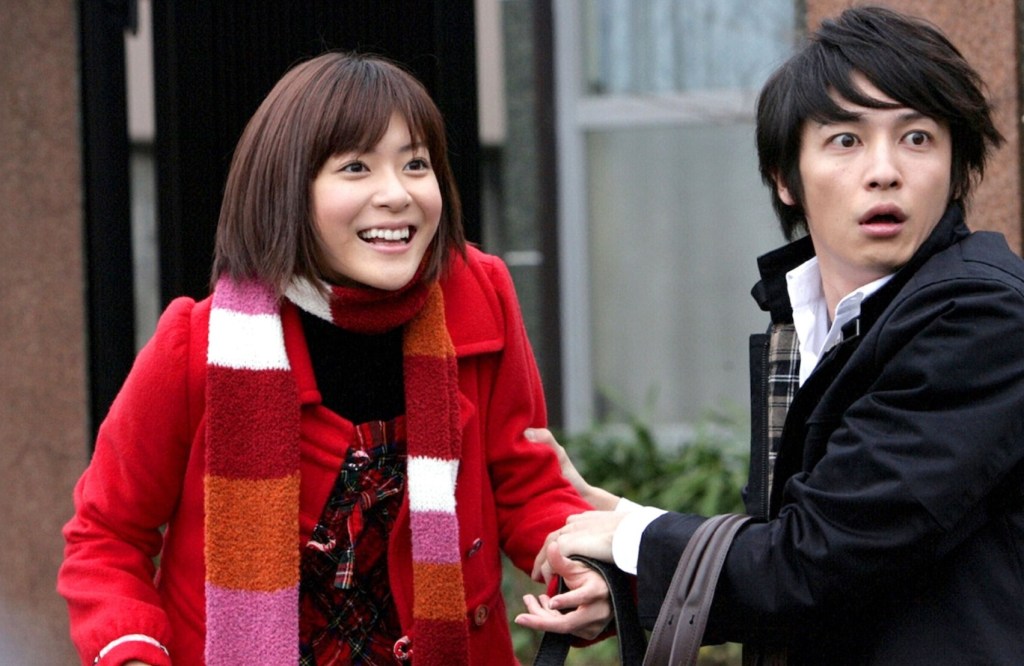
    A music perfectionist from the upper class, Chiaki (above right), meets his complete opposite in Nodame (above left), a disorganized but gifted middle-class musician, setting the stage for an unlikely dynamic.

    As late to the game as I am in watching this award winning mini drama series (11 episodes in total) – which was a 2006 live adaptation of the manga series by the same name – I can nonetheless safely conclude and console myself that my tardiness is all but negligible in that it being a classic case of “better late than never” and also – to my surprise – an unexpected occurrence of “never would I have thought”…

    You see, my initial impressions of the drama series – particularly the first two episodes – was not largely positive. Apart from a recognisable and handsome face in Hiroshi Tamaki, the rest of the characters – Masumi, Mine, Eto, Stresemann, and – yes even – Nodame (played brilliantly by Juri Ueno) – was for a lack of a better term, weird, in hairstyles (Mine’s ostentatious blond hair, Nodame’s bed hair, Masumi’s afro?!), fashion style (outlandish colour configurations), accessories (what’s up with Eto sensei’s paper fan?!), and not to mention, their over-the-top mannerisms [and to be fair, also Chiaki’s (Hiroshi’s) awkward and (in all honesty) amateurish conducting which is a far-cry from how talented conductors conduct (I trained and was once an aspiring conductor and was fortunate enough to be exposed to good conducting)]. This, coupled with the old-fashioned grainy display of old film technology most certainly did not do any favours to the show’s draw especially in this Netflix generation of razor sharp images.

    But as it was, I kept going, perhaps due to the environ of the plot which was based in a music college and its characters being student musicians with the addition of a rather frequent dose of classical music snippets peppered throughout the episodes – all these appealing to a musician and classical music lover – and so I watched on..

    I knew not exactly when but strangely as I progressed in the series, I begun to appreciate and even found myself being tickled by the characters’ over-the-top mannerisms and slap stick style. Also, what I found strange and off-putting in most of the characters (except Chiaki whom I thought was the most “normal”), I slowly loved (?!)…

    In retrospect, was it because of the skilful character development, gradually revealing their vulnerabilities, backstories and “soul”- expressed in acts of kindness and loyalty? Or their erratic-ness, childlike passion, and unabashed authenticity that artists often display and labelled as “crazy” and “weird” for it, which I actually identify and bear affinity with? Or could it be the ongoing ambivalence in the nature of the relationship between the protagonists, Chiaki and Nodame [which only later (the last episode) revealed] that left me, the viewer, in a state of guess work as to whether the odd couple would be together or not, other than it being the case of unrequited love (on poor Nodame’s part)? Yes, I would say that all of the above contributed in somehow striking a chord in me and pulling on my heartstrings…

    And consider this – related to the nature of beauty: can something or someone who might not be at face value attractive grow on the beholder and later become a subject of endearment as he/she/it is gradually revealed petal by petal leading to its full radiant bloom (beauty really, which, as St Thomas would define, the intersection of inner essence and outer radiance)? Well, it was certainly so in my relationship with the drama, and you could say, Chiaki too, with Nodame (?).

    Not to be a spoiler to those who have yet to watch it, but I must say that the drama concludes on a crescendo, on a “high” (the choice of the exuberant fourth movement of Beethoven’s Symphony 7 in the show’s conclusion is wholly fitting in my view) with both protagonists and other supporting characters finding renewed vigour and clarity on their life’s journey after graduation from the music college.

    Could they have landed themselves in such fortuitous unexpected states if not for their encounters with each other, dictating circumstances, and opportunities opening up? Absolutely not, but is it just mere “good luck” or – on the other extreme end – events caused by each individual’s sheer act of willpower and smarts? The latter, in my opinion delusional, and the former meaningless. So perhaps is it after all the mighty sweep of destiny divine working alongside (albeit paradoxically) our loves, passions, desires, and active choices that determine our future?

    厳しくされてもされなくても、ダメになる奴はダメになるし、プロのピアニストになろうと思ってられるものじゃない。そういう世界ですから、成功するかどうかなんてわからない。俺もあいつも。でも、僕はあいつのピアノがすごく好きなんですよ。

    Even if you’re treated strictly — or not — the ones who fail will fail anyway. You can’t become a pro just because you want to. That’s the reality of this world. We can’t know for sure that we will succeed. Neither me nor her (Nodame). But, I love her piano. A lot.

    – Chiaki in Episode 11

    Alas, will destiny bring them together? Watch to find out.

    *Featured Image Source: Netflix
  • Kinto Water Bottle: Fluid Pottery

    Kinto Water Bottle: Fluid Pottery

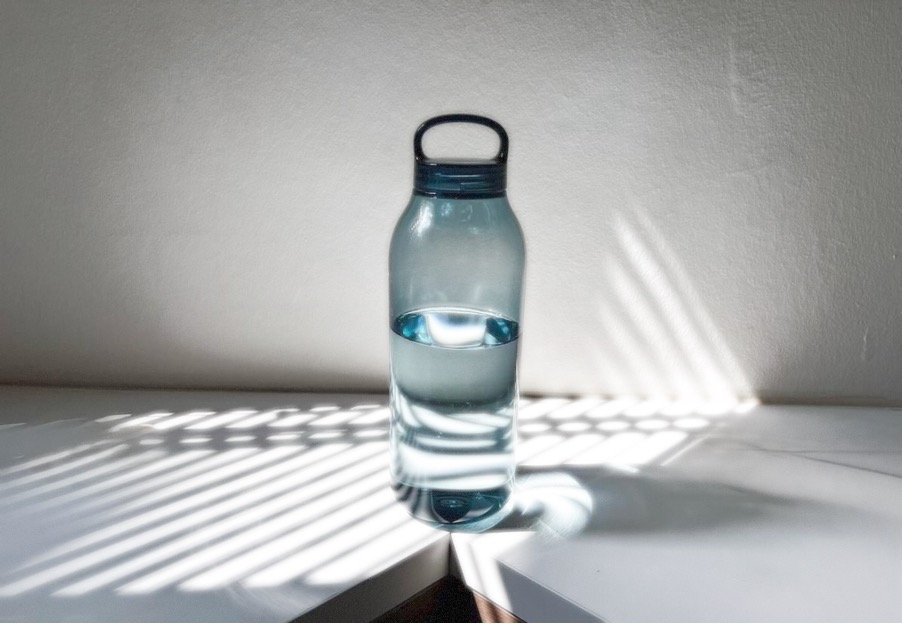
    Doesn’t Beauty, although “useless”, nevertheless hold a mysterious grip among its enraptured beholders? Oscar Wilde once remarked that to put usefulness first, we lose it. But to place beauty first, what we do will be useful forever. And part of the reason that beautiful everyday objects will be “useful forever” is that it is conserved and cherished by the user by virtue of the object being beautiful – and that is exactly what I experienced with my Kinto Water Bottle (as with the case, in a larger scale, of historical buildings being conserved and not destroyed due to their beauty – watch “Why Beauty Matters” at the 17:20 mark).

    My Kinto water bottle is the first water bottle that I actually cherish. Here are three actions that I wouldn’t do for any other water bottle:

    1. Not bring it to the tennis court (I play tennis) and place it on the dirty floor.

    2. Leave it to dry when not in use so as to prevent algae growth.

    3. Look at it repeatedly and think to myself, “what a lovely water bottle this is.”

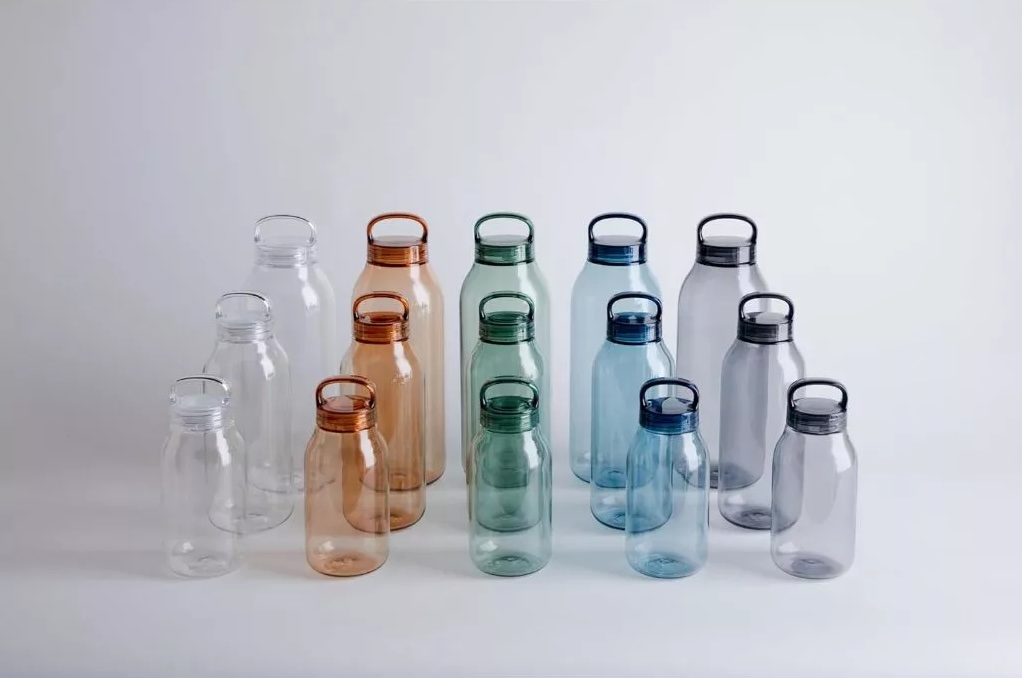
    Indeed no other water bottle has caught my attention as the Kinto water bottle for its curved shapeliness that is, first of all, unique to say the least but also creating a seamless form from bottom to top analogous to a pottery piece deserving of display. Its plastic (made from recycled material) is sturdy and perspicuous like glass – that also comes in five colours (clear, amber, smoke, blue, green) and three sizes (300ml, 500ml, 950ml) – which paired up with its soft curves amplifies the pleasure of looking at the water contained within as if the water is at one with the bottle.  

    Kinto Water Bottles in five colours and three sizes
    Kinto Water Bottles in five colours and three sizes (Image Source: Shopee)


    Drinking water from the bottle also feels great due to its “practical size sprout” which apart from being designed for easy refilling and washing also enables one to drink comfortably, and exceptionally so I must say – no awkward contortion of lips to get a sip as we do for some water bottles! Also, the lid opens with just a few twists which – to my surprise – does aid in the ease of the drinking-water experience as does the handle moulded to the lid contributes greatly to the portability department in enabling one to pick up the bottle and to make carrying it around a breeze.

    Ought “form follows function” or “function follows form” in the creation of everyday objects? I say, both are essential but the best marry both in perfect unity and harmony as in the case with this Kinto Water Bottle – as I would term it: Fluid Pottery.

    *Featured Image Source: My Own


    If you like click and purchase the Kinto Water Bottle here: https://amzn.to/43WuTN9. I may earn a small commission if you do so but at no additional costs to you. Thanks for your support, Cheers! 

  • BiC Japan Clic Gold Ballpoint Pen: Ordinary, not!

    BiC Japan Clic Gold Ballpoint Pen: Ordinary, not!

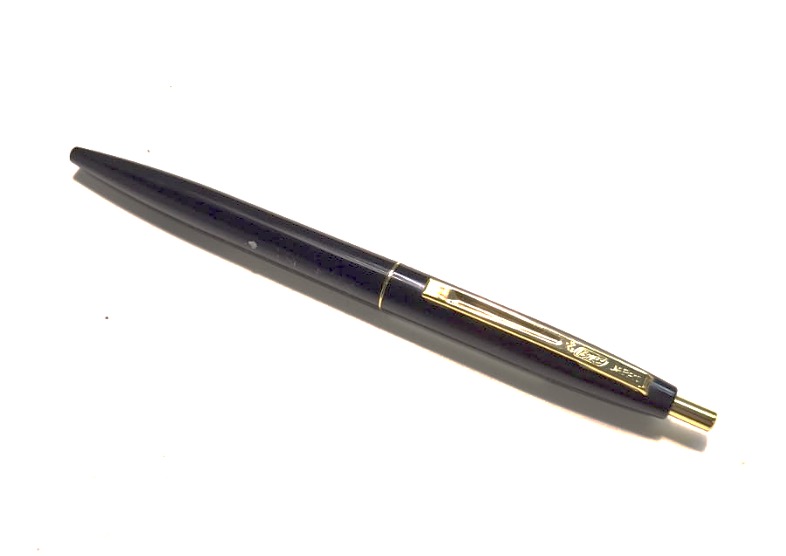
    I have to admit that my first reception of these pens were like “oh, another hotel pen” – you know those black ballpoint pens (yes, I first received the black version) available on the reception desk often with a cable or string attached for visitors to use (before wide-spread digitalisation) or those found in hotel rooms with a notepad.

    To which my giver retorted, “No, they are not! They are special and made-in-Japan.”

    So I gave it a second look, and concluded still, “nah, it is ordinary”, until I started using it…

    [Admittedly, this is not the first time that seemingly ordinary-looking objects “grew on me” (see The Bag My Friend Gave), and I wonder if there is always an element of hiddenness in the truly beautiful which requires time for the beholder to uncover and see.]

    “The grip and feel of the pen actually feels great” was what I found myself thinking after a couple of days of usage. The smooth veneer of the pen is pleasurable to touch, glide – and swirl (if you’re into it too) – and the grip is comfortable to hold with fingers fitting nicely at the pen’s narrower tip. Clicking the pen also felt good in its firmness and slight pushback, and the tip leaves a fine (it has a 0.5mm ball diameter) unique greyish-black trace that does not smudge easily (which is a plus-point I like).

    In the looks-department, adjectives such as “elegant”, “sleek”, and “classy” begin to replace “ordinary” in my mind’s judgement of the pen, and with it also a realisation of the increased frequency and duration of my glances, admiring its shapeliness and base colour against the gold trimmings and platings. And so it was in the midst of my enjoyment, that it had to happen:

    I lost it.

    Not in misplacing it but (this is rather embarrassing:) in swirling my (only) black “Clic Gold” pen out from my hands into the inaccessible recesses of the underside of immovable furniture, to oblivion. A sure case of tough luck, that is.

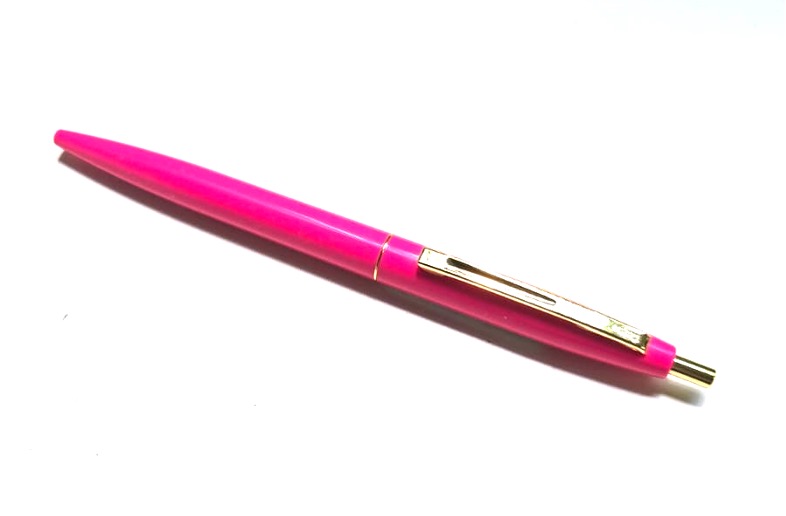
    But – yes, but – as luck providence would have it, I needed to wait just a couple more months before receiving more “Clic Gold” pens from my empathetic and generous friend (who came to know of my dismay), and this time receiving back not only the black variation but also obtaining another colour variant: shocking pink (see below)!

    BiC Clic Gold Ballpoint Pen Pink

    Image Source: My Own

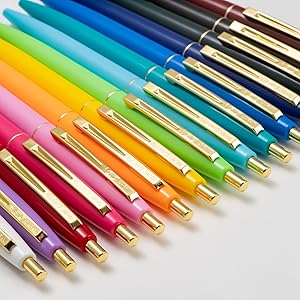
    As I surmised and later discovered, the “Clic Gold” range does indeed contain a melange of colours which you can even mix-and-match with (visit here to experiment and see my video below)!

    Image Source: Amazon

    In all, the BiC Clic Gold pens are ballpoint pens suited for everyday usage with an affordable price but more: they remain one of my favourite (if not my favourite) ballpoint pens for its casing-feel, elegant-look, colour-variety, and reliable ink-trace. I highly commend them for personal use and/or gifts! And if anybody ever comments that they’re ordinary “hotel pens”, you can consider responding as such:

    “No, they are not! They are special and made-in-Japan.”

    *Featured Image Source: My Own


    If you like, click and purchase the pens here: https://amzn.to/4jcuWIR. I may earn a small commission if you do so but at no additional costs to you. Thanks for your support, Cheers!


  • One-Punch Man (ワンパンマン ): A Rude Awakening in the Face of Greatness

    One-Punch Man (ワンパンマン ): A Rude Awakening in the Face of Greatness

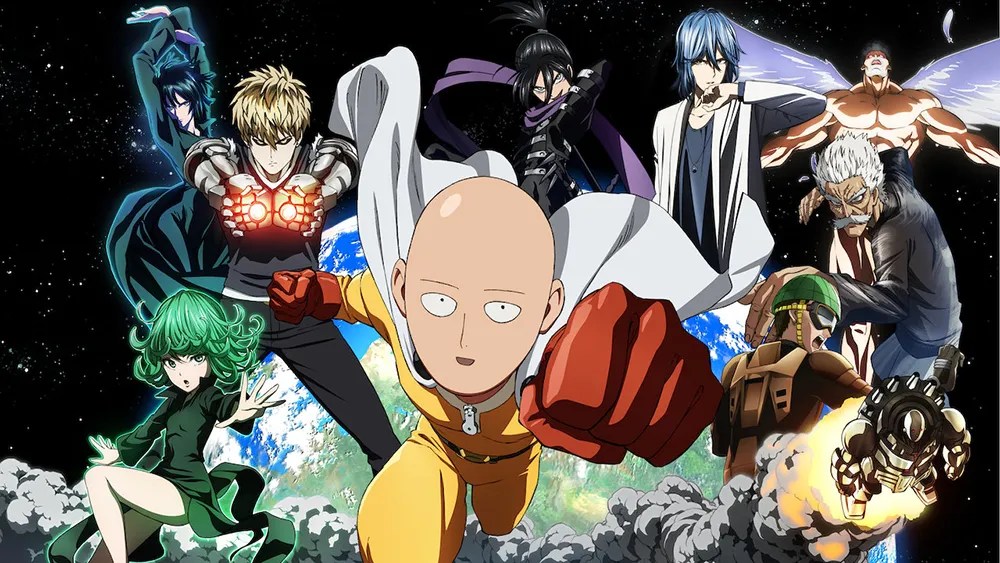
    The story of Saitama, a hero that does it just for fun and can defeat his enemies with a single punch.

    (Source: IMDb)

    Beyond the awesome action scenes, successful comedic moments, attractively rich characters, and, not to mention, a most interesting premise of a human hero with a 100% guaranteed K.O. rate against all his opponents, lies the curious dealings in the face of greatness. Saitama, our hero-protagonist (i.e. the “One Punch Man”), for one, struggles to come to grips with his overwhelming power, not in terms of harnessing it, but in living with it; in making sense of it:

    “I became so powerful, no one is able to beat me. I’m the hero I dreamed of becoming. So, what is this? What’s wrong? Why does my heart feel so empty?… As the days pass, my emotions grow more distant… I used to feel all kinds of emotions whirling inside me when I fought. Fear. Panic. Anger. But now, all I need is one punch to end it.” (Season 1, Episode 1)

    Such – if I may call it so – is the gradual-sudden awakening to the vanity of pursuing greatness (in whatever form: strength, pleasure, riches, experiences, etc) for gain’s sake. For like mist the reward is temporal and thin – it quickly vanishes and leaves one wanting. The inner turmoil that our hero Saitama experiences, needless to say, is neither unique nor fictional for it speaks to our real human ambitions and our universal desire for fulfilment.

    What happens when we reach the top of our ambitions? Strangely, they always disappoint. With Saitama, it was the loss of the kick he got out of battling with monsters – “I mean, I just do the hero-thing as a hobby. In other words, as long as I get a kick out of it, that’s all I care about.” (Season 1, Episode 1). And in a similar vein, so it is with us who thought, “If only I could be the best _______ (teacher, salesman, doctor, etc)/have this ________ (car, house, girl, etc)/be in _______ (Japan, Hawaii, Maldives, etc) I will be fully satisfied”, but – alas – only to be left cheated-empty after we obtain.

    So what is the way forward for Saitama? What is the way forward for us seekers and pursuers of happiness? Perhaps the clue lies in another character in the anime:

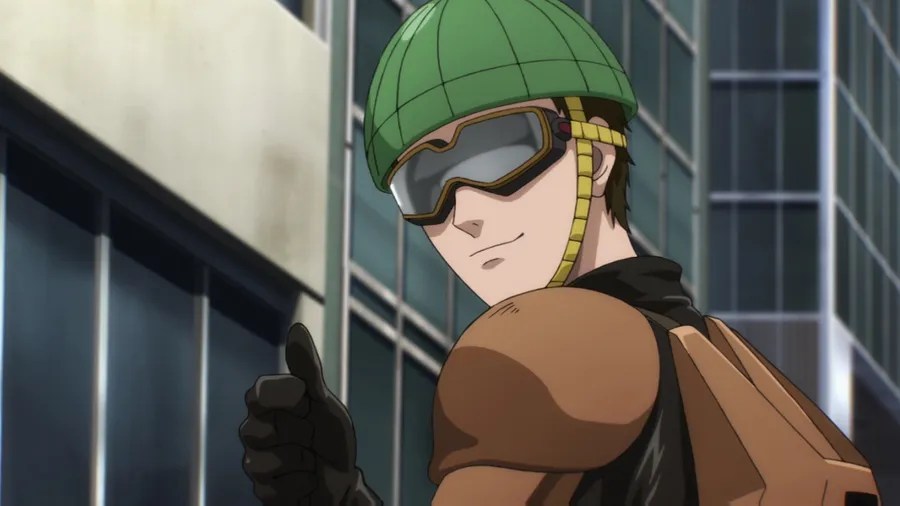
    Mumen Rider

    Mumen Rider (無免ライダー)

    Unlike Saitama, Mumen Rider is weak in strength (he is a Class C hero, the bottom tier of the heroes strength classification) but surpassingly big in heart. He is what you would call a true hero, one who valiantly lives out fully his hero-identity, come what may. A particularly moving scene involving him facing the outrageously evil and powerful “Deep Sea King” beautifully exemplifies this – his dialogue goes:

    “No one expects much from me. They think a Class C hero won’t be much help. I know that better than anyone! I’m not good enough for Class B. I’m weak. I know that much. No one has to tell me I have no chance of beating you. I already know that! And yet I must try. It’s not about winning or losing! It’s about me taking you on right here, right now!” (Season 1, Episode 9)

    Did Mumen Rider the “Cyclist for Justice” prevail? (Go find out!) But for our purposes, the more pressing question is, “Is he fulfilled as a hero?” It seems so in the way he is portrayed as a friendly, well-respected (even among stronger heroes), and enthusiastic hero in spite of his evident weakness (he possess no superhuman strength like the other heroes who are in the upper classes). But why so, despite his failures, weakness and glaring limitations to get stronger? And would he be fulfilled as well if, say, he were to be granted Saitama’s celestial prowess?

    I would believe so for (here lies the reveal) he knows who he is – as a hero – and lives as a hero is meant to be, and therefore – believe it or not – he is great. A square peg in a round hole will never be a good fit, and so does one who has misplaced expectations on what is meant to be, say, a policeman, businessman, wife, and ultimately (we cannot escape this) a human being. Is happiness-greatness found in the abundance of our possessions, achievements, escapades, or rather in being who we are meant to be? So: what does it mean to be human, and – so too our specific vocations – a(n) _______ (etc)? This is the question we need to answer if satiation and greatness is what we want – and also for our hero, Saitama. I end here with (another character:) King’s prompt to Saitama:

    “What does it take to be the greatest hero? Is it an unwavering sense of justice, the power to fight, or the courage to withstand adversity? Until you seek the answer, you have no time to be bored.” (Season 2, Episode 9)

    Featured image source: Variety
    “Mumen Rider” source: Wallpapers.com