At life’s inception, I opened them – A fuzz, a blur, a searing blaze… Blinking-wriggling, The need to progress, Blinking-wriggling, Shades of grey, Blinking-wriggling, On light’s first meet.
Shapes, Colours, Are next I saw – and movement, Yes, movement, here and there – From side to side, Front and back, Sometimes high, Sometimes low. A strange world materialising Before my eyes – Endlessly fascinating it must have been, But left me drained to heed sleep’s call.
Eyes, it’s said, Are windows to the soul. To encounter another is in no way slight. Look eye-to-eye and you might see…
Those haughty eyes who look down upon; Those cunning eyes who dart, wink, plot; Those seductive eyes who capture and charm, Eating away those unawares Their flesh and bones, All life unspared…
Shivers. Cold. A Nightmare.
Awake, Awake, Into the light! Expectantly look Into lovers’ eyes…
“Your eyes are doves.”
“With a glance, you ravished my heart.” “Avert them away, for they – your eyes – overwhelm me so!”
–
An abundance of love Expressed and felt In the softness of eyes With compassion aglow Assures the anxiety-laden Reinvigorates the weak.
So from eye to eye, As with torch to torch, Inflame one another Till the brim of light!
–
Light is sweet, And to see is a gift. But remember also Of the day to come:
When grey shades return, And visions go blur…
Blinking-breathing, The will to survive. Blinking-gasping, Fading light. Shut. Sleep. At the close –
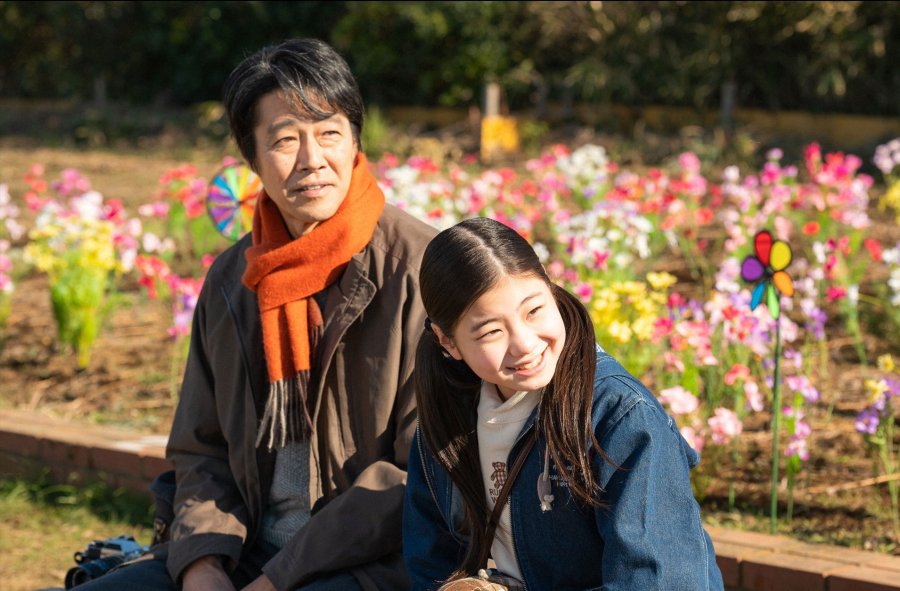
A widower (Keisuke) and his daughter (Mai) encounter a girl (Marika) claiming to be the reincarnation of the man’s late wife (Takae), eventually accepting her into their lives as they grapple with their grief.
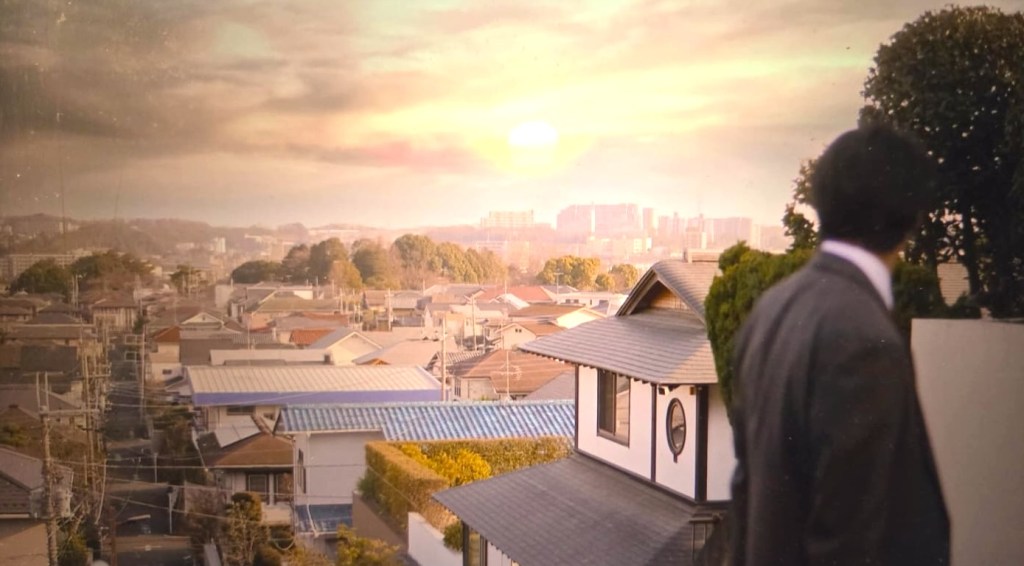
There is a lot to like about this 2022 drama which is based off a manga series, “Tsuma, Shougakusei ni naru.” (妻、小学生になる。) by Murata Yayuu (村田椰融). From the interesting plot (which admittedly triggered a tad bit of discomfort, awkwardness, and anxiety initially, wondering how exactly the interaction between Keisuke and Takae-Marika will unfold without bordering on paedophilia – which thankfully was not the case due in no small part to:), fabulous acting [the expressive eyes of Maida Nono (Takae-Marika) and Shinichi Tsutsumi (Keisuke) especially is of much help here), beautiful backdrops, fitting soundtracks – not to mention, the hauntingly poignant nostalgic theme song, 灯火 (“Tomoshibi” – listen to a sample below) – wholesome content, and satisfying ending, this drama left me feeling warm, touched and thinking…
“TsumaSho” addresses a very real experience common to all (or rather to those who dare to love) and that is, loss, along with its bitter corollary, grief. “To love at all”, C.S.Lewis writes in The Four Loves, “is to be vulnerable. Love anything and your heart will be wrung and possibly broken.” And broken it was for Keisuke and Mai (and also Yuri, Takae’s brother) at the loss of Takae, their beloved wife-mother(-sister), through a sudden tragic car accident. I have not personally (as of yet) encountered catastrophic losses but I have known (and read about) others who have loss their precious children and parents. Like Keisuke and Mai, a loss seems to be as much the death of the dearly departed as well as of the living left-behind – a part of us dies, it seems, and if we are not careful, that death can indeed consume our whole being leaving us, as Keisuke and Mai was for a decade, as zombies – body alive, dead in the inside, dead to others (even towards Mai, his daughter).
Is that the best way to live after experiencing loss? We (outsiders) see that it is not, and the creator of the story seems also to share that point of view. And thus miraculously, in the unfolding of time, Takae is “reborn” into the form of an elementary school student who, after overcoming initial resistance, injects a gargantuan dose of hope and vitality into the lives of Keisuke and Mai, which is – to be said – totally expected, for the family is reunited again (albeit in a strange configuration)!
But then begs the question: Is the panacea to grief-and-loss only found in the resurrection and reunion with loved ones? To which I answer: Yes, ifonly the reunion is permanent – and we know of no such reality here on Earth – even those, historically who were resurrected (e.g. Lazarus of Bethany) will eventually die again (Christ not withstanding). And (spoiler alert:) so it is with Takae-Marika in the story, which lends itself to further probing: Is the second and third loss of Takae-Marika any less painful than the initial loss of Takae? It seems not for Mai and Keisuke, and perhaps the pain is intensified after having tasted the goodness of reunion again. So what is the remedy then? What made Keisuke and Mai live differently after the subsequent losses? As you might conjecture, not resurrection per se, but hope – and also love: in living.
Hope in seeing a loved one again is the universal cry and desire of all who have lost. But it is not enough, and also funnily enough, hope needs to be kindled by love to make hope “alive”. I could imagine one without hope-and-love echoing the words of Keisuke, “I’ll just keep living the same uneventful days. And then I’ll die. I don’t need anything. No hobbies, no purpose, no dreams. No new life… My life since Takae (or _____) left is just an afterthought.” – or why not commit suicide to hasten the process of seeing a loved one, or identifying with him/her through complete death (as in Romeo and Juliet)? One could argue that such renouncement of life is an expression of love too – in honour and remembrance of the dearly departed. But is that wholly love? Is that hope – or rather resignation? Is that what the (your) dearly departed other wants (as with Takae-Marika’s many attempts for Keisuke, Mai and Yuri to live)? Is that what those alive and close to you need? Is that what life is – with death having the final say? God forbid, no.
“Death has been swallowed up in victory. Where, O death, is your victory? Where, O death, is your sting?” – St Paul
And so till then, We humbly beseech, That we grief – but not without hope, That we hope – but not without love, That we love – not for mere remembrance, But instead we live – we live, For love knows no end —
 withaestheticeyes.com