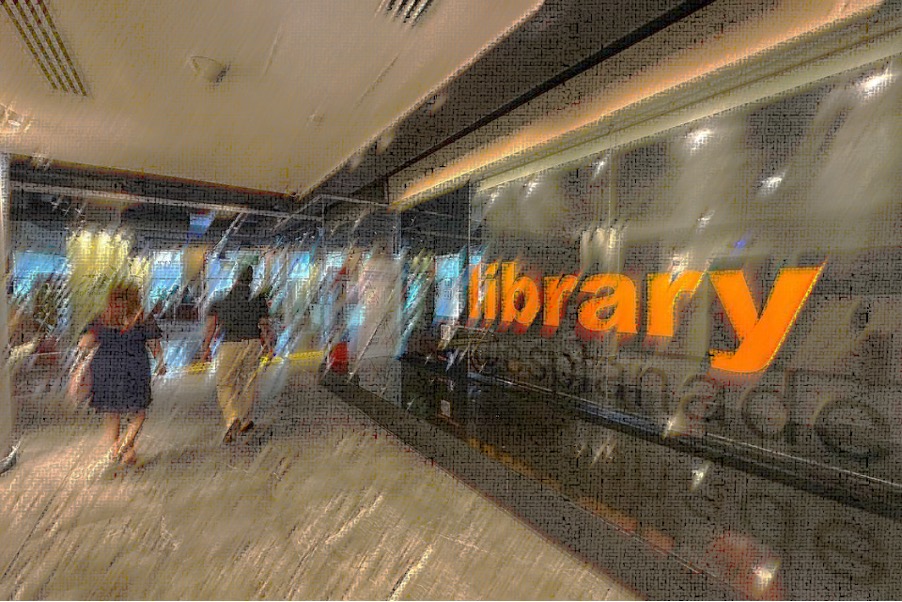
I miss the Esplanade Library.
It will forever remain as one of my favourite places in Singapore insofar as my memory stays in tact, and undesirably but ineluctably, accompanying that memory, lies a deep grievance that such a treasure of a place is now gone – targetted, enveloped and destroyed into bits (yet again, as I see it) by commercial interests and utilitarian intents:
“Singapore’s only public library dedicated to the performing arts – library@esplanade – will close on June 30 (20231), and its collections and programmes will be moved to the National Library Building in the Bras Basah area… the move will allow it to centralise its arts resources in the heart of the Civic District, where they will be close to arts institutions and practitioners in the area…
The premises currently occupied by library@esplanade will be converted by Esplanade – Theatres on the Bay into arts and commercial spaces…” (Source: The Straits Times)
– as if a library is no more than a mere transferrable storage warehouse for books and resources, and place-making all but non-existent – even despised? Well, on the one hand, this should not be surprising for such is the natural outcome of a society that knows the price of everything but the value of nothing, where all interests are essentially utilitarian and economically motivated, where places exists primarily for the sake of efficiency, productivity, and – who are we kidding – profitability. And so, all who get in utility’s way will be wallowed up, dissolved, and remade into its image.
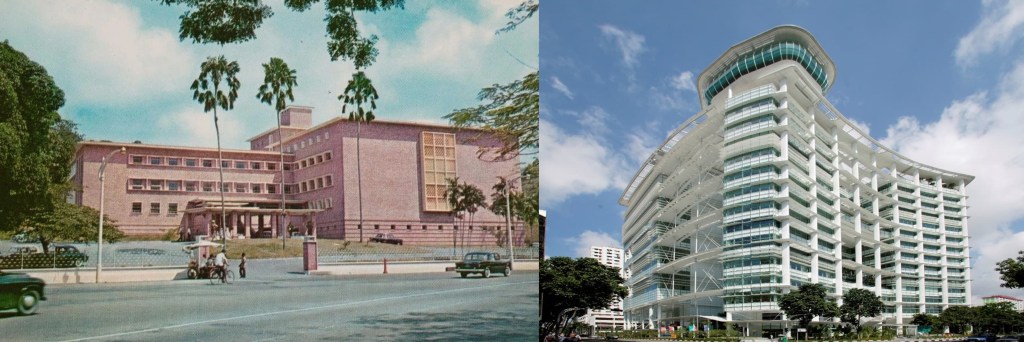
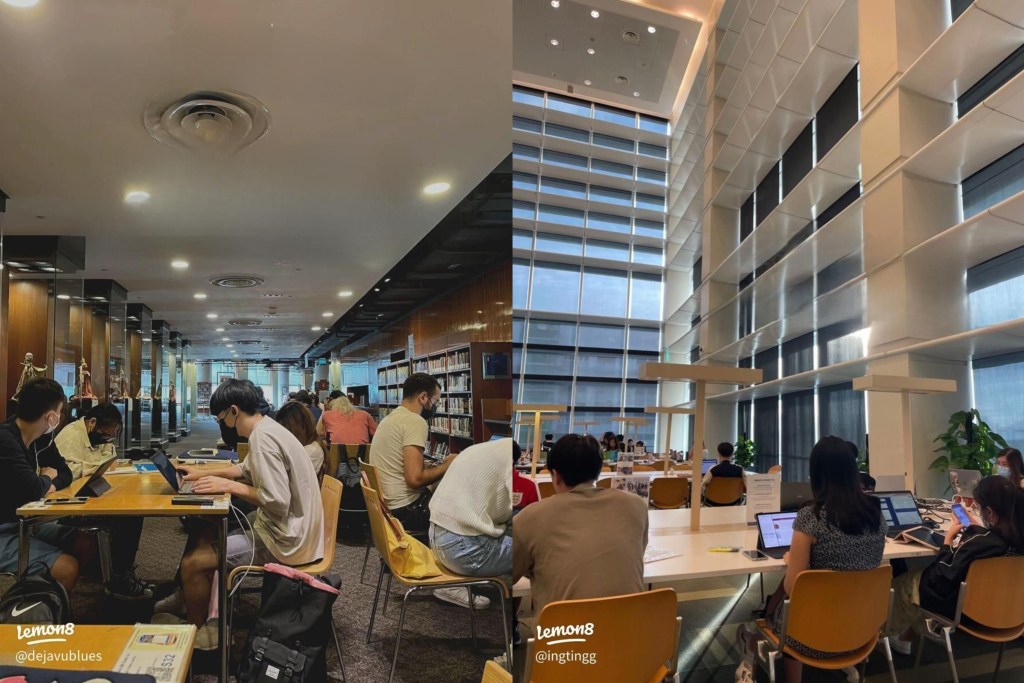
Is it no small wonder then that the National library (yes Singapore’s flagship library) looks and feels atrociously sterile resembling a laboratory (or if you prefer, a learning laboratory) for rats and machines for production purposes rather than a warm and inviting space for learners to find solace, delight, and inspiration to explore, connect, and create? Look at the comparison between the exterior of the old National Library and the current, and then the interior of the current National library against the then-Esplanade Library:
As it is, as mentioned, on the one hand, it should not be surprising to witness the failures of our country’s conservation efforts and declining quality of buildings for they merely reflect our culture’s core beliefs but yet on the other hand, in spite of one’s preparedness, the shock and sadness that result in actually losing a beloved (be it a person or place or anything for that matter) must be squarely acknowledged…
I know not when that I encountered the space,
But pleasantly surprised was what I felt,
“A library in the Esplanade?
“Now that’s interesting.”
In curiosity’s trial I treaded along,
Up the escalator and around I turned,
Greeted by art which adorned the side-walls,
Admiring-walking…
I encounter an impasse
– Or so I thought.
On the woody wall the engraving is there:
“library@esplanade” to direct one’s path.
And so I resumed walking along,
an intriguing opening materialising before my eyes…
The entrance.
Spacious, warm, and inviting.
Clearly distinct from its paquet flooring,
Extending around
To the performance stage.
A hallowed ground?
A defined entry?
A crossroad I say
To decide the next route.
To the left three things stand out,
two involving seats, and one an art display.
On the latter,
Many a time I have paused to look
At the art encased in the column rows,
Lining up toward the tables and chairs
– the study area that is –
That place I spent
In hours galore
To get work done
Or simply to read.
The other seats are one-of-a-kind.
For those puffy red chairs are found in cinemas no more.
They clang and cling when one uses them,
But still it’s a joy to give them life.
For their comfort?
Not so much.
But for their uniqueness and richness?
Most absolutely yes!
To the right from the entrance,
Gives a different vibe.
If the left wing is Yang,
Then the right wing is Yin.
Mellow, dark, and subdued in buzz,
Yet not a cave but a haven light-shone,
Where one can bask
In the silence and sights…
And if you’re lucky,
From time to time,
Sounds adorn the silence,
Free and Raw,
That refreshes and sparks,
Of all attuned,
The pleasures to have,
When live music is heard.
So why would you steal,
This treasured place from us?
Lessoning the count
Of spaces adored
– of places tried?
If it’s progress you say that warrants such acts,
Then why does it feel that the opposite is true?
A sense of connection
Eroding away,
Giving way to function
Disregarding form.
Beauty bereft
Efficiency King,
Leave no room for structures
That provide no price.
And so it was
For the 21 year old library,
In what remains –
A memory.
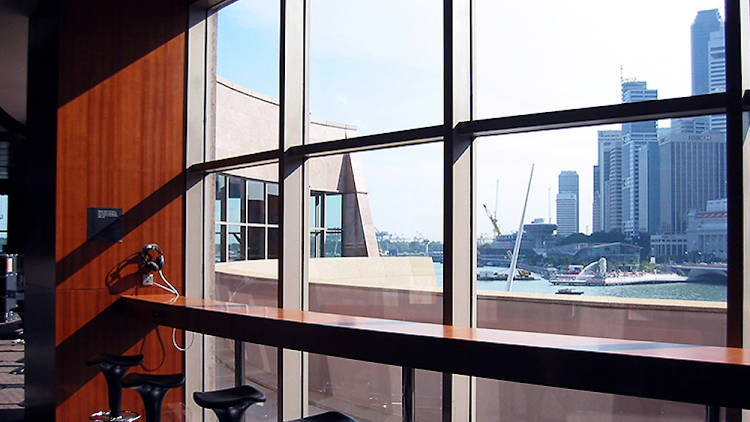
A favourite spot of mine in the right wing (Image Source: TimeOut) 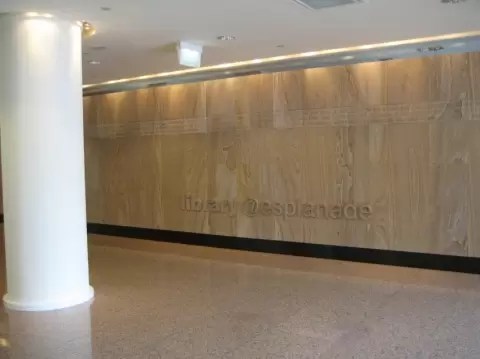
The “Impasse” (Image Source: Wikipedia) 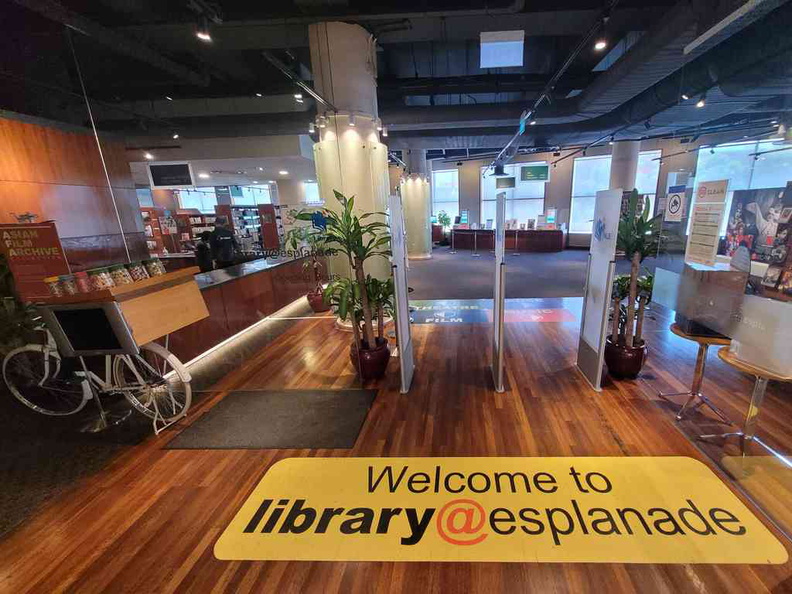
The Entrance (Image Source: Shaun Chng) 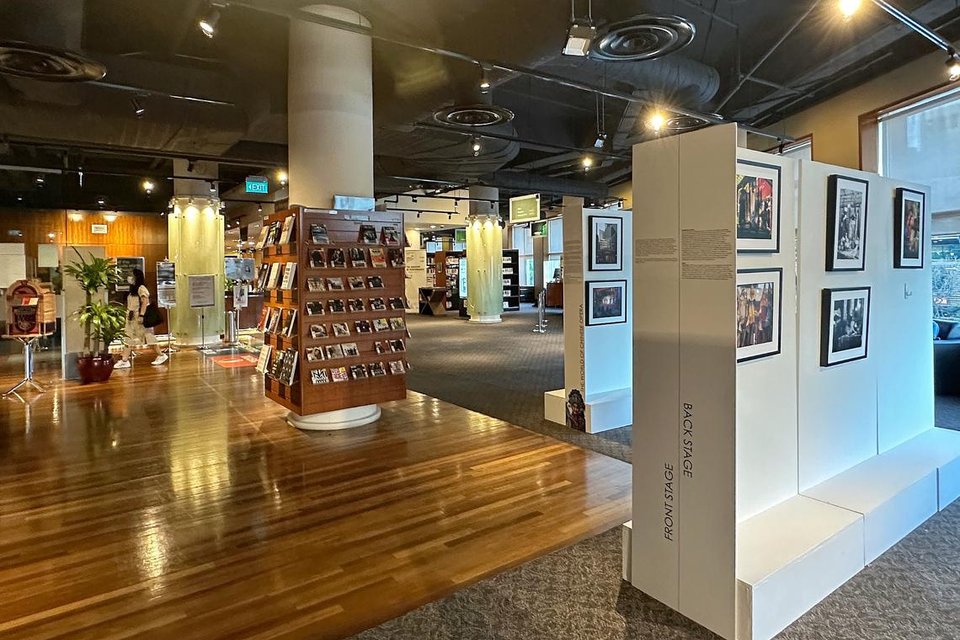
The Entrance (Image Source: The Straits Times) 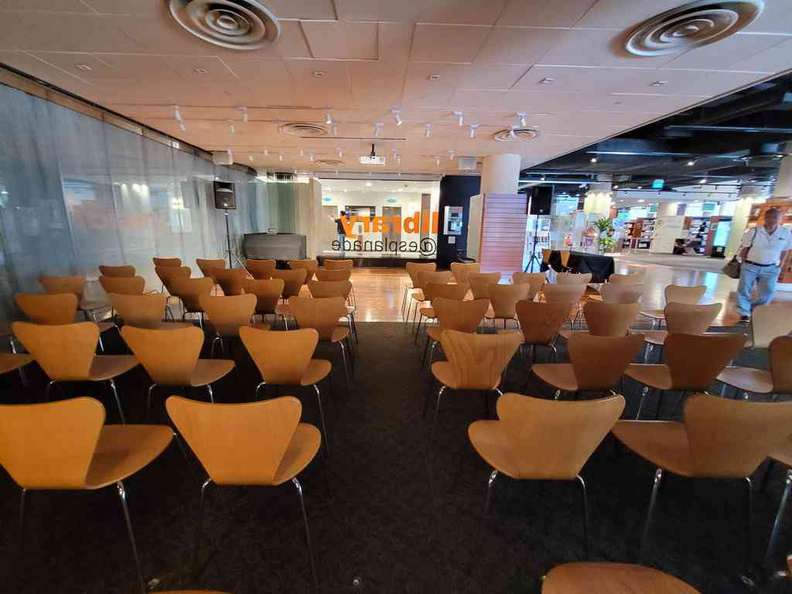
The performance stage (image source: Shaun Chng) 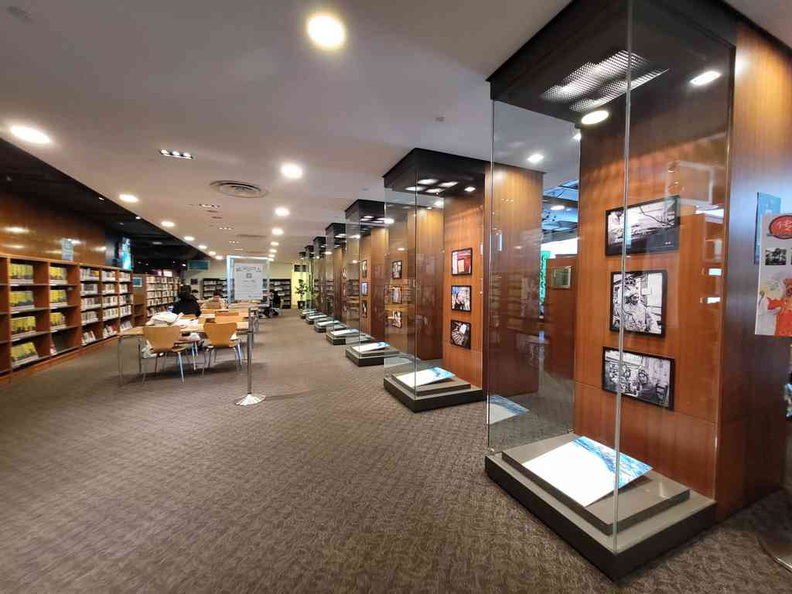
The art display (Image Source: Shaun Chng) 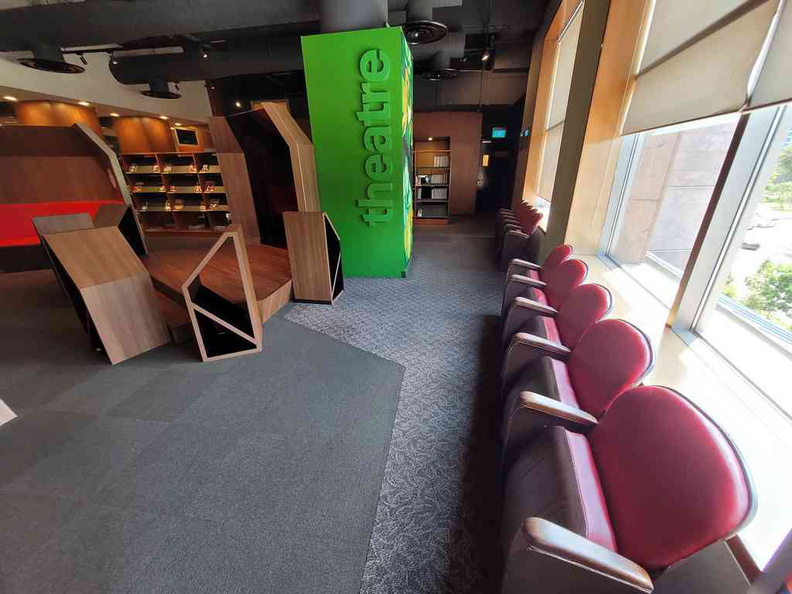
The “puffy red” chairs in the left wing (Image Source: Shuan Chng) 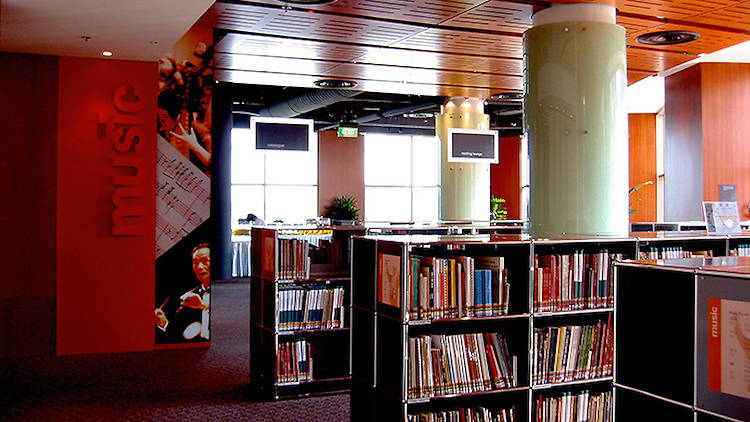
Part of the right wing (Image Source: TimeOut) 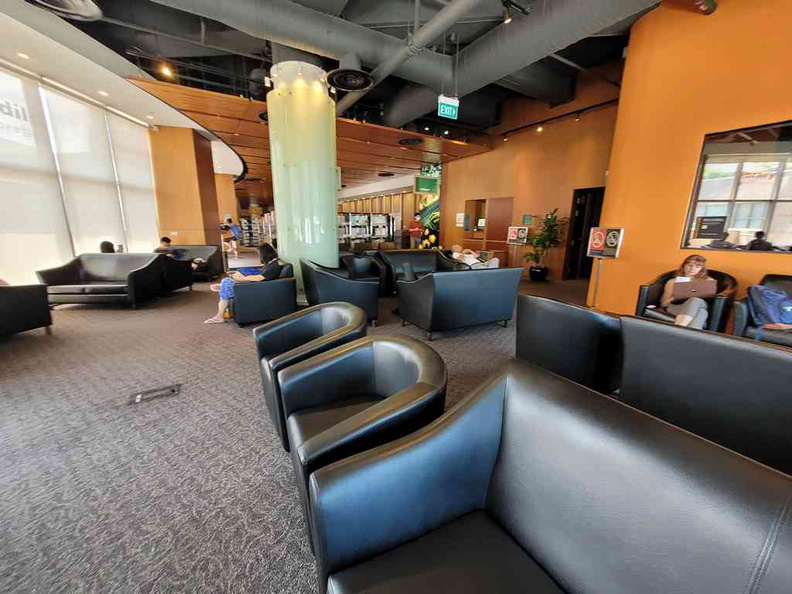
Part of the right wing overlooking Marina Bay (Image Source: Shuan Chng) 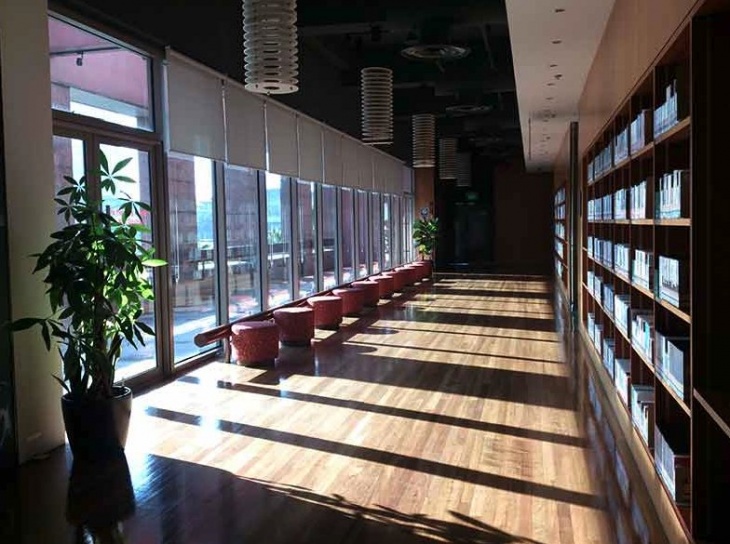
Dance book section in the right wing (Image Source: TickiKIDS)
*Featured Image Source: The Straits Times
- It officially opened on the 12th September 2002. ↩︎
 withaestheticeyes.com