
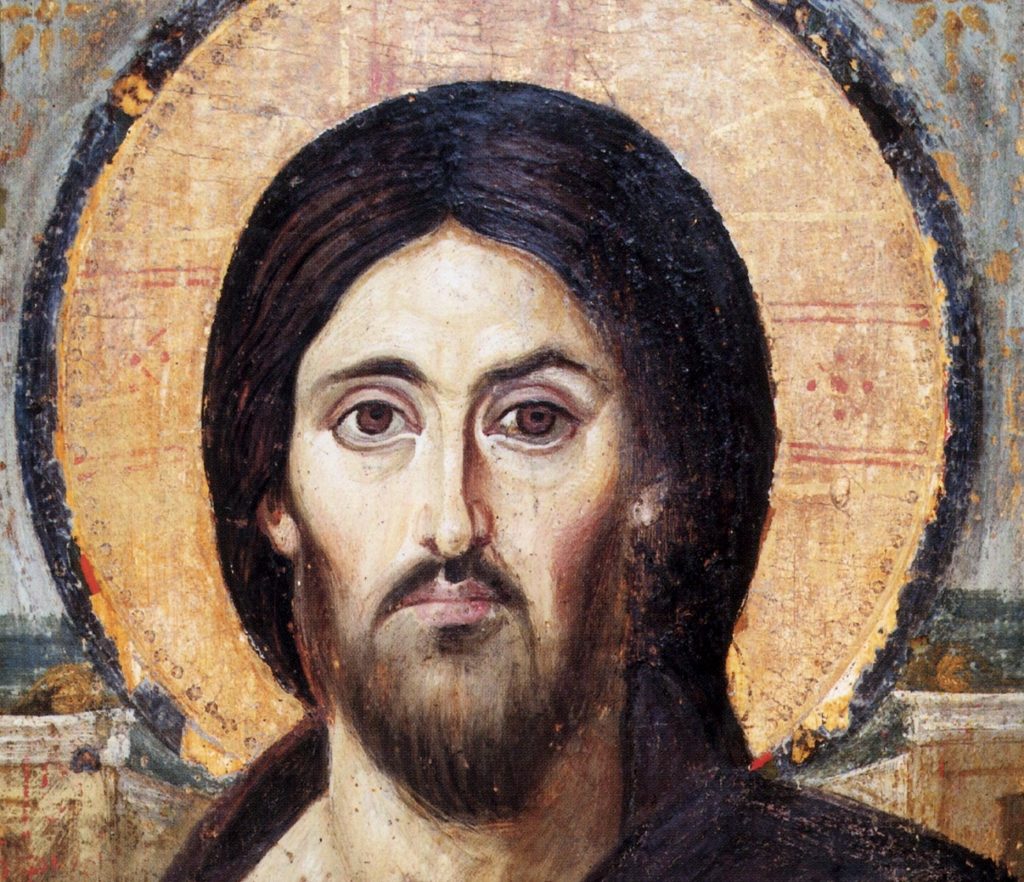
“… he had no form or majesty that we should look at him, nothing in his appearance that we should desire him.”
– Isaiah 53:2
Jesus of Nazareth, certainly one of the most – if not the most – influential singular human figure in the history of humanity, ranks also objectively speaking one of the most – if not the most – beautiful of all men. But how so we may ask? We know neither the exact face of Jesus except through a myriad of depictions of him (see below) and the enigmatic shroud of Turin. The Bible too is silent about his looks less for his glorious and fearsome appearance in visions and epiphanies (e.g. Matthew 17:1-13, Revelation 1:9-18). In fact, as we read in the passage above from the Prophet Isaiah about Jesus, he was anything but good looking. So how is he beautiful? And why even bother about his beauty?
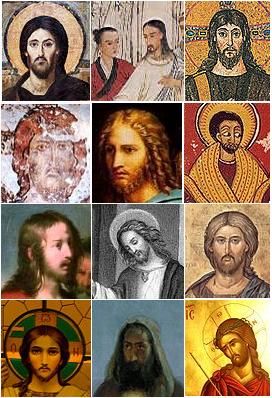
Many faces of Jesus
(Image source: Pinterest)
On the first inquiry, it must be somewhat obvious that our mentioning of the ‘beautiful’ here extends beyond mere bodily and facial appearance in form and countenance, to encompass the essence of human beauty which is that of body-and-soul: we are embodied souls-ensouled bodies. This salutary regard of human beauty, is to some extent (only that it is perhaps becoming increasingly difficult with the ascendancy and ubiquity of social media – and so, superficiality), considered in our “lookout for character” advice to singles and in the “thoughtful questions” segment of beauty pageants to draw out the wisdom of the ‘beauties’. Thus this valuation of human beauty should not be foreign to us (if not serving as a rightful reminder) and should lead us to uncover and discover Jesus’ beauty.
But first: what are we praising when we pronounce that someone is beautiful (remember: beyond mere looks1)? Quite invariably his/her virtues, attitude, words, mannerisms, actions. Or in other words, his/her qualities shone through his/her demeanour, actions and speech. But is that adequate to touch us enough to warrant a bestowment of “beautiful” upon him/her? No, I think not for something more is needed, and that is the factoring in of the situation in which the act takes place. To judge and heap “beautiful” on anybody who does charitable acts (e.g. donating money to a beggar in public) without considering the particular circumstances is rather foolish – yes, the charitable act can be perceived as beautiful but all you know he/she could be donating money in public to bolster his/her reputation, and hardly caring for the beggar at all – would we want then to praise him/her? So the situation is paramount along with the outward expressions of virtues in judging a person beautiful.
In relation to Jesus of Nazareth, his virtues were evidently present, documented and well-accepted. He was wise, temperate, passionate about advancing right, brave, devout, and loving. He worked (as a carpenter), taught, fasted, healed, fed, embraced the weak, washed feet, rebuked, acted on injustice, prayed, endured hardships, suffered, and died. Prostitutes, criminals, the rich, the powerful, the poor, the sick, outcasts, and children were drawn to him. But without taking into account of his situation, all his deeds, attitude, and words would not have the impact that it did. Because behind his service, he was poor, misunderstood, grieving, despised, and God.
“He was despised and rejected by others; a man of suffering and acquainted with infirmity; and as one from whom others hide their faces, he was despised, and we held him of no account.”
– Isaiah 53:3
And
“For you know the generous act of our Lord Jesus Christ, that though he was rich, yet for your sakes he became poor, so that by his poverty you might become rich.”
– 2 Corinthians 8:9
And
“In this is love, not that we loved God but that he loved us and sent his Son to be the atoning sacrifice for our sins.”
– 1 John 4:10
I must admit that the phrase, “not that we loved God” by St John strikes a deep chord in relation to the contrasting love of God towards me-us. How often do we see an individual love an enemy who does them harm? Rarely, if ever. And if we do, to what extent does the individual love the hater? Offering forgiveness? Perhaps; avoiding slandering him/her? Difficult; helping him/her with a task? On good days; but sacrificing your life for your enemy to save his/hers? Preposterous.
And this very absurdity is precisely what God had done towards me-those who hate him through the willing hands and feet of the Nazarene, Jesus. From the most mundane acts of kindness to the extremity of sacrificing oneself for the good of another, this was what Jesus of Nazareth, had chose to do for haters, forgoing for a time his “riches” (i.e. his prestige, privileges and comforts) as the Son of God as St Paul states, to living a life of simplicity, poverty and service that he may reach all – yes, even the poorest. This had befuddled many a curious mind throughout the ages and still for some others, Jesus has touched their hearts through his goodness (virtues) and truth (situation) displayed in forms as beauty (actions, manner, and words).
As to why bother about the beauty of Jesus of Nazareth? I simply have this to answer: We love whom/what we find beautiful.
*Featured Image Source: Wikipedia
- For that we have adjectives like “pretty”, “handsome”, “good looking” to employ. ↩︎


 withaestheticeyes.com