Generous. Thoughtful. Sincere and Cheerful – Those traits you have In common across.
You give, you give In season and out – Birthdays, Christmas, Festivities – But the ordinary day?… Now, that’s a surprise – with pleasantness, of course!
I won’t pretend that I cherish you, Your gifts and all, A hundred percent. For truth be told: My attitude falls short Of Your steadfast acts.
It is easy, you see, To overlook The familiar and constant, Where contempt is bred.
Yet in moments of silence I muse and I see, That it’s no small matter, To receive and receive.
For what have I got To warrant such grace? Flaws? Quirks? I have in galore – You know, you know – And still give away.
What more can I be then But thankful I am: So thank you and thank you For warming my heart – And if that’s not all, – you enrich my world!
Yes, through your gifts – as I would otherwise not have – I see, touch, smell, Hear and taste Anew and afresh Of the world’s good things.
Blessed is receiving But more blessed to give? What was the Rabbi thinking When he said it like that?
To give is to die, A sacrifice of sorts. But if dying is not living, Then how can you be Happy in pro-choice, ‘Dying’ away?
Love perhaps – As sacrifice no doubt – Might provide the clue To the answer we seek –
Or still perhaps, O Givers across – Teachers, Lovers, Family and Friends – That you can tell us:
At life’s inception, I opened them – A fuzz, a blur, a searing blaze… Blinking-wriggling, The need to progress, Blinking-wriggling, Shades of grey, Blinking-wriggling, On light’s first meet.
Shapes, Colours, Are next I saw – and movement, Yes, movement, here and there – From side to side, Front and back, Sometimes high, Sometimes low. A strange world materialising Before my eyes – Endlessly fascinating it must have been, But left me drained to heed sleep’s call.
Eyes, it’s said, Are windows to the soul. To encounter another is in no way slight. Look eye-to-eye and you might see…
Those haughty eyes who look down upon; Those cunning eyes who dart, wink, plot; Those seductive eyes who capture and charm, Eating away those unawares Their flesh and bones, All life unspared…
Shivers. Cold. A Nightmare.
Awake, Awake, Into the light! Expectantly look Into lovers’ eyes…
“Your eyes are doves.”
“With a glance, you ravished my heart.” “Avert them away, for they – your eyes – overwhelm me so!”
–
An abundance of love Expressed and felt In the softness of eyes With compassion aglow Assures the anxiety-laden Reinvigorates the weak.
So from eye to eye, As with torch to torch, Inflame one another Till the brim of light!
–
Light is sweet, And to see is a gift. But remember also Of the day to come:
When grey shades return, And visions go blur…
Blinking-breathing, The will to survive. Blinking-gasping, Fading light. Shut. Sleep. At the close –
“… he had no form or majesty that we should look at him, nothing in his appearance that we should desire him.” – Isaiah 53:2
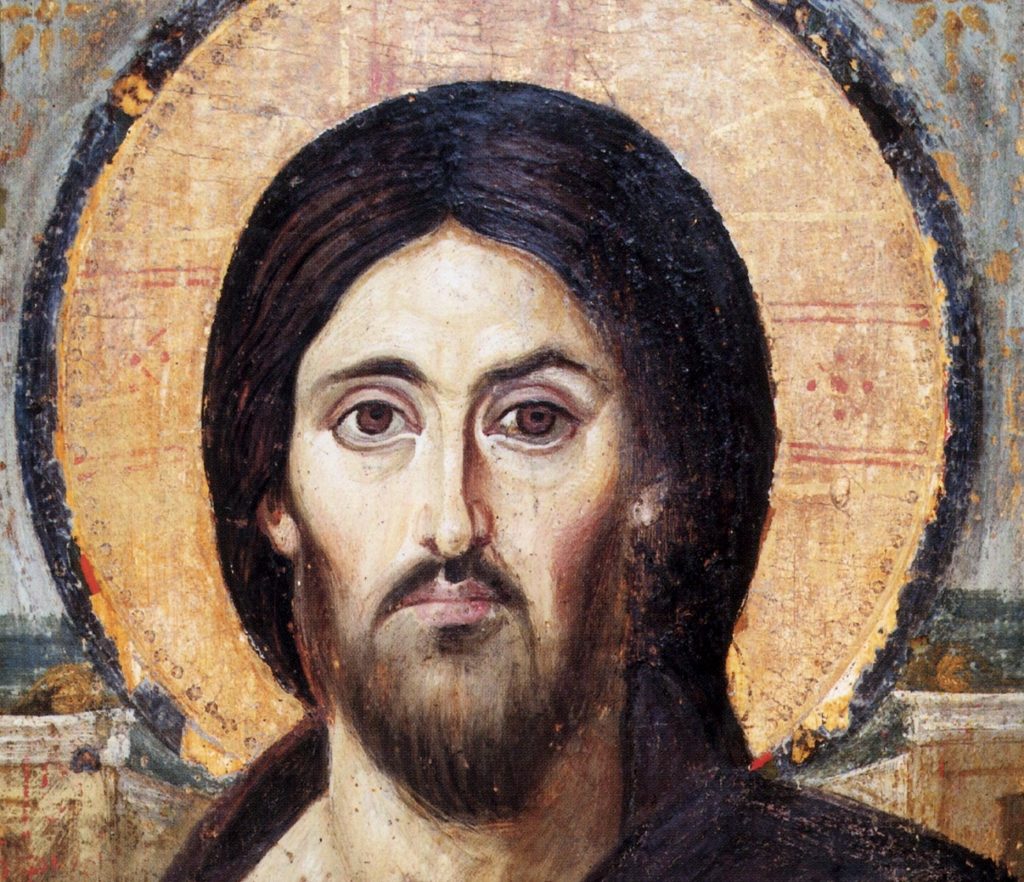
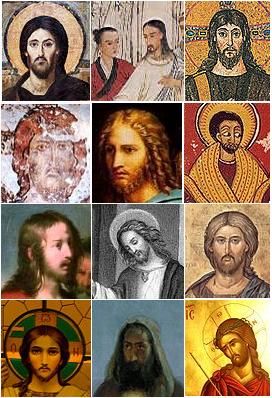
Jesus of Nazareth, certainly one of the most – if not the most – influential singular human figure in the history of humanity, ranks also objectively speaking one of the most – if not the most – beautiful of all men. But how so we may ask? We know neither the exact face of Jesus except through a myriad of depictions of him (see below) and the enigmatic shroud of Turin. The Bible too is silent about his looks less for his glorious and fearsome appearance in visions and epiphanies (e.g. Matthew 17:1-13, Revelation 1:9-18). In fact, as we read in the passage above from the Prophet Isaiah about Jesus, he was anything but good looking. So how is he beautiful? And why even bother about his beauty?
On the first inquiry, it must be somewhat obvious that our mentioning of the ‘beautiful’ here extends beyond mere bodily and facial appearance in form and countenance, to encompass the essence of human beauty which is that of body-and-soul: we are embodied souls-ensouled bodies. This salutary regard of human beauty, is to some extent (only that it is perhaps becoming increasingly difficult with the ascendancy and ubiquity of social media – and so, superficiality), considered in our “lookout for character” advice to singles and in the “thoughtful questions” segment of beauty pageants to draw out the wisdom of the ‘beauties’. Thus this valuation of human beauty should not be foreign to us (if not serving as a rightful reminder) and should lead us to uncover and discover Jesus’ beauty.
But first: what are we praising when we pronounce that someone is beautiful (remember: beyond mere looks1)? Quite invariably his/her virtues, attitude, words, mannerisms, actions. Or in other words, his/her qualities shone through his/her demeanour, actions and speech. But is that adequate to touch us enough to warrant a bestowment of “beautiful” upon him/her? No, I think not for something more is needed, and that is the factoring in of the situation in which the act takes place. To judge and heap “beautiful” on anybody who does charitable acts (e.g. donating money to a beggar in public) without considering the particular circumstances is rather foolish – yes, the charitable act can be perceived as beautiful but all you know he/she could be donating money in public to bolster his/her reputation, and hardly caring for the beggar at all – would we want then to praise him/her? So the situation is paramount along with the outward expressions of virtues in judging a person beautiful.
In relation to Jesus of Nazareth, his virtues were evidently present, documented and well-accepted. He was wise, temperate, passionate about advancing right, brave, devout, and loving. He worked (as a carpenter), taught, fasted, healed, fed, embraced the weak, washed feet, rebuked, acted on injustice, prayed, endured hardships, suffered, and died. Prostitutes, criminals, the rich, the powerful, the poor, the sick, outcasts, and children were drawn to him. But without taking into account of his situation, all his deeds, attitude, and words would not have the impact that it did. Because behind his service, he was poor, misunderstood, grieving, despised, and God.
“He was despised and rejected by others; a man of suffering and acquainted with infirmity; and as one from whom others hide their faces, he was despised, and we held him of no account.” – Isaiah 53:3
And
“For you know the generous act of our Lord Jesus Christ, that though he was rich, yet for your sakes he became poor, so that by his poverty you might become rich.” – 2 Corinthians 8:9
And
“In this is love, not that we loved God but that he loved us and sent his Son to be the atoning sacrifice for our sins.” – 1 John 4:10
I must admit that the phrase, “not that we loved God” by St John strikes a deep chord in relation to the contrasting love of God towards me-us. How often do we see an individual love an enemy who does them harm? Rarely, if ever. And if we do, to what extent does the individual love the hater? Offering forgiveness? Perhaps; avoiding slandering him/her? Difficult; helping him/her with a task? On good days; but sacrificing your life for your enemy to save his/hers? Preposterous.
And this very absurdity is precisely what God had done towards me-those who hate him through the willing hands and feet of the Nazarene, Jesus. From the most mundane acts of kindness to the extremity of sacrificing oneself for the good of another, this was what Jesus of Nazareth, had chose to do for haters, forgoing for a time his “riches” (i.e. his prestige, privileges and comforts) as the Son of God as St Paul states, to living a life of simplicity, poverty and service that he may reach all – yes, even the poorest. This had befuddled many a curious mind throughout the ages and still for some others, Jesus has touched their hearts through his goodness (virtues) and truth (situation) displayed in forms as beauty (actions, manner, and words).
As to why bother about the beauty of Jesus of Nazareth? I simply have this to answer: We love whom/what we find beautiful.
What is it that makes the playing style of Roger Federer so easy and pleasing to the eye? What sets him apart from his peers in the aesthetic department?
Could it be his poise, ever balanced in his every stroke? Yes, but almost all the top players are perfectly balanced too. Could it be his nimbleness, light on the feet and breathtakingly agile? But the best movers in the game such as Lleyton Hewitt, Novak Djokovic, and Kei Nishikori (to name a few) share the same trait. Now, how about his “effortlessness”, the ability to make the game look so easy to play – and watch? Again, Roger is not unique in this area – Tomáš Berdych, for one, produces the most powerful strokes almost matter-of-factly as if he was merely rallying, with little hint of maximum exertion. Still another: David Nalbandian, the sole player to defeat the Big Three (Roger, Nadal, and Djokovic) at the same tournament, makes returning 200km/h serves – and with conviction to boot – seem like a breeze. So then, what aspect(s) that Roger possesses that differentiates him from the rest in terms of athletic beauty?
In a word, grace.
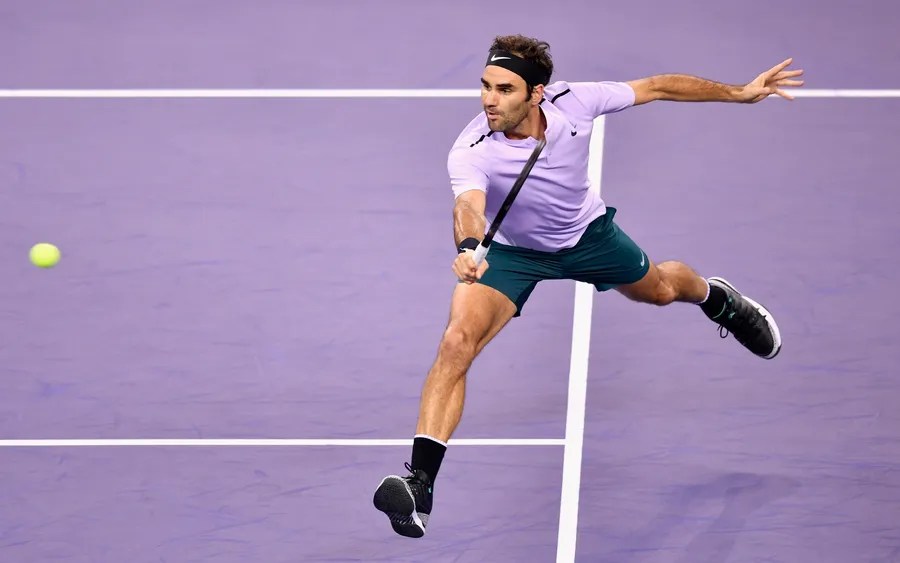
Grace in the balletic kinaesthetic sense that Roger has in abundance. Take almost any picture of him playing (with the above being an example) and it is cover-worthy for a book or article for its “picturesque” quality. No other tennis player has that grace in abundance – we merely resemble scuffling sportsmen while Roger, a dancer. But what exactly constitutes Roger’s gracefulness?
Surely, all the aforementioned qualities – poise, nimbleness, effortlessness – and if we were to list down more – his stature, his appearance, his gait, his gaze, and whatever constituent parts unique to his body and contributive to his beautiful playing style – but in all these discrete qualities we will not find the whole truth to his grace.
Instead, a unifying force must also be considered which we can also term “grace”, but in the sense of “charis”, a Greek word denoting – among other things – “giftedness” or in the vernacular, “talent”. Thus, talent is what unifies all the stylistic features of Roger’s play style and is what enables him to execute at will all that he posseses, intends and finds graceful. Is this talent innate or merited through hard work? Fundamentally, the former, for how can one merit something one does not already have or bestowed upon? Even Spud Webb who is the shortest man (5’7) to be able to dunk a basketball in the NBA must have a body and mind to work with in the first place to be able to jump 46 inches vertically off the ground (for how many 5’7 men you know desire to execute a slam dunk to such an extent as to train for it – and succeed?). And apart from innate athletic ability, talent is also highly personalised (stylistic) which makes Roger one-of-a-kind: not even Grigor Dimitrov who most resembles Roger’s playing style is exactly similar.
Grace then, is to my mind the key to Roger’s alluring playing style which surpasses all, and we have only to rightfully respond to grace with – yet another aspect of – “grace” (Latin. grātia), that is gratitude.


 withaestheticeyes.com