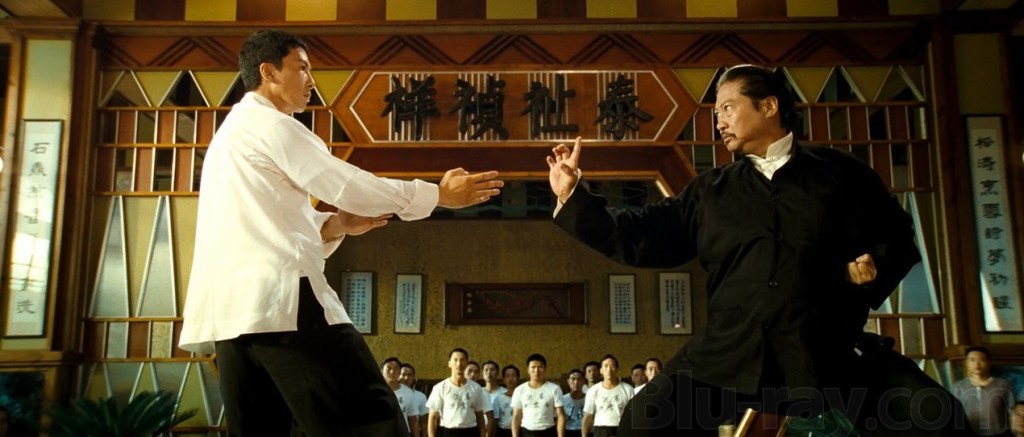
Category: Artistic Beauty

  • Ip Man 2: The Prevails of Mercy and Respect

    Ip Man 2: The Prevails of Mercy and Respect

    In this film inspired by a true story, Wing Chun martial arts master Ip Man (Donnie Yen) and his family are moving from Foshan, China, to Hong Kong, where Ip aspires to create a school so that he may teach his fighting techniques to a new generation. However, he finds resistance from an asthmatic Hung Ga master named Hong Zhen Nan (Sammo Hung). Soon, Ip is drawn into a treacherous world of corruption as well as a fateful showdown with a merciless boxer known as the Twister (Darren Shahlavi).

    (Source: Rotten Tomatoes)

    Thanks to Netflix streaming services, I am able to revisit old films and “Ip Man 2” (2010) has been a delight to watch again – and now to write about. At this point of writing, the “Ip Man” series has been concluded and although I have yet to watch the final series in the franchise (i.e. “Ip Man 4”), I would say hitherto “Ip Man 2” is my favourite (with it also amassing 6 wins and 10 nominations in film awards).

    Certainly, it has lived out to its expectation of an action-martial arts movie with not just believable fight scenes set in an array of settings (from the rooftop to a fish market to a boxing ring) but also choreography that is creative, fresh but also true to the varied Chinese martial art forms (the table duel scene between Ip and the other kung fu masters comes especially to mind here). In short, the quality and quantity of kung fu action in this film will undoubtedly satisfy – at least – lovers of kung fu cinema, but if you are not one, there remains still another reason to watch and that is its heart.

    “Ip Man 2” remains one of the few movies that inspires me to be a better person, and it achieves that through – no surprise here – Ip, the protagonist, as a model of mercy and respect (among other virtues of admiration such as his simplicity, modesty, prudence, and sincerity).

    “To say that a person is merciful, is like saying that he is sorrowful at heart (miserum cor), that is, he is afflicted with sorrow by the misery of another as though it were his own.”

    – Thomas Aquinas

    How was Ip portrayed as merciful? There are quite many examples in the film ranging from the trite – in his aiding of the ailing laundry lady to hang out laundry; in his concession to his disciples’ demands to postpone paying their fees due to financial strain – to the unexpected, particularly in his lenient dealings with his retaliatory disciples who ended up costing Ip his martial arts studio place.

    I must admit that I was taken aback as to how Ip dealt with his blameworthy disciples after the ruckus. Most of anyone (as I would expect) under Ip’s shoes would have reacted angrily, lashed out, and possibly evicted his disciples for causing an important part of his livelihood to be lost – not least, for their foolish acts. But instead Ip, sensing his disciples’ regret, gently dealt with them, only requiring them to transport his fighting equipment from the studio to his house.

    Is that merciful act of Ip rather ‘foolish’ and was it even effective? Was he being too merciful to the extent of being soft and thus open to being taken advantage of?

    Well, surely Ip or anybody could be taken advantage of for his mercy but also consider this: mercy shown-sown could also win, soften and mould the hardest of hearts (as with the case of Shun Leong, Ip’s charismatic but troublesome lead disciple), enoble, and also in turn merit mercy for ourselves (“Blessed are the merciful, for they shall receive mercy” teaches Jesus of Nazareth).
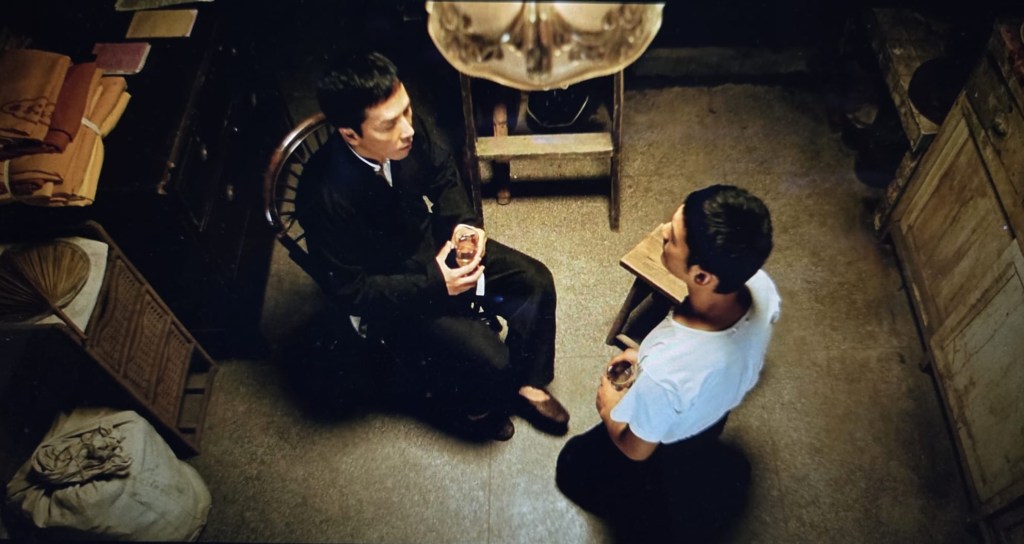
    Shun Leong apologising to Ip Man in a scene (Photo capture)

    But what of respect?

    “Respect for the human person proceeds by way of respect for the principle that everyone should look upon his neighbor (without any exception) as another self, above all bearing in mind his life and the means necessary for living it with dignity.”

    – Catechism of the Catholic Church (no. 1931)

    Two scenes in particular stood out for me in the exemplification of respect in Ip.

    The first is the Ip-masters duel where the dignity of the competitors are upheld through bows (with the martial salute), formal addresses (“___ shi fu”, “Qing”), and deferential behaviour (“Thank you for letting me win”; not displaying excessive joy upon victory). The etiquette evinced in the Ip-masters duel is beautiful to witness no matter of it possibly being labelled as “old fashioned” or “overly formal” – no, courtesy and formality has its place and function in promoting respect that is both beautiful and needful (consider that rules not only prevent disorder but also shape character). Incidentally, the scene also led me to think of other such analogous display of respect present in other sports such as Sumo Wrestling, and tennis (Roger Federer‘s restrained behaviour in the Wimbledon locker room with Andy Roddick in sight come to mind here) which are pleasing to behold and hear about.

    The other scene has to be the closing fight-and-speech sequence of Ip’s battle with Twister where respect (and also mercy) was beautifully expressed in deed (not annihilating Twister as the now-defeated boxer had previously done to master Hong) and in word:
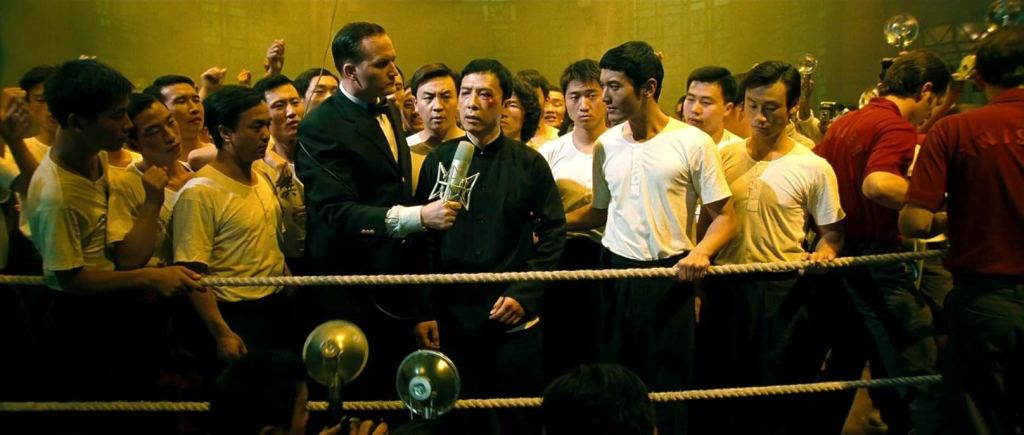
    Ip making his speech after the win against Twister (Image Source: IMDb)

    “By fighting this match, I’m not trying to prove that Chinese martial arts is better than Western boxing. What I really want to say is though people may have different status in life, everybody’s dignity is the same. I hope that from this moment on, we can start to respect each other.”


    Mercy and Respect,
    Though “soft” as they look,
    More than muscles and brawn,
    Are stronger yet still.

    To break hard hearts,
    And to offer respite,
    To enoble others,
    And to keep the peace,
    Are all up for grabs,
    To all and at once.

    Will you thus join,
    in the prevails of both,
    Simple yet strong,
    Mercy,
    Respect.

    *Featured Image Source: blu-ray.com


  • One-Punch Man (ワンパンマン ): A Rude Awakening in the Face of Greatness

    One-Punch Man (ワンパンマン ): A Rude Awakening in the Face of Greatness

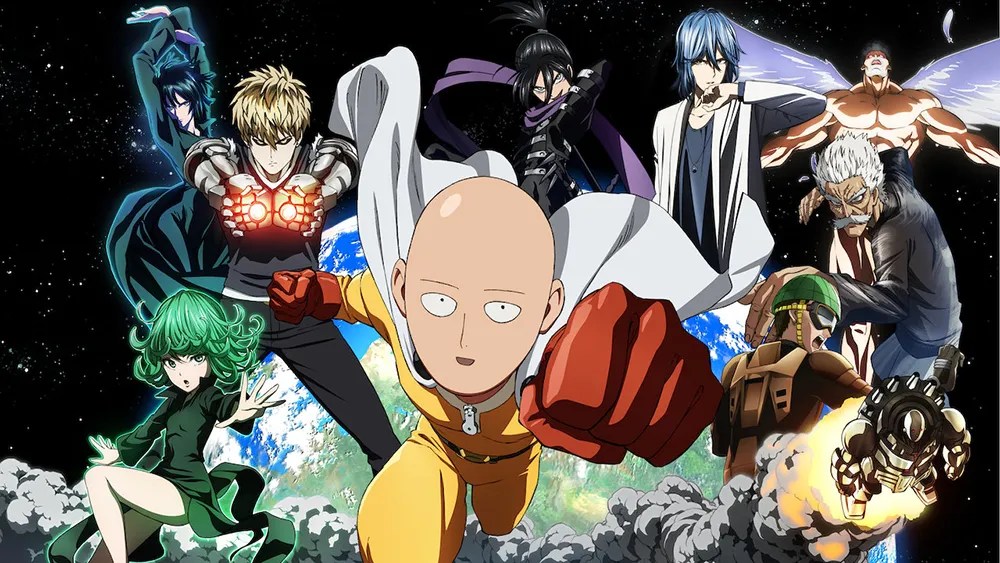
    The story of Saitama, a hero that does it just for fun and can defeat his enemies with a single punch.

    (Source: IMDb)

    Beyond the awesome action scenes, successful comedic moments, attractively rich characters, and, not to mention, a most interesting premise of a human hero with a 100% guaranteed K.O. rate against all his opponents, lies the curious dealings in the face of greatness. Saitama, our hero-protagonist (i.e. the “One Punch Man”), for one, struggles to come to grips with his overwhelming power, not in terms of harnessing it, but in living with it; in making sense of it:

    “I became so powerful, no one is able to beat me. I’m the hero I dreamed of becoming. So, what is this? What’s wrong? Why does my heart feel so empty?… As the days pass, my emotions grow more distant… I used to feel all kinds of emotions whirling inside me when I fought. Fear. Panic. Anger. But now, all I need is one punch to end it.” (Season 1, Episode 1)

    Such – if I may call it so – is the gradual-sudden awakening to the vanity of pursuing greatness (in whatever form: strength, pleasure, riches, experiences, etc) for gain’s sake. For like mist the reward is temporal and thin – it quickly vanishes and leaves one wanting. The inner turmoil that our hero Saitama experiences, needless to say, is neither unique nor fictional for it speaks to our real human ambitions and our universal desire for fulfilment.

    What happens when we reach the top of our ambitions? Strangely, they always disappoint. With Saitama, it was the loss of the kick he got out of battling with monsters – “I mean, I just do the hero-thing as a hobby. In other words, as long as I get a kick out of it, that’s all I care about.” (Season 1, Episode 1). And in a similar vein, so it is with us who thought, “If only I could be the best _______ (teacher, salesman, doctor, etc)/have this ________ (car, house, girl, etc)/be in _______ (Japan, Hawaii, Maldives, etc) I will be fully satisfied”, but – alas – only to be left cheated-empty after we obtain.

    So what is the way forward for Saitama? What is the way forward for us seekers and pursuers of happiness? Perhaps the clue lies in another character in the anime:

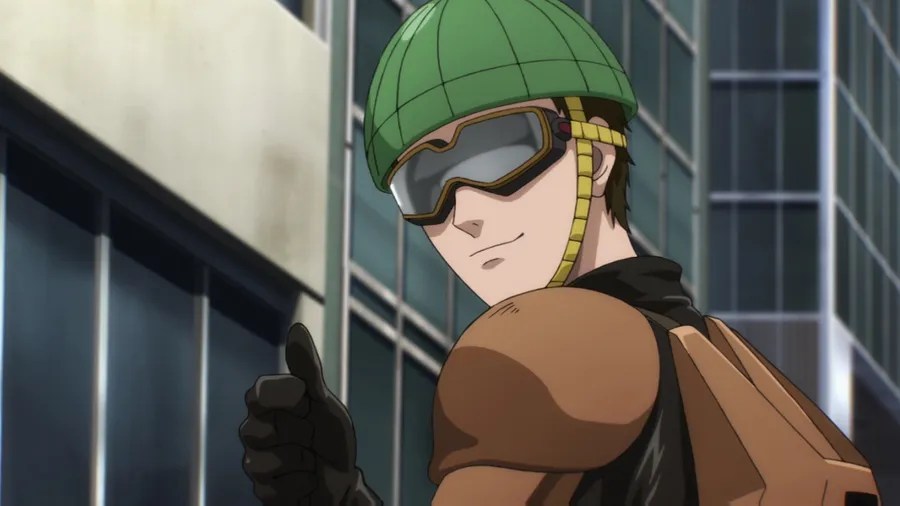
    Mumen Rider

    Mumen Rider (無免ライダー)

    Unlike Saitama, Mumen Rider is weak in strength (he is a Class C hero, the bottom tier of the heroes strength classification) but surpassingly big in heart. He is what you would call a true hero, one who valiantly lives out fully his hero-identity, come what may. A particularly moving scene involving him facing the outrageously evil and powerful “Deep Sea King” beautifully exemplifies this – his dialogue goes:

    “No one expects much from me. They think a Class C hero won’t be much help. I know that better than anyone! I’m not good enough for Class B. I’m weak. I know that much. No one has to tell me I have no chance of beating you. I already know that! And yet I must try. It’s not about winning or losing! It’s about me taking you on right here, right now!” (Season 1, Episode 9)

    Did Mumen Rider the “Cyclist for Justice” prevail? (Go find out!) But for our purposes, the more pressing question is, “Is he fulfilled as a hero?” It seems so in the way he is portrayed as a friendly, well-respected (even among stronger heroes), and enthusiastic hero in spite of his evident weakness (he possess no superhuman strength like the other heroes who are in the upper classes). But why so, despite his failures, weakness and glaring limitations to get stronger? And would he be fulfilled as well if, say, he were to be granted Saitama’s celestial prowess?

    I would believe so for (here lies the reveal) he knows who he is – as a hero – and lives as a hero is meant to be, and therefore – believe it or not – he is great. A square peg in a round hole will never be a good fit, and so does one who has misplaced expectations on what is meant to be, say, a policeman, businessman, wife, and ultimately (we cannot escape this) a human being. Is happiness-greatness found in the abundance of our possessions, achievements, escapades, or rather in being who we are meant to be? So: what does it mean to be human, and – so too our specific vocations – a(n) _______ (etc)? This is the question we need to answer if satiation and greatness is what we want – and also for our hero, Saitama. I end here with (another character:) King’s prompt to Saitama:

    “What does it take to be the greatest hero? Is it an unwavering sense of justice, the power to fight, or the courage to withstand adversity? Until you seek the answer, you have no time to be bored.” (Season 2, Episode 9)

    Featured image source: Variety
    “Mumen Rider” source: Wallpapers.com

  • TsumaSho (妻小): A Warm Imagining of Coping with Loss

    TsumaSho (妻小): A Warm Imagining of Coping with Loss

    A widower (Keisuke) and his daughter (Mai) encounter a girl (Marika) claiming to be the reincarnation of the man’s late wife (Takae), eventually accepting her into their lives as they grapple with their grief.

    (Source: IMDb with my add-ins in parenthesis)

    There is a lot to like about this 2022 drama which is based off a manga series, “Tsuma, Shougakusei ni naru.” (妻、小学生になる。) by Murata Yayuu (村田椰融). From the interesting plot (which admittedly triggered a tad bit of discomfort, awkwardness, and anxiety initially, wondering how exactly the interaction between Keisuke and Takae-Marika will unfold without bordering on paedophilia – which thankfully was not the case due in no small part to:), fabulous acting [the expressive eyes of Maida Nono (Takae-Marika) and Shinichi Tsutsumi (Keisuke) especially is of much help here), beautiful backdrops, fitting soundtracks – not to mention, the hauntingly poignant nostalgic theme song, 灯火 (“Tomoshibi” – listen to a sample below) – wholesome content, and satisfying ending, this drama left me feeling warm, touched and thinking…

    “TsumaSho” addresses a very real experience common to all (or rather to those who dare to love) and that is, loss, along with its bitter corollary, grief. “To love at all”, C.S.Lewis writes in The Four Loves, “is to be vulnerable. Love anything and your heart will be wrung and possibly broken.” And broken it was for Keisuke and Mai (and also Yuri, Takae’s brother) at the loss of Takae, their beloved wife-mother(-sister), through a sudden tragic car accident. I have not personally (as of yet) encountered catastrophic losses but I have known (and read about) others who have loss their precious children and parents. Like Keisuke and Mai, a loss seems to be as much the death of the dearly departed as well as of the living left-behind – a part of us dies, it seems, and if we are not careful, that death can indeed consume our whole being leaving us, as Keisuke and Mai was for a decade, as zombies – body alive, dead in the inside, dead to others (even towards Mai, his daughter).

    Is that the best way to live after experiencing loss? We (outsiders) see that it is not, and the creator of the story seems also to share that point of view. And thus miraculously, in the unfolding of time, Takae is “reborn” into the form of an elementary school student who, after overcoming initial resistance, injects a gargantuan dose of hope and vitality into the lives of Keisuke and Mai, which is – to be said – totally expected, for the family is reunited again (albeit in a strange configuration)!

    But then begs the question: Is the panacea to grief-and-loss only found in the resurrection and reunion with loved ones? To which I answer: Yes, if only the reunion is permanent – and we know of no such reality here on Earth – even those, historically who were resurrected (e.g. Lazarus of Bethany) will eventually die again (Christ not withstanding). And (spoiler alert:) so it is with Takae-Marika in the story, which lends itself to further probing: Is the second and third loss of Takae-Marika any less painful than the initial loss of Takae? It seems not for Mai and Keisuke, and perhaps the pain is intensified after having tasted the goodness of reunion again. So what is the remedy then? What made Keisuke and Mai live differently after the subsequent losses? As you might conjecture, not resurrection per se, but hope – and also love: in living.

    Hope in seeing a loved one again is the universal cry and desire of all who have lost. But it is not enough, and also funnily enough, hope needs to be kindled by love to make hope “alive”. I could imagine one without hope-and-love echoing the words of Keisuke, “I’ll just keep living the same uneventful days. And then I’ll die. I don’t need anything. No hobbies, no purpose, no dreams. No new life… My life since Takae (or _____) left is just an afterthought.” – or why not commit suicide to hasten the process of seeing a loved one, or identifying with him/her through complete death (as in Romeo and Juliet)? One could argue that such renouncement of life is an expression of love too – in honour and remembrance of the dearly departed. But is that wholly love? Is that hope – or rather resignation? Is that what the (your) dearly departed other wants (as with Takae-Marika’s many attempts for Keisuke, Mai and Yuri to live)? Is that what those alive and close to you need? Is that what life is – with death having the final say? God forbid, no.

    “Death has been swallowed up in victory. Where, O death, is your victory? Where, O death, is your sting?” – St Paul

    And so till then,
    We humbly beseech,
    That we grief – but not without hope,
    That we hope – but not without love,
    That we love – not for mere remembrance,
    But instead we live – we live,
    For love knows no end —

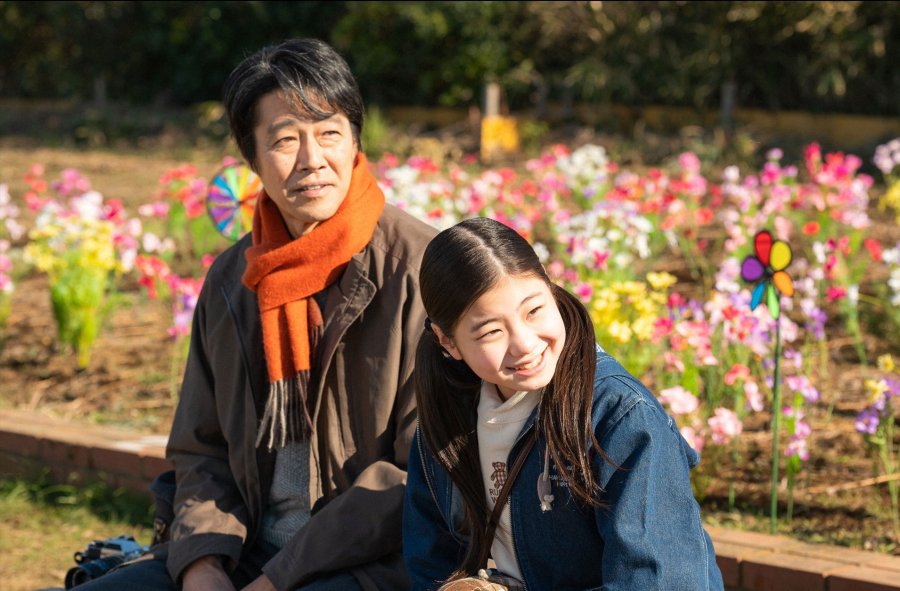
    Scene from Japanese drama, suma, Shougakusei ni naru. (妻、小学生になる。) by Murata Yayuu (村田椰融).
    Scene from Episode 10 (photo capture)

    Feature Image Source: MyDramaList