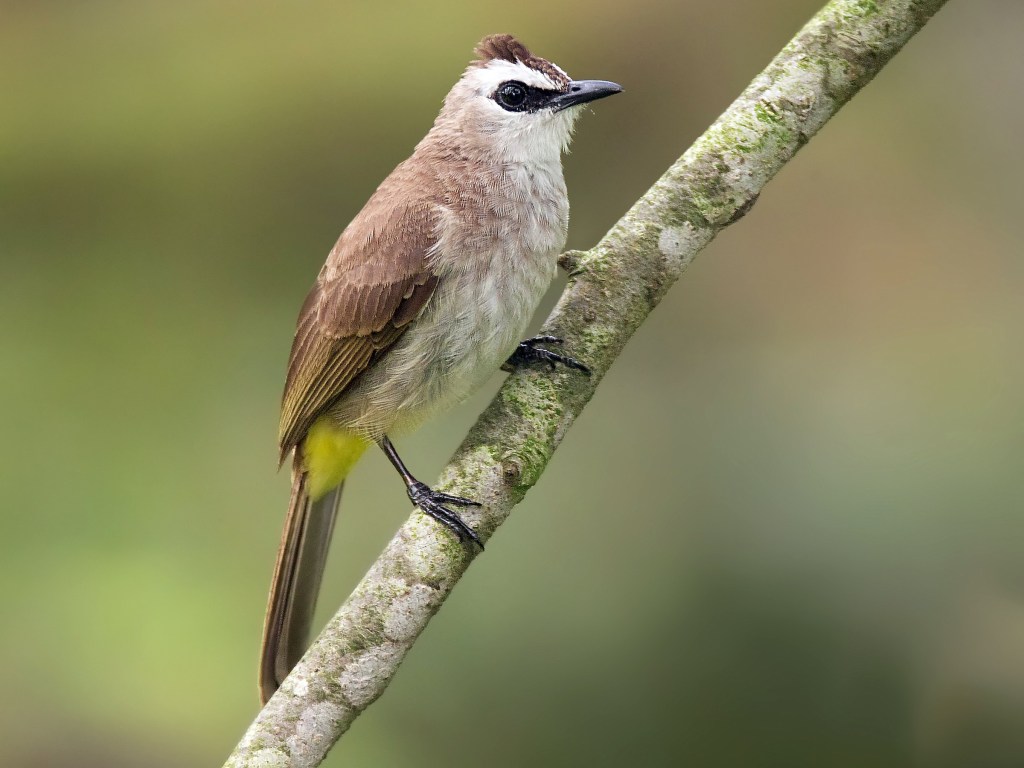
Who would have thought in the thick of estates – where I reside – could be found not mere men, but birds in array –
The common Myna, of course, And the Pigeons as well. Flamebacks. Hornbills. Koels. Parakeets. Doves. Orioles. Sparrows. Munias. – Yes they are here (to my disbelief) As patrons and neighbours – a motley crew – Who add to the interests, with their sightings and sounds, Of those who see past The generic bird.
Now there is one fowl Which is not in the list, Intentionally left out To particularise. What is she called?
I wonder…
Is it a sparrow? (which at first I thought) Though brown, it is not. A tad too large? Yes, definitely too large. A broad elongated tail? Can’t be a sparrow. And look – Wow! – its head! Look at its head! Handsomely white with a streak of black, The kind which garners second looks. But that’s not all. For its movement is flamboyant, Resembling a dancer – a flamenco dancer, to be exact – In her long-laced dress, she Hops, Turns, Switches, Suspends
– and Swoosh!
Alas, she is gone! Her beauty missed. The one held dear but gone with the wind.
When will I see her – again and again? Oh. But what is she called? Yes, what is she called?
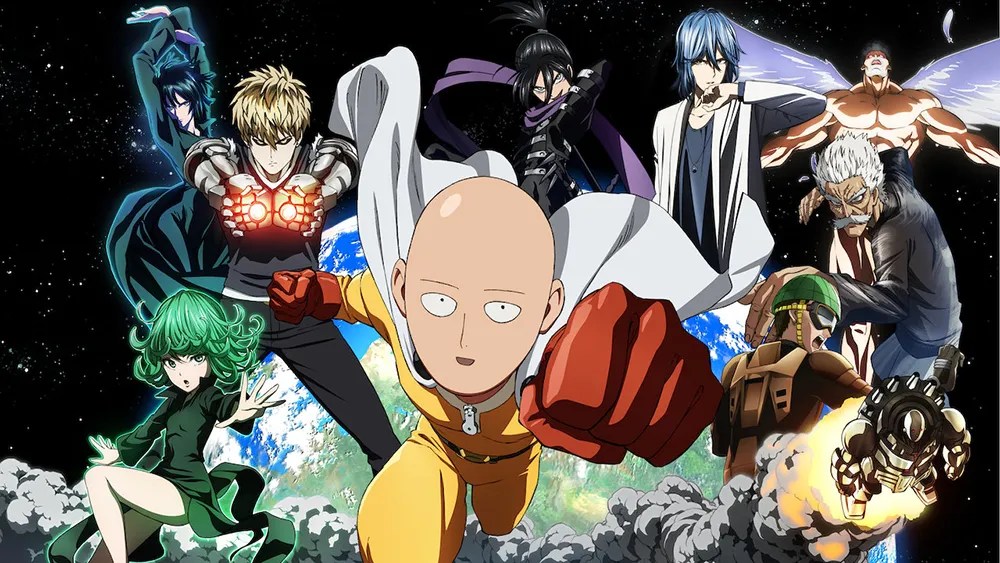
Beyond the awesome action scenes, successful comedic moments, attractively rich characters, and, not to mention, a most interesting premise of a human hero with a 100% guaranteed K.O. rate against all his opponents, lies the curious dealings in the face of greatness. Saitama, our hero-protagonist (i.e. the “One Punch Man”), for one, struggles to come to grips with his overwhelming power, not in terms of harnessing it, but in living with it; in making sense of it:
“I became so powerful, no one is able to beat me. I’m the hero I dreamed of becoming. So, what is this? What’s wrong? Why does my heart feel so empty?… As the days pass, my emotions grow more distant… I used to feel all kinds of emotions whirling inside me when I fought. Fear. Panic. Anger. But now, all I need is one punch to end it.” (Season 1, Episode 1)
Such – if I may call it so – is the gradual-sudden awakening to the vanity of pursuing greatness (in whatever form: strength, pleasure, riches, experiences, etc) for gain’s sake. For like mist the reward is temporal and thin – it quickly vanishes and leaves one wanting. The inner turmoil that our hero Saitama experiences, needless to say, is neither unique nor fictional for it speaks to our real human ambitions and our universal desire for fulfilment.
What happens when we reach the top of our ambitions? Strangely, they always disappoint. With Saitama, it was the loss of the kick he got out of battling with monsters – “I mean, I just do the hero-thing as a hobby. In other words, as long as I get a kick out of it, that’s all I care about.” (Season 1, Episode 1). And in a similar vein, so it is with us who thought, “If only I could be the best _______ (teacher, salesman, doctor, etc)/have this ________ (car, house, girl, etc)/be in _______ (Japan, Hawaii, Maldives, etc) I will be fully satisfied”, but – alas – only to be left cheated-empty after we obtain.
So what is the way forward for Saitama? What is the way forward for us seekers and pursuers of happiness? Perhaps the clue lies in another character in the anime:
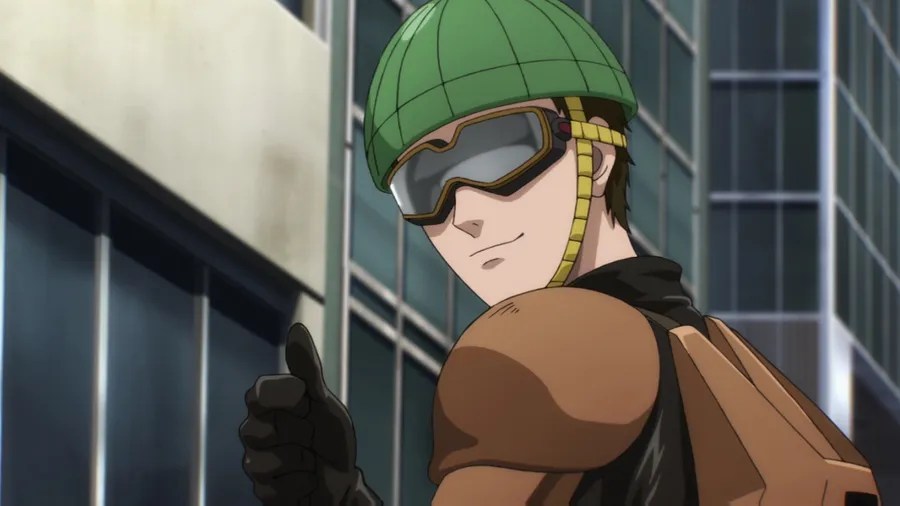
Mumen Rider (無免ライダー)
Unlike Saitama, Mumen Rider is weak in strength (he is a Class C hero, the bottom tier of the heroes strength classification) but surpassingly big in heart. He is what you would call a true hero, one who valiantly lives out fully his hero-identity, come what may. A particularly moving scene involving him facing the outrageously evil and powerful “Deep Sea King” beautifully exemplifies this – his dialogue goes:
“No one expects much from me. They think a Class C hero won’t be much help. I know that better than anyone! I’m not good enough for Class B. I’m weak. I know that much. No one has to tell me I have no chance of beating you. I already know that! And yet I must try. It’s not about winning or losing! It’s about me taking you on right here, right now!” (Season 1, Episode 9)
Did Mumen Rider the “Cyclist for Justice” prevail? (Go find out!) But for our purposes, the more pressing question is, “Is he fulfilled as a hero?” It seems so in the way he is portrayed as a friendly, well-respected (even among stronger heroes), and enthusiastic hero in spite of his evident weakness (he possess no superhuman strength like the other heroes who are in the upper classes). But why so, despite his failures, weakness and glaring limitations to get stronger? And would he be fulfilled as well if, say, he were to be granted Saitama’s celestial prowess?
I would believe so for (here lies the reveal) he knows who he is – as a hero – and lives as a hero is meant to be, and therefore – believe it or not – he is great. A square peg in a round hole will never be a good fit, and so does one who has misplaced expectations on what is meant to be, say, a policeman, businessman, wife, and ultimately (we cannot escape this) a human being. Is happiness-greatness found in the abundance of our possessions, achievements, escapades, or rather in being who we are meant to be? So: what does it mean to be human, and – so too our specific vocations – a(n) _______ (etc)? This is the question we need to answer if satiation and greatness is what we want – and also for our hero, Saitama. I end here with (another character:) King’s prompt to Saitama:
“What does it take to be the greatest hero? Is it an unwavering sense of justice, the power to fight, or the courage to withstand adversity? Until you seek the answer, you have no time to be bored.” (Season 2, Episode 9)
It might strike you as strange that I’m writing about something so banal as a bag. For to some, bags, in the barest sense, are merely upgraded “plastic bags” which one can sling on one or both shoulders and/or hand carry from one locality to another, and therefore it seems inane and absurd – even ludicrous – to dedicate a post about it. Still others who are perhaps not quite extreme utilitarians in their regard of bags (but nevertheless made of the same ilk:) who actually like the look of bags and might even own lots of them but somehow never look past them as being mere show-pieces for status, or trophy-rewards of one’s merit, will probably also be surprised at such a post dedicated to a bag. And then there are those in which the description, “bag lovers”1 (that is, loving bags – in all its functionality and design – for its own sake), truly applies, who alas might resonate with what I have to share here.
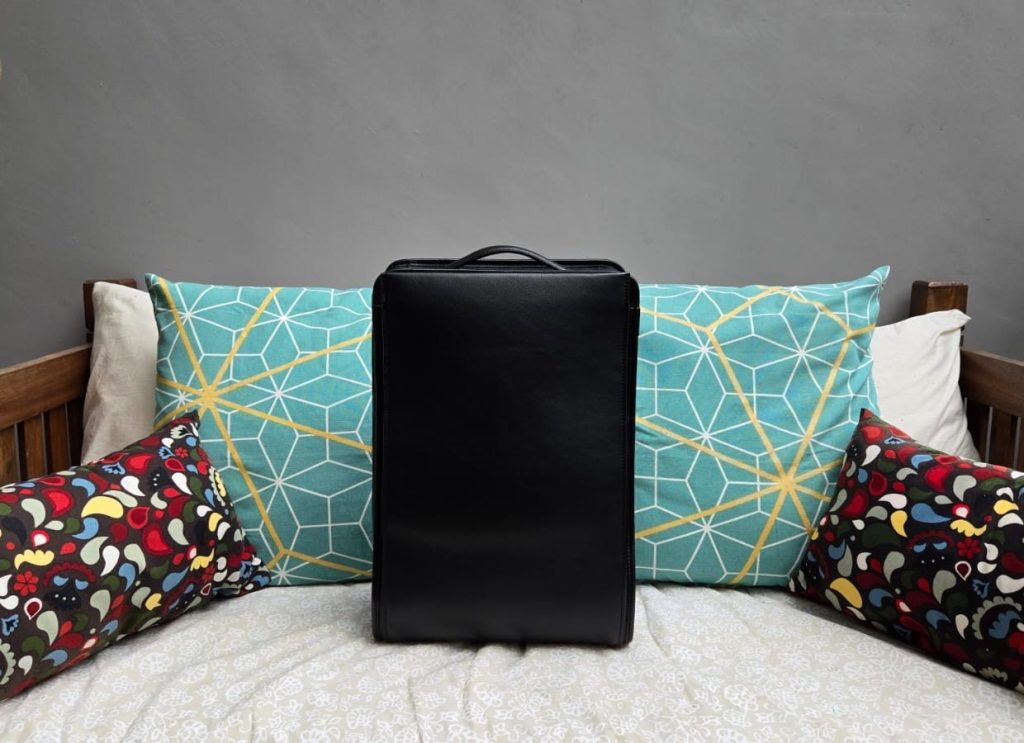
While the adage, “big gifts come in small packages” remains valid, so too, in my case, that big gifts can also come in plain packages2. I received the gift in a rather thin simple greyish blue draw-string bag, and the bag itself at cursory glance was also plain-looking. It was black, oblong and boxlike in shape (see picture above) which – to be clear – I actually like, but it wasn’t until I really examined and begun to use it days later that I grew to love it, and as it turns out, I can say without reservation that it is the best bag I have owned my entire life.
The first thing I love about the bag is the way it feels: the bag is fashioned out of full leather of varying kinds – with the exception of the screws, zips and hooks which are made out of polished metal with a dark grey hue. The straps, edges, handle, buckles(!) and the back and bottom area are made up of smooth and “cushiony” leather, while the rest of the bag is clothed with a coarser leather that is also so pleasurable to touch. In fact, the whole bag is a tactile heaven and touching it became so instinctual that I was called out by my bemused and amused friends for my frequent “caressing” (their words) of my bag (embarrassing but I did managed to defend my actions and got them to feel it for themselves, hah)!
Another cause for love is the bag’s exquisite craftsmanship. Although minimalistic in design, it is clearly evident that there is much thought and dedication that went into the crafting of it. Try as hard as you may, one cannot spot a flaw within and without. From the sturdy zipper which zips seamlessly (and elicited in me the feeling of assurance that it will remain so for years to come), to the careful selection of leather parts and meticulous stitching, down to its integrative nylon(?) interior, it is hard not to agree – even for non-experts (such as myself) – that it is a well-made bag in every sense of the word.
And finally, the look of it, namely its plainness or simplicity that is so appealing to me. The bag looks “clean” with neither patterns or prints nor even any brand logo! And it has just two compartments – one at the front and the back other. How then can such a simple look be appealing – much less “so appealing”? Well, for one, I am a fan of minimalistic designs and my love for simplicity-elegance matches the bag’s “clean” aesthetic. And another is its fittingness of the constituent parts to form a bag of strong shapeliness (rectangular in this case) with “soft” features (the angularity is overcome by rounding off the edges) which altogether exudes dignity and “inviting-ness” as both an art piece and a bag – akin to the Randoseru, ランドセル, in beautiful simplicity and functionality.
What then is the result of this exquisite marrying of form and function in a bag? Well: awe, delight, gratefulness, and a desire to cherish and praise!
Well done, Tsuchiya Kaban! And thanks again my Dear Friend for the gift. ありがとうございました!:)
Although I classify myself as a “bag lover” I am by no means the collector/aficionado type but I write on nevertheless for the desire to write about this bag is pressing. ↩︎
But certainly not without the sweet thoughtfulness and radical generosity of my giver who is my close friend of whom I am very grateful for (much love, bro). ↩︎
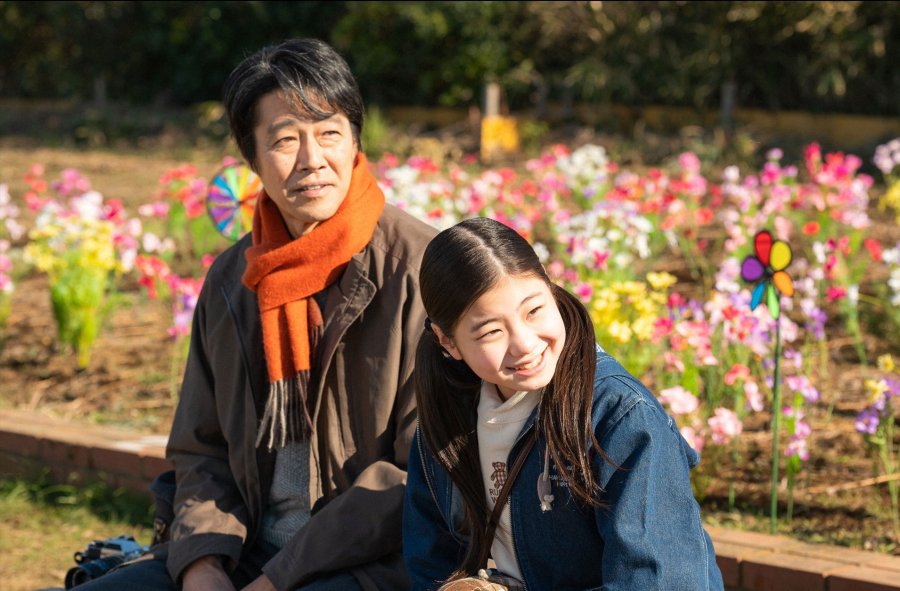
A widower (Keisuke) and his daughter (Mai) encounter a girl (Marika) claiming to be the reincarnation of the man’s late wife (Takae), eventually accepting her into their lives as they grapple with their grief.
There is a lot to like about this 2022 drama which is based off a manga series, “Tsuma, Shougakusei ni naru.” (妻、小学生になる。) by Murata Yayuu (村田椰融). From the interesting plot (which admittedly triggered a tad bit of discomfort, awkwardness, and anxiety initially, wondering how exactly the interaction between Keisuke and Takae-Marika will unfold without bordering on paedophilia – which thankfully was not the case due in no small part to:), fabulous acting [the expressive eyes of Maida Nono (Takae-Marika) and Shinichi Tsutsumi (Keisuke) especially is of much help here), beautiful backdrops, fitting soundtracks – not to mention, the hauntingly poignant nostalgic theme song, 灯火 (“Tomoshibi” – listen to a sample below) – wholesome content, and satisfying ending, this drama left me feeling warm, touched and thinking…
“TsumaSho” addresses a very real experience common to all (or rather to those who dare to love) and that is, loss, along with its bitter corollary, grief. “To love at all”, C.S.Lewis writes in The Four Loves, “is to be vulnerable. Love anything and your heart will be wrung and possibly broken.” And broken it was for Keisuke and Mai (and also Yuri, Takae’s brother) at the loss of Takae, their beloved wife-mother(-sister), through a sudden tragic car accident. I have not personally (as of yet) encountered catastrophic losses but I have known (and read about) others who have loss their precious children and parents. Like Keisuke and Mai, a loss seems to be as much the death of the dearly departed as well as of the living left-behind – a part of us dies, it seems, and if we are not careful, that death can indeed consume our whole being leaving us, as Keisuke and Mai was for a decade, as zombies – body alive, dead in the inside, dead to others (even towards Mai, his daughter).
Is that the best way to live after experiencing loss? We (outsiders) see that it is not, and the creator of the story seems also to share that point of view. And thus miraculously, in the unfolding of time, Takae is “reborn” into the form of an elementary school student who, after overcoming initial resistance, injects a gargantuan dose of hope and vitality into the lives of Keisuke and Mai, which is – to be said – totally expected, for the family is reunited again (albeit in a strange configuration)!
But then begs the question: Is the panacea to grief-and-loss only found in the resurrection and reunion with loved ones? To which I answer: Yes, ifonly the reunion is permanent – and we know of no such reality here on Earth – even those, historically who were resurrected (e.g. Lazarus of Bethany) will eventually die again (Christ not withstanding). And (spoiler alert:) so it is with Takae-Marika in the story, which lends itself to further probing: Is the second and third loss of Takae-Marika any less painful than the initial loss of Takae? It seems not for Mai and Keisuke, and perhaps the pain is intensified after having tasted the goodness of reunion again. So what is the remedy then? What made Keisuke and Mai live differently after the subsequent losses? As you might conjecture, not resurrection per se, but hope – and also love: in living.
Hope in seeing a loved one again is the universal cry and desire of all who have lost. But it is not enough, and also funnily enough, hope needs to be kindled by love to make hope “alive”. I could imagine one without hope-and-love echoing the words of Keisuke, “I’ll just keep living the same uneventful days. And then I’ll die. I don’t need anything. No hobbies, no purpose, no dreams. No new life… My life since Takae (or _____) left is just an afterthought.” – or why not commit suicide to hasten the process of seeing a loved one, or identifying with him/her through complete death (as in Romeo and Juliet)? One could argue that such renouncement of life is an expression of love too – in honour and remembrance of the dearly departed. But is that wholly love? Is that hope – or rather resignation? Is that what the (your) dearly departed other wants (as with Takae-Marika’s many attempts for Keisuke, Mai and Yuri to live)? Is that what those alive and close to you need? Is that what life is – with death having the final say? God forbid, no.
“Death has been swallowed up in victory. Where, O death, is your victory? Where, O death, is your sting?” – St Paul
And so till then, We humbly beseech, That we grief – but not without hope, That we hope – but not without love, That we love – not for mere remembrance, But instead we live – we live, For love knows no end —
As it tends to be with human beings, and by extension, fish hobbyists, I, too have particular predilections towards certain things, people, and, in this case, fishes, in a world – mind you – that is filled with other good things. So why this particular fish, the Corydoras? But first, an introduction:
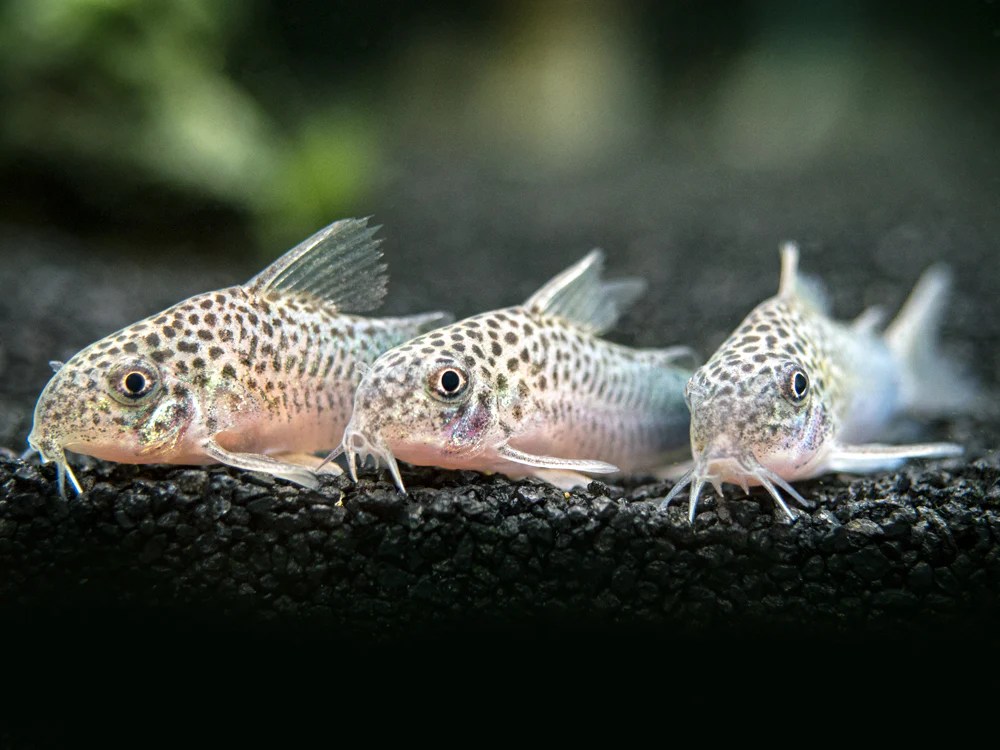
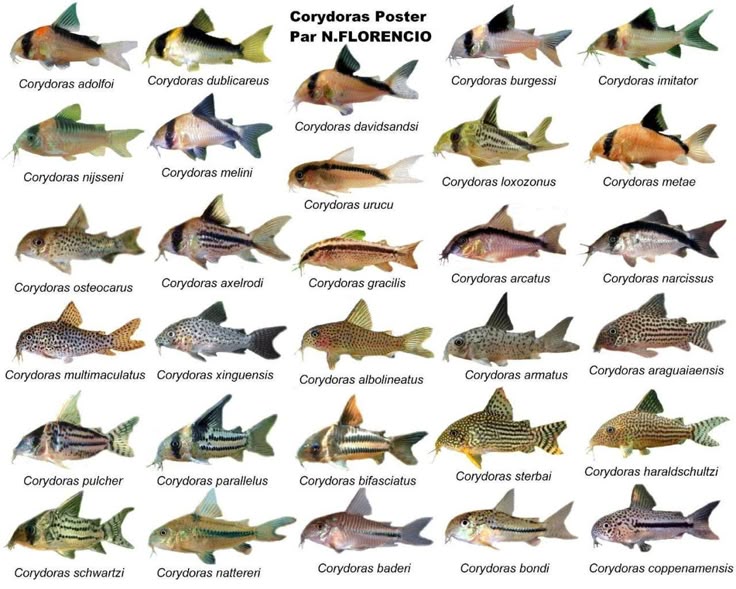
Corydoras (in Greek: kory = helmet; doras = skin) is a genus of freshwater catfish native to South America, with a body filled with bony plates instead of scales (hence the name attributed to it), and like most (if not all) catfish, they posses “whiskers” or “barbels” attached to their mouths. They are primarily bottom dwellers and schooling fishes, whose diet consists of aquatic invertebrates and algae in the wild. As of yet, there are over 160 recognized species with some several hundreds still unspecified. Here is a small sample of different species in the genus:
I cannot remember exactly when my first encounter with the “Corys” (as I like to call them) was but it must have been sometime when I was thirteen/fourteen years old, happily tagging alongside my Father, who was and still is, an active fish hobbyist, to fish shops and eventually having them graced my home aquarium. And so it seems, my love for them has not faded since then…
Corydoras, lovely and small, Adorned with garbs of, beauty bizarre – spots, stripes, blotches, and bars – Who would have thought could come from bone plates? Whiskers, notwithstanding, are what to expect, But O so wise they make you look. And perhaps you are, in your distant stares, With eyes enlarged and rolling about – A penny for your thoughts is what I’ll give!
Resting and rummaging, you seem also to do, But hardly alone you do those things. Never one for one-upmanship, Harmony you prize in your social life, Receiving, accepting, all who are near – in leisure, in search, and in fe(a)stal joy!
What is more delightful than – a Cory? – two, three, no, I say more! Beauty in numbers is found in them, Akin to a tapestry, vibrant and right, Is what you will see in Corys-in-schools!
Praise be to Corys, and Nature alike! For pleasures we know not if not for them. And may we not ask, “Why it is so?” Then perhaps the reply: “Just enjoy and be”. Or maybe you’ll hear, With open hearts, “It is I who create and knows you well.”
Corydoras, Lovely and small, Is the pet fish of, My desiring.
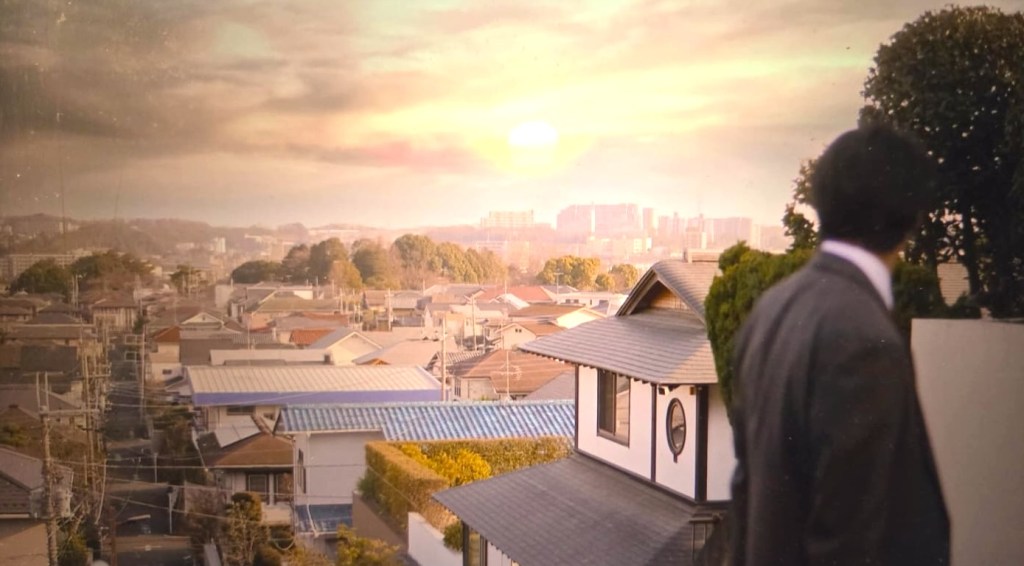
If you were to ask me which area of Singapore is my favourite, I would unhesitatingly reply the “East” but particularly Tampines, Simei, and Pasir Ris. If you were to probe further to ask why do I fancy the “East”, my reply would be because of the unique bucolic “homey” vibe it exudes. Could it be due to a biased preference since I have been living in the “East” all my life? Possibly, but I could also list down objective reasons for my preference such as its interesting circular streets, landscaping, open spaces, lower rise buildings (due to its close proximity to the airport) enabling one to see more of the skyline, and also its organicity and “homeliness” – which, sad to see, is fast dissipating due to frenetic (even vulgar) development in a utilitarian world.
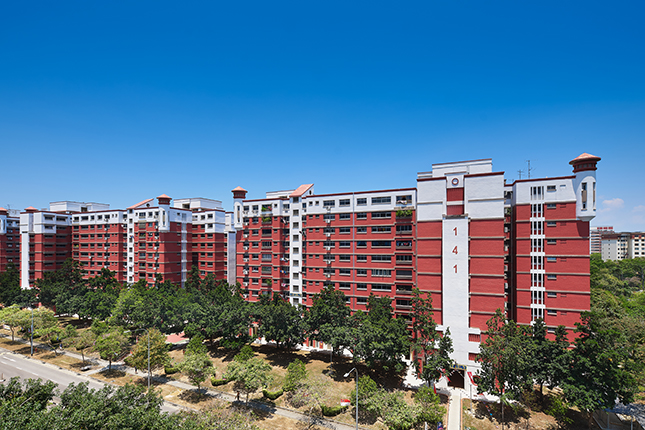
But gloom aside, I would like to highlight and commemorate one prime vestige of such organicity evinced in – what I would call – the “good old flats” of Pasir Ris.
Back in 2022, I had a serendipitous encounter with the “Pasir Ris Heritage Trial” while researching on places in Singapore to explore as part of my fulfilment of a module in teacher-college (National Institute of Education) which I eventually embarked on. That solo trip and showcase after (through an artefact which we have to create – which is made available below) led me to delve deeper into the architecture of the old public housing flats.
Having spent most of my childhood in Pasir Ris, those flats were certainly not alien to me and I had always found them attractive but never wondered why until then. Coming off the trail, I was blown away by the intentionality, coherence and fittingness that went into the intricate designs of the flats as well as its landscaping based on a particular theme unique to the identity and history of Pasir Ris, that is, the “seaside resort” theme – for Pasir Ris was near the beach and had multiple beachfront hotels in the past. And in that trial I witnessed with my own eyes, the artist’s (dare I say) loving intents in features such as:
“lighthouse-shaped turrets formed by columns of balconies and grille patterns inspired by traditional tropical basket-weaving designs… void decks and precinct boundary walls feature(ing) porthole-shaped openings, and flat windows and balconies are (being) framed within clam-shaped openings.” (source:Roots)
Needless to say, I was delighted and in all honesty a bit awestruck, not least with the amount of thought that went into the details but also discovering what it meant for buildings to have a “face” – a “soul”.
Roger Scruton, in his book The Aesthetics of Architecture mentions a kind of facelessness existing in modern edifices whose facades of windows simply mirrors their surroundings, lacking any soul or distinctiveness which is essentially anti-human flourishing:
“Vast and overbearing though the modern building types may be, they never acquire an air of permanence, but recreate the city as a frozen junkyard. Their raw functionality hurts the eye and the soul, for it speaks not of us and our right of dwelling, but of them. It is an anonymous they who built these things for inscrutable purposes that lie beyond our sympathies. In losing the reference to sacred architecture that inhabited our building types from the Greeks until the beginning of the twentieth century, we lose also our conception of the city, as a place where absent generations reside among the living, and the living room reside. The real cause of the decay of our inner cities, I believe, is the architecture that has killed them.” (PXII)
And sadly Singapore is not spared such a phenomenon: look around and notice the new housing developments (both private and public), are they not a far cry from the “good old flats of Pasir Ris” but instead reek of bland pungent functionality – resembling Le Corbusier’s vision of the house as a “machine for living in”?
No wonder I always felt “at home” in Pasir Ris (and other parts of Simei and Tampines) especially being in the presence of such “life-giving” architecture and landscaping borne out of the location’s historical roots and distinctive characteristics, and in the converse, a feeling of alienation and uneasiness in (regretfully) other (newer) parts of Singapore. It is my prayer and hope that the “Good Old Flats” of Pasir Ris might be loved, remain, and shine as a beacon and model for new (re-)developments to come. For Shalom!
What is it that makes the playing style of Roger Federer so easy and pleasing to the eye? What sets him apart from his peers in the aesthetic department?
Could it be his poise, ever balanced in his every stroke? Yes, but almost all the top players are perfectly balanced too. Could it be his nimbleness, light on the feet and breathtakingly agile? But the best movers in the game such as Lleyton Hewitt, Novak Djokovic, and Kei Nishikori (to name a few) share the same trait. Now, how about his “effortlessness”, the ability to make the game look so easy to play – and watch? Again, Roger is not unique in this area – Tomáš Berdych, for one, produces the most powerful strokes almost matter-of-factly as if he was merely rallying, with little hint of maximum exertion. Still another: David Nalbandian, the sole player to defeat the Big Three (Roger, Nadal, and Djokovic) at the same tournament, makes returning 200km/h serves – and with conviction to boot – seem like a breeze. So then, what aspect(s) that Roger possesses that differentiates him from the rest in terms of athletic beauty?
In a word, grace.
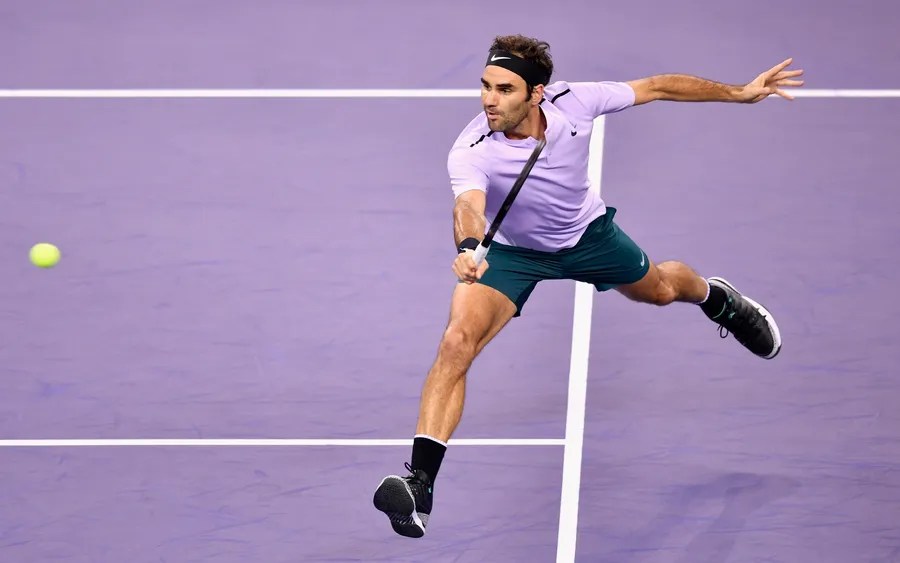
Grace in the balletic kinaesthetic sense that Roger has in abundance. Take almost any picture of him playing (with the above being an example) and it is cover-worthy for a book or article for its “picturesque” quality. No other tennis player has that grace in abundance – we merely resemble scuffling sportsmen while Roger, a dancer. But what exactly constitutes Roger’s gracefulness?
Surely, all the aforementioned qualities – poise, nimbleness, effortlessness – and if we were to list down more – his stature, his appearance, his gait, his gaze, and whatever constituent parts unique to his body and contributive to his beautiful playing style – but in all these discrete qualities we will not find the whole truth to his grace.
Instead, a unifying force must also be considered which we can also term “grace”, but in the sense of “charis”, a Greek word denoting – among other things – “giftedness” or in the vernacular, “talent”. Thus, talent is what unifies all the stylistic features of Roger’s play style and is what enables him to execute at will all that he posseses, intends and finds graceful. Is this talent innate or merited through hard work? Fundamentally, the former, for how can one merit something one does not already have or bestowed upon? Even Spud Webb who is the shortest man (5’7) to be able to dunk a basketball in the NBA must have a body and mind to work with in the first place to be able to jump 46 inches vertically off the ground (for how many 5’7 men you know desire to execute a slam dunk to such an extent as to train for it – and succeed?). And apart from innate athletic ability, talent is also highly personalised (stylistic) which makes Roger one-of-a-kind: not even Grigor Dimitrov who most resembles Roger’s playing style is exactly similar.
Grace then, is to my mind the key to Roger’s alluring playing style which surpasses all, and we have only to rightfully respond to grace with – yet another aspect of – “grace” (Latin. grātia), that is gratitude.
 withaestheticeyes.com