A walk in the shop – a chance encountering. Of crystals, apparel, and trinkets therein. “Unique”, I thought and was led to see.
It soon became clear where my focus was drawn: To stones arrayed in sundry sizes and forms, But largely it was their colours that charmed. To ascribe them mere red, yellow, and blue – or the other basic colours – Would be a great disservice, a travesty.
The blend, the mix, the textures, the shades, Result in a palette so rich as to alarm. For how can nature concoct Such art beyond words – In its intricacy, colour-symphony, and – dare I say – Its beauty – If it’s left to chance’s haphazard work?
Is it no wonder that crystals are linked To the spiritual realm though they be just rocks?
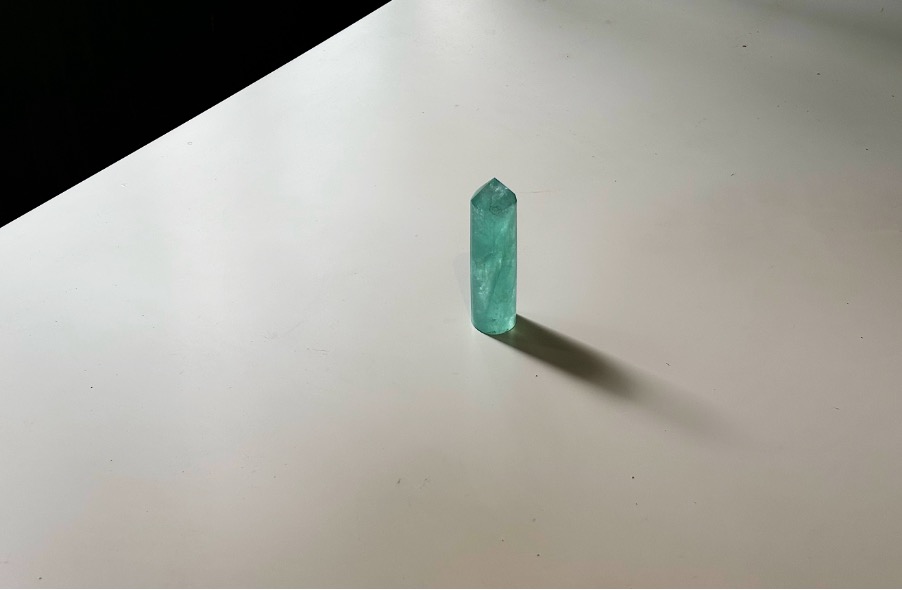
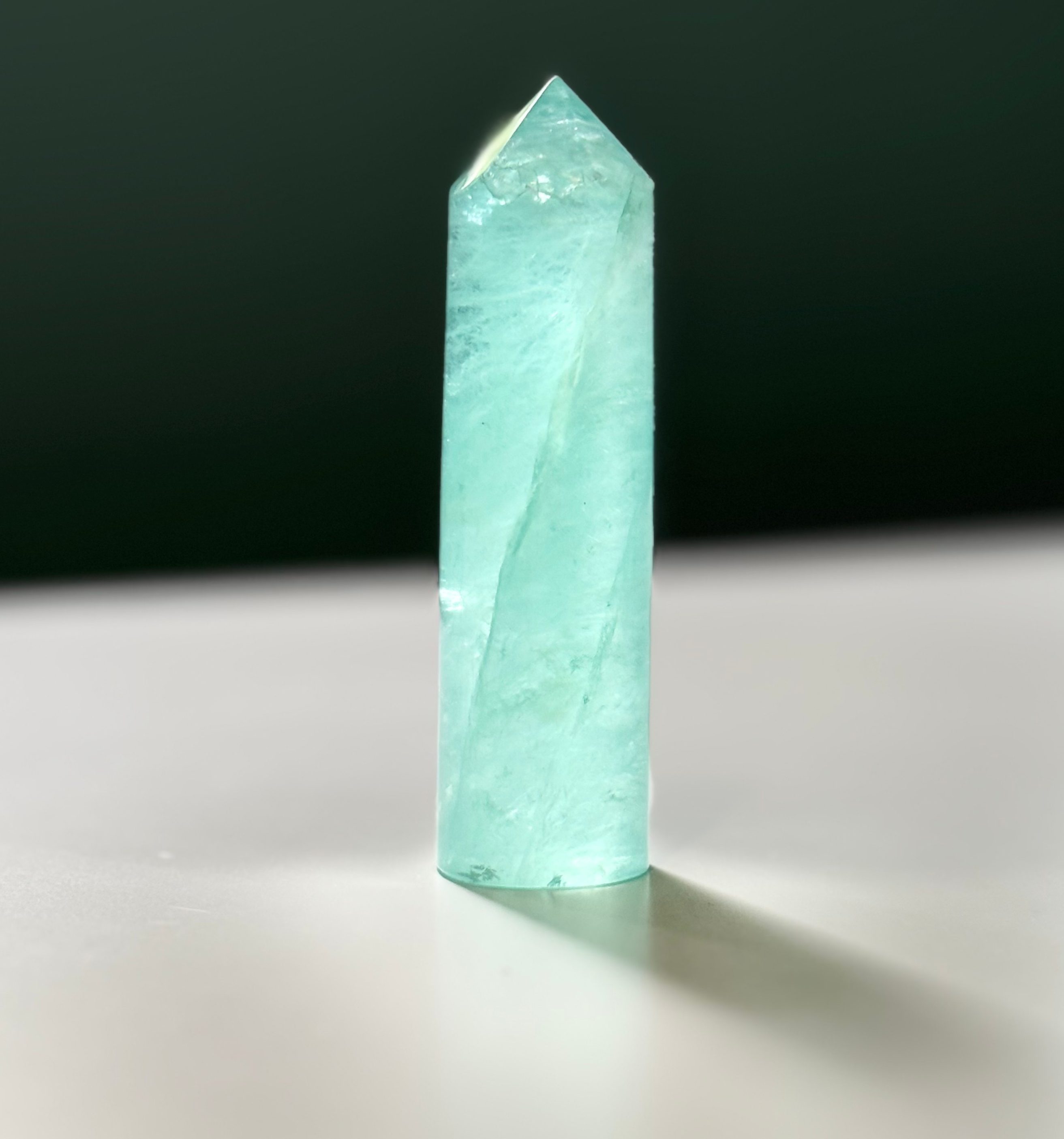
A walk in the shop – a chance encountering? I saw, I felt, but one caught my eye. The luminosity of it that transfixed me so. Its greenish flush that seems to radiate Is what you could call, Nature’s “glow-in-the-dark”. Aided by man’s handiwork, The form that results is unorthodox. Body cylindrical with pointed tip Appeals more to me than the x-sided tower.
A sense of awe and mystery it brings, A translucent green from an encasement of “frost”. Who knows what history that this rock contains? Except that it is now part of my life. Grateful I am to encounter and have, This fluorite tower, Luminescing Joy, a delight to hold –
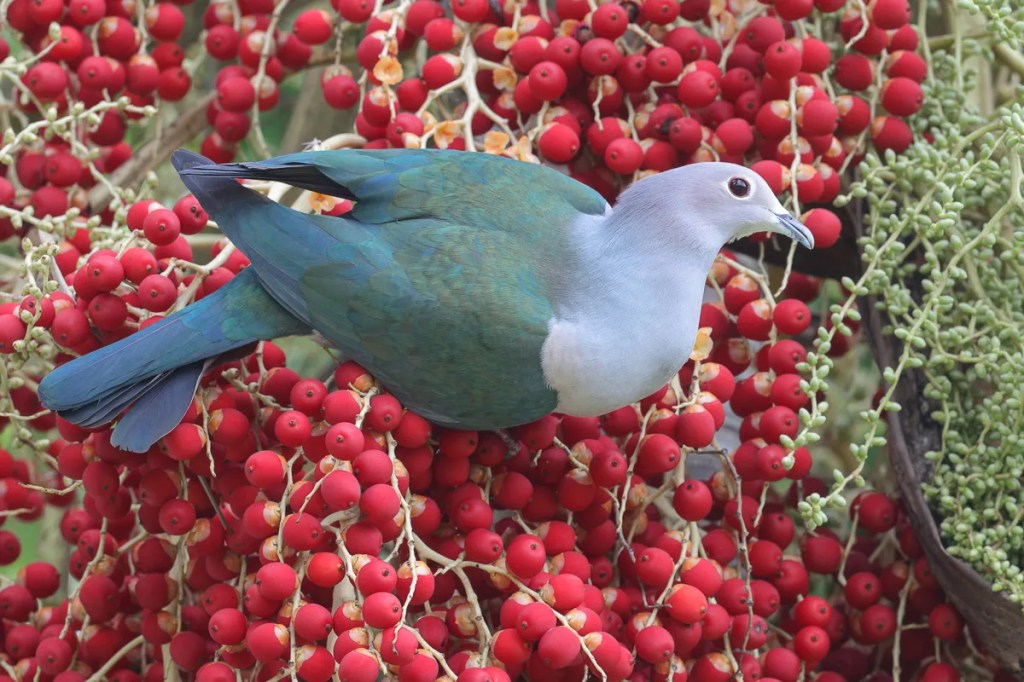
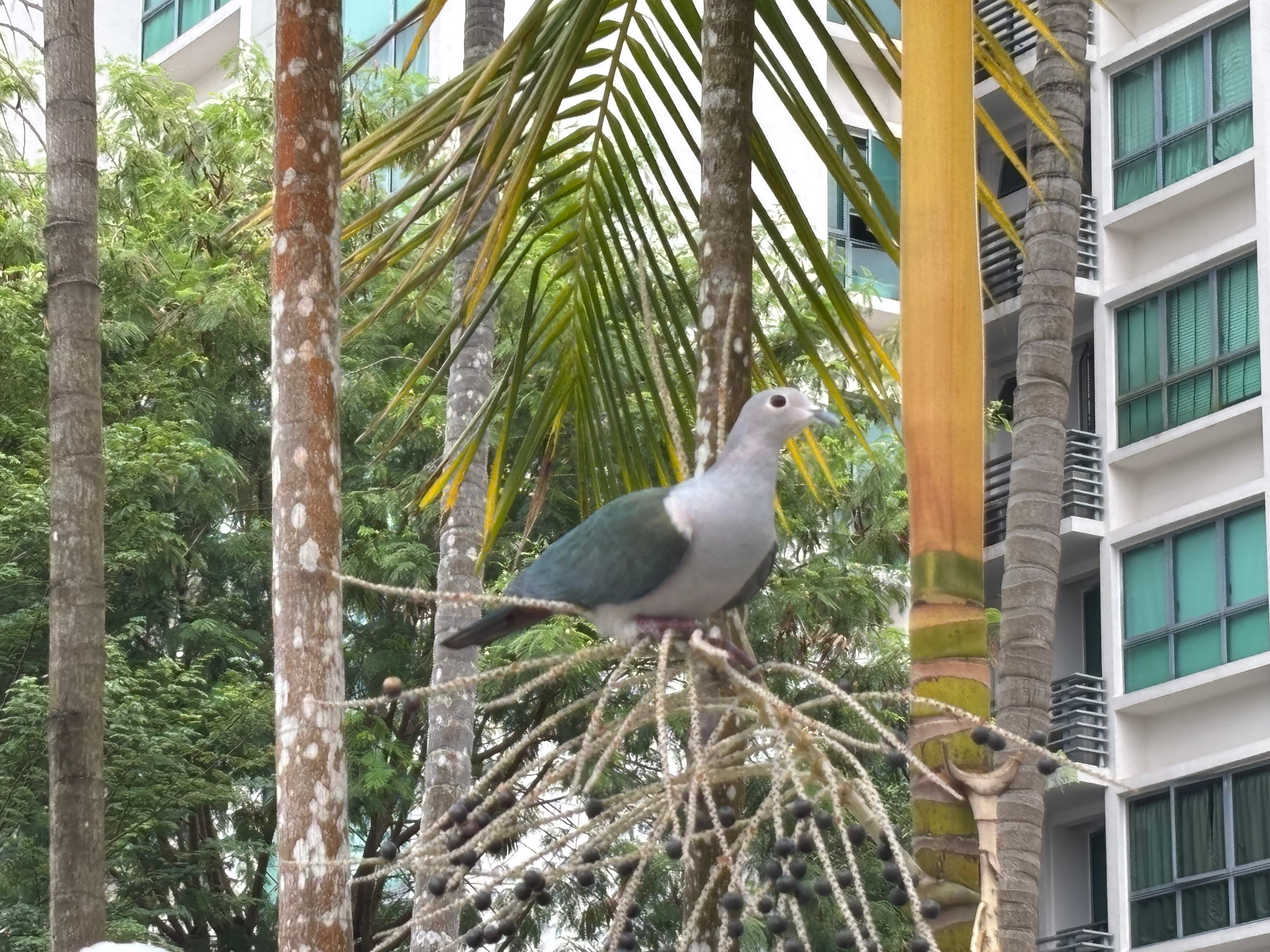
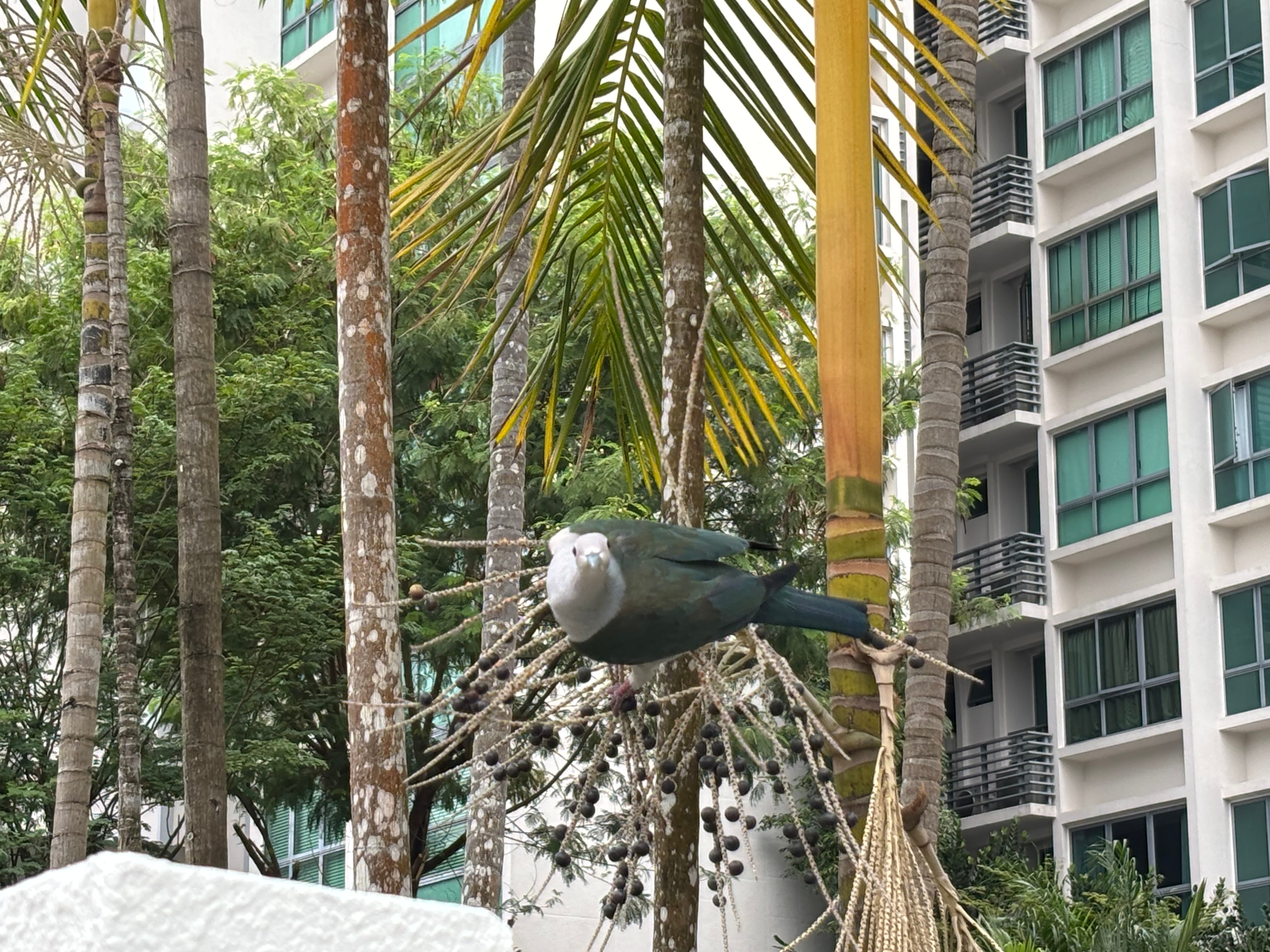
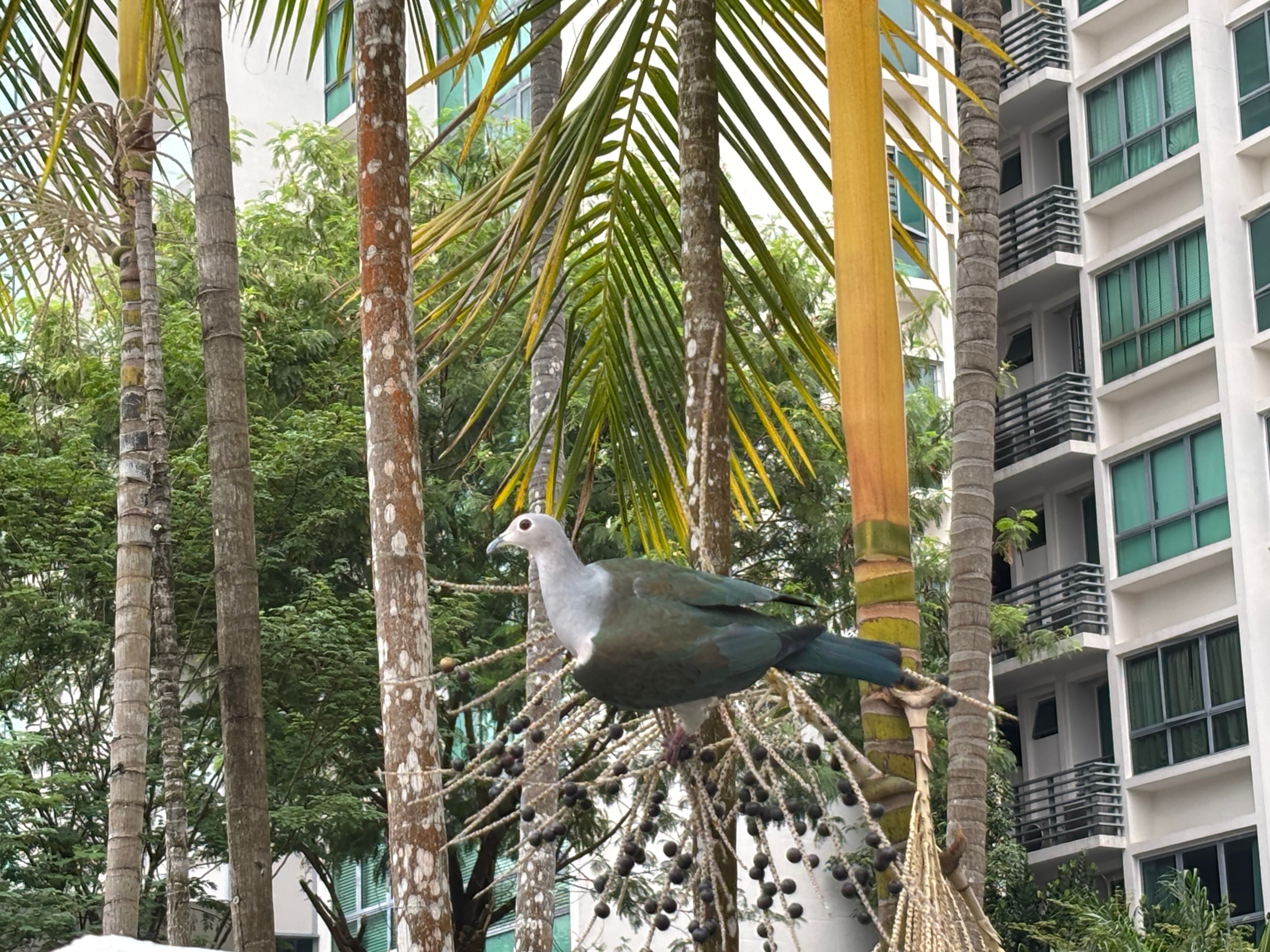
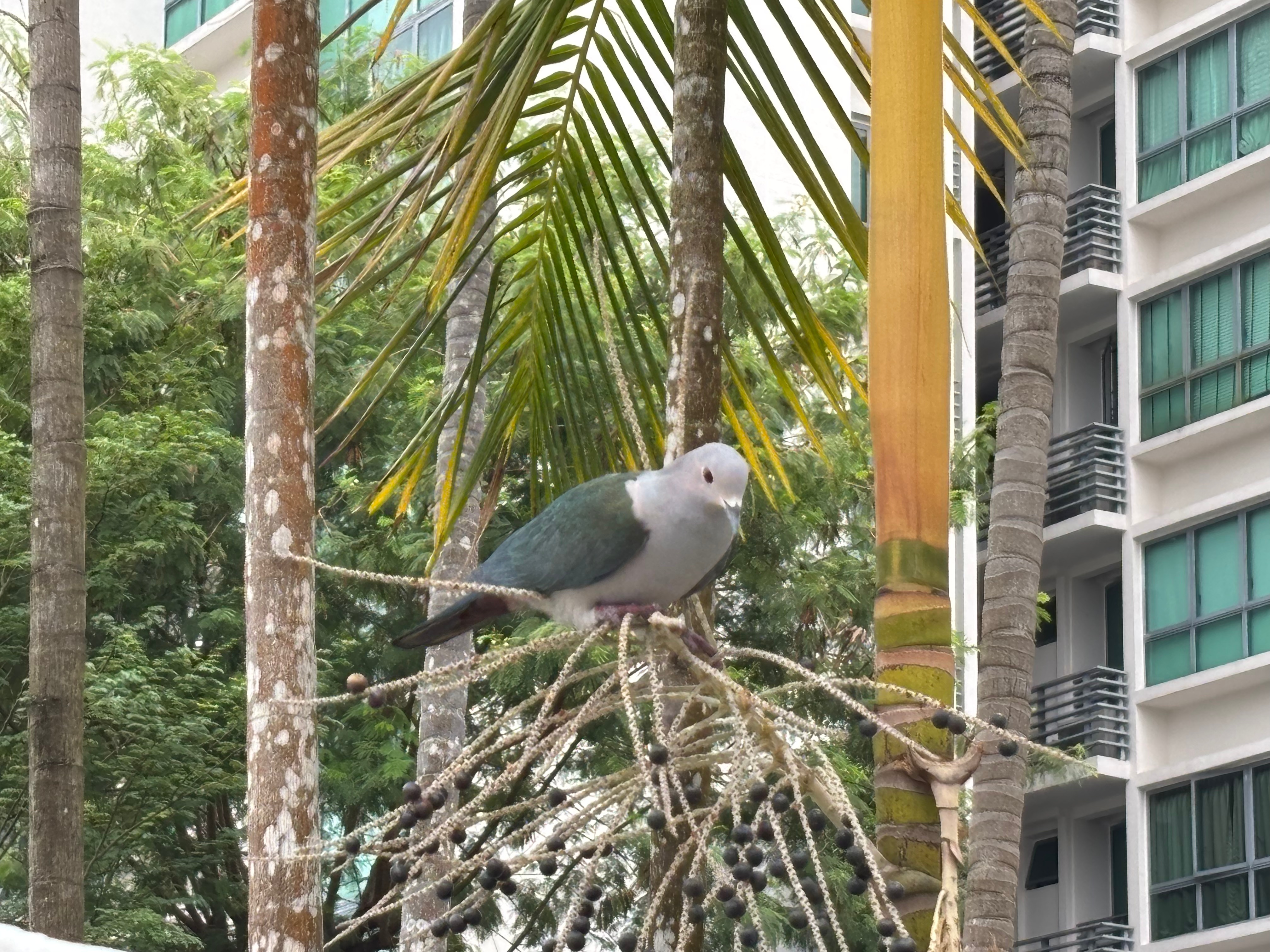
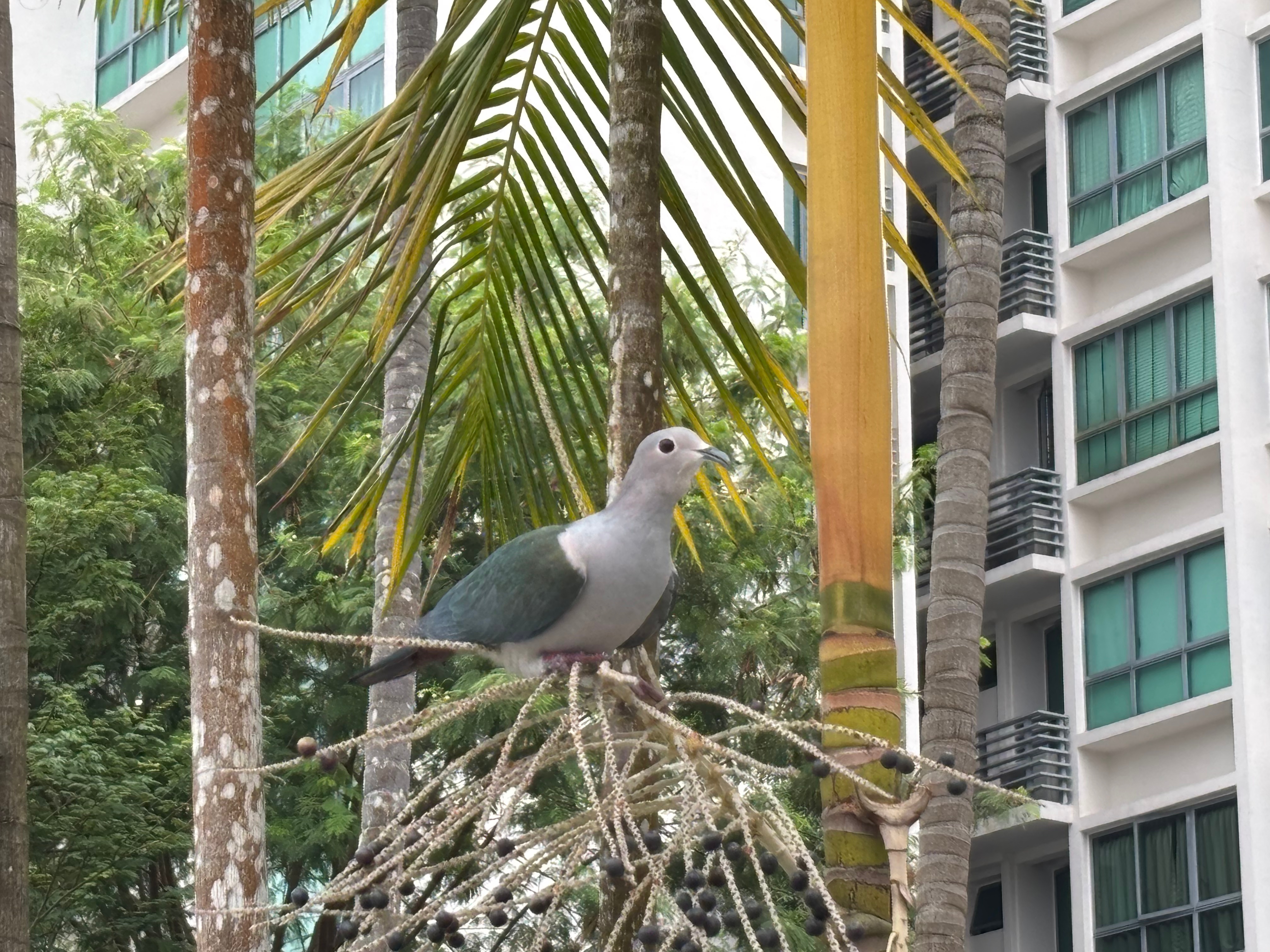
As serendipity would have it, I encountered this mysterious bird up close the other day:
To be clear, it was not the first time I have encountered it in where I live (Upper Changi) – I have spotted it before on the palm trees surrounding my condominium’s tennis court – but it is my first time beholding it within arm’s length while on my way to the bus stop.
Certainly, I was thrilled and paused to observe, being careful to keep my movements gentle lest I startle her.
“Majestic. Stately. Bright-eyed”, are adjectives that come to my mind when I looked. It was without a doubt a pigeon or a dove and had wing feathers resembling a peacock-green with its almost iridescent green which complementarily matched a light grey neck and pinkish feet. Her pupils are another sight to behold in its maroon-like tinge reflected in them. Intrigued by its presence, I felt an instinctual urge to wave at it, curious to see how she would respond, which to my relief – after a few shifts and turns – remained resolute in her position.
This time keeping my hands close to myself, I discreetly took some pictures and continued to watch and lo, and behold! She began feasting on the fruits – no wonder she stayed!
A sight to behold, A joy to watch, So trite a thing as some might mock, “A Bird? A Pigeon? Haven’t you seen one in your life?”
But if you heed not Presumption’s take, To bypass familiarity, and to still the rush. To pause. To look. To muse away –
And then you’ll see the magnificent fowl, Commonplace or rare, Our inhabitants of sky.
Each one unique, In colours – the obvious – In calls – sometimes pleasant – In temperament – the thrill!
So it is to witness the sight of one, The uncommon pigeon with the Greenish coat, Stout, Grey-neck, Red-eyes, With a sense of pomp, Whose name is fitting To how it is:
It will forever remain as one of my favourite places in Singapore insofar as my memory stays in tact, and undesirably but ineluctably, accompanying that memory, lies a deep grievance that such a treasure of a place is now gone – targetted, enveloped and destroyed into bits (yet again, as I see it) by commercial interests and utilitarian intents:
“Singapore’s only public library dedicated to the performing arts – library@esplanade – will close on June 30 (20231), and its collections and programmes will be moved to the National Library Building in the Bras Basah area… the move will allow it to centralise its arts resources in the heart of the Civic District, where they will be close to arts institutions and practitioners in the area…
The premises currently occupied by library@esplanade will be converted by Esplanade – Theatres on the Bay into arts and commercial spaces…” (Source: The Straits Times)
– as if a library is no more than a mere transferrable storage warehouse for books and resources, and place-making all but non-existent – even despised? Well, on the one hand, this should not be surprising for such is the natural outcome of a society that knows the price of everything but the value of nothing, where all interests are essentially utilitarian and economically motivated, where places exists primarily for the sake of efficiency, productivity, and – who are we kidding – profitability. And so, all who get in utility’s way will be wallowed up, dissolved, and remade into its image.
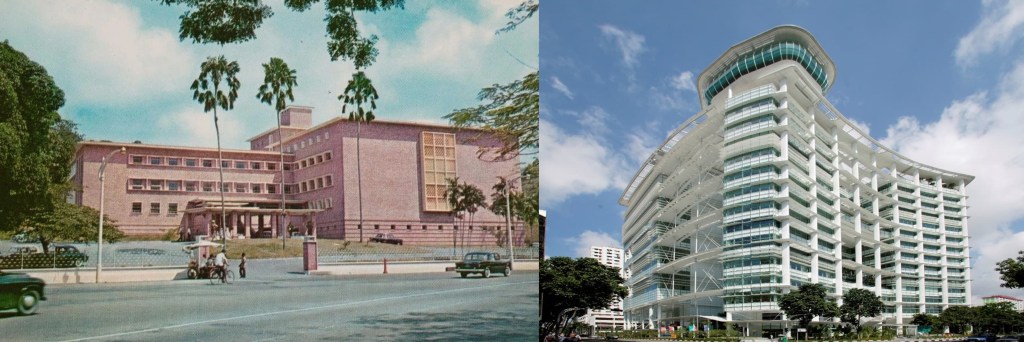
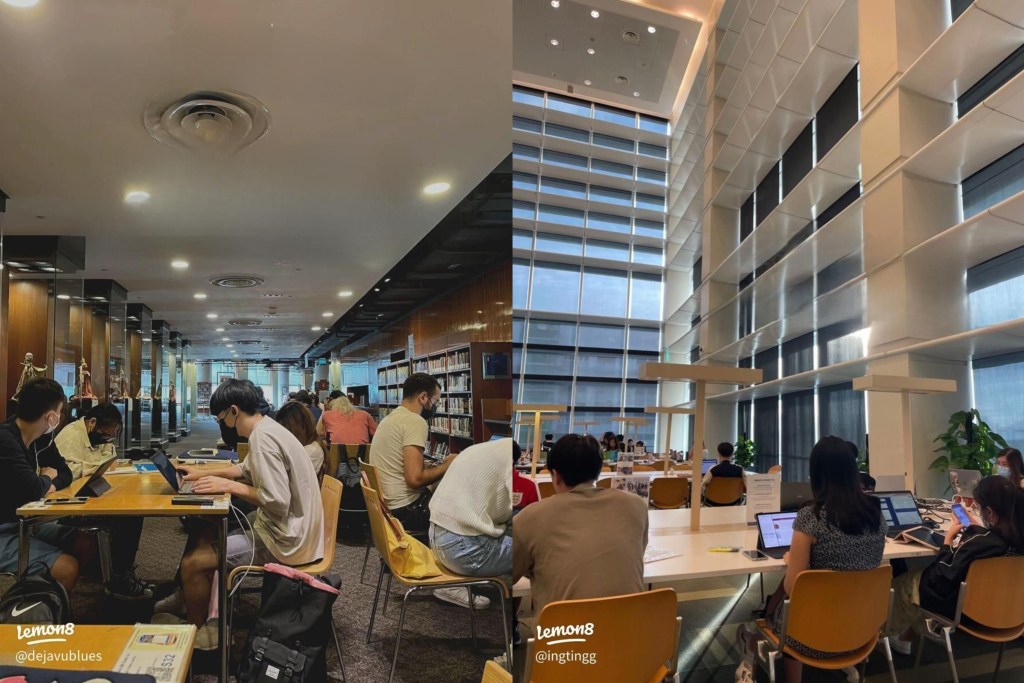
Is it no small wonder then that theNational library (yes Singapore’s flagship library) looks and feels atrociously sterile resembling a laboratory (or if you prefer, a learning laboratory) for rats and machines for production purposes rather than a warm and inviting space for learners to find solace, delight, and inspiration to explore, connect, and create? Look at the comparison between the exterior of the old National Library and the current, and then the interior of the current National library against the then-Esplanade Library:
The Rustic Charm of the Old National Library against the Sterile-looking “Learning-Laboratory” National Library of the present (Image sources: Roots and NLB) The ‘homeliness’ of the Esplanade Library of the past (left) against the laboratory-like tables of the present National Library (right) [Image source: Lemon8]
As it is, as mentioned, on the one hand, it should not be surprising to witness the failures of our country’s conservation efforts and declining quality of buildings for they merely reflect our culture’s core beliefs but yet on the other hand, in spite of one’s preparedness, the shock and sadness that result in actually losing a beloved (be it a person or place or anything for that matter) must be squarely acknowledged…
I know not when that I encountered the space, But pleasantly surprised was what I felt, “A library in the Esplanade? “Now that’s interesting.”
In curiosity’s trial I treaded along, Up the escalator and around I turned, Greeted by art which adorned the side-walls, Admiring-walking… I encounter an impasse – Or so I thought.
On the woody wall the engraving is there: “library@esplanade” to direct one’s path. And so I resumed walking along, an intriguing opening materialising before my eyes…
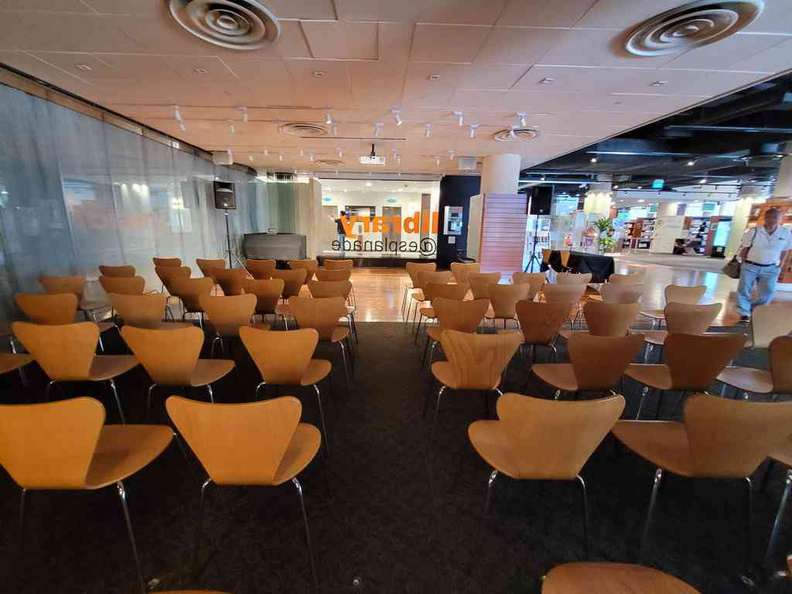
The entrance. Spacious, warm, and inviting. Clearly distinct from its paquet flooring, Extending around To the performance stage. A hallowed ground? A defined entry? A crossroad I say To decide the next route.
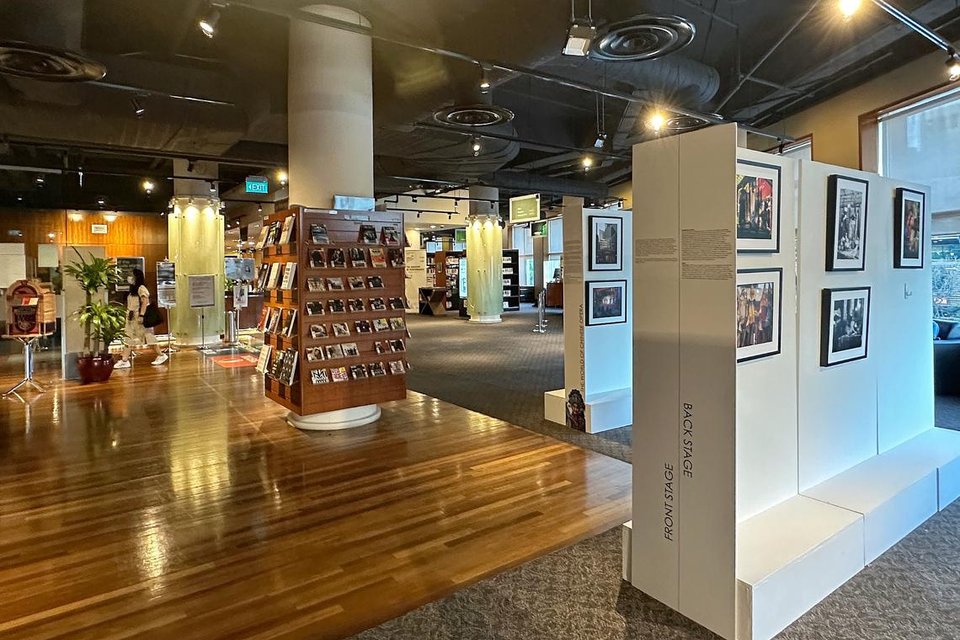
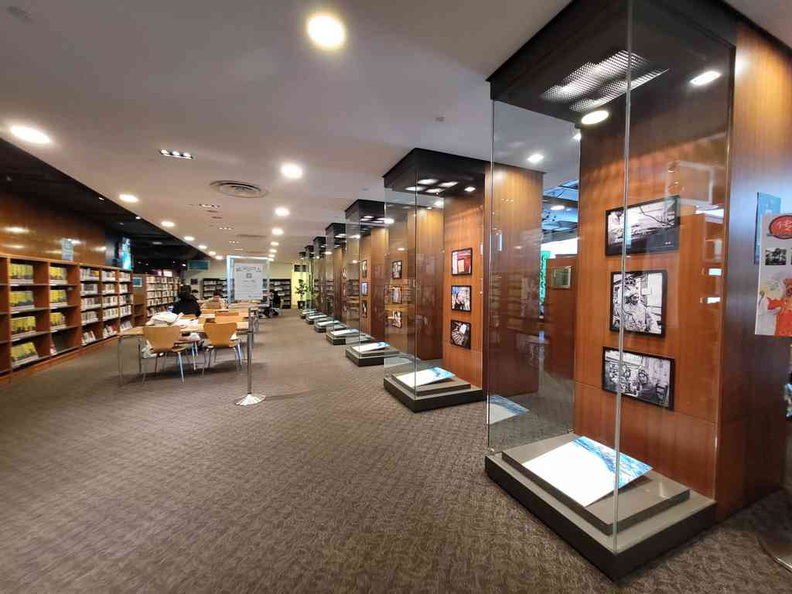
To the left three things stand out, two involving seats, and one an art display. On the latter, Many a time I have paused to look At the art encased in the column rows, Lining up toward the tables and chairs – the study area that is – That place I spent In hours galore To get work done Or simply to read.
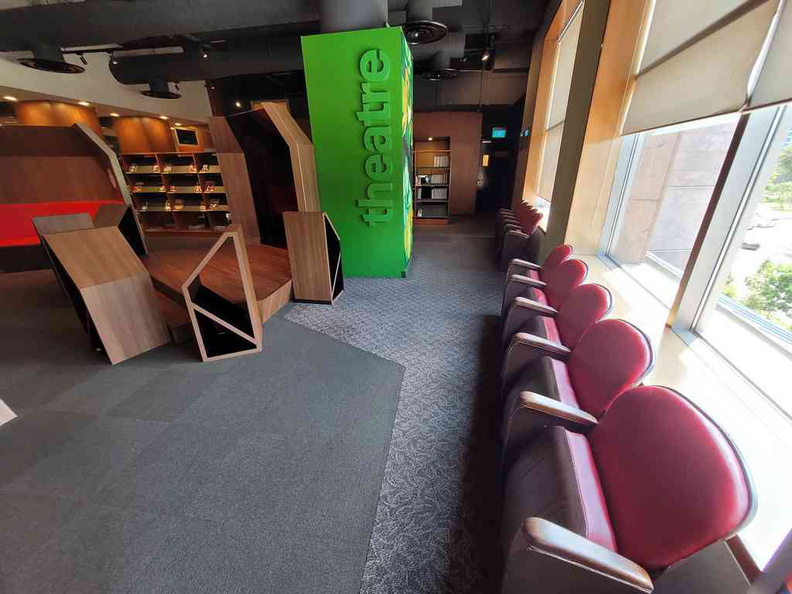
The other seats are one-of-a-kind. For those puffy red chairs are found in cinemas no more. They clang and cling when one uses them, But still it’s a joy to give them life. For their comfort? Not so much. But for their uniqueness and richness? Most absolutely yes!
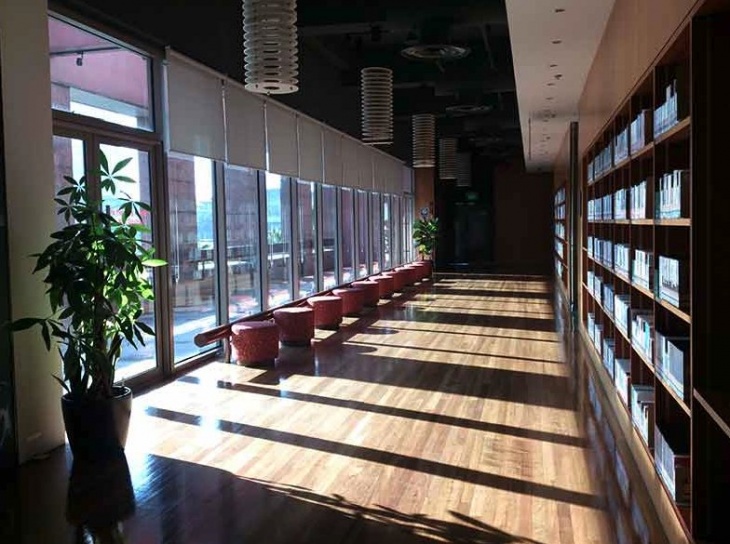
To the right from the entrance, Gives a different vibe. If the left wing is Yang, Then the right wing is Yin. Mellow, dark, and subdued in buzz, Yet not a cave but a haven light-shone, Where one can bask In the silence and sights…
And if you’re lucky, From time to time, Sounds adorn the silence, Free and Raw, That refreshes and sparks, Of all attuned, The pleasures to have, When live music is heard.
So why would you steal, This treasured place from us? Lessoning the count Of spaces adored – of places tried?
If it’s progress you say that warrants such acts, Then why does it feel that the opposite is true?
A sense of connection Eroding away, Giving way to function Disregarding form. Beauty bereft Efficiency King, Leave no room for structures That provide no price.
And so it was For the 21 year old library, In what remains – A memory.
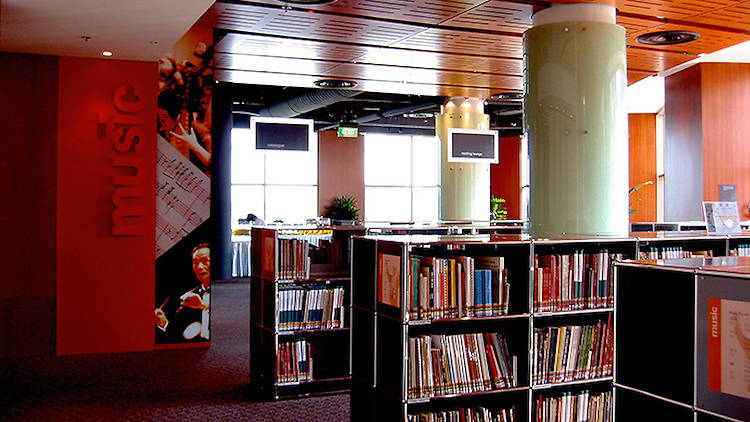
A favourite spot of mine in the right wing (Image Source: TimeOut)
The “Impasse” (Image Source: Wikipedia)
The Entrance (Image Source: Shaun Chng)
The Entrance (Image Source: The Straits Times)
The performance stage (image source: Shaun Chng)
The art display (Image Source: Shaun Chng)
The “puffy red” chairs in the left wing (Image Source: Shuan Chng)
Part of the right wing (Image Source: TimeOut)
Part of the right wing overlooking Marina Bay (Image Source: Shuan Chng)
Dance book section in the right wing (Image Source: TickiKIDS)
Doesn’t Beauty, although “useless”, nevertheless hold a mysterious grip among its enraptured beholders? Oscar Wilde once remarked that to put usefulness first, we lose it. But to place beauty first, what we do will be useful forever. And part of the reason that beautiful everyday objects will be “useful forever” is that it is conserved and cherished by the user by virtue of the object being beautiful – and that is exactly what I experienced with my Kinto Water Bottle (as with the case, in a larger scale, of historical buildings being conserved and not destroyed due to their beauty – watch “Why Beauty Matters” at the 17:20 mark).
My Kinto water bottle is the first water bottle that I actually cherish. Here are three actions that I wouldn’t do for any other water bottle:
1. Not bring it to the tennis court (I play tennis) and place it on the dirty floor.
2. Leave it to dry when not in use so as to prevent algae growth.
3. Look at it repeatedly and think to myself, “what a lovely water bottle this is.”
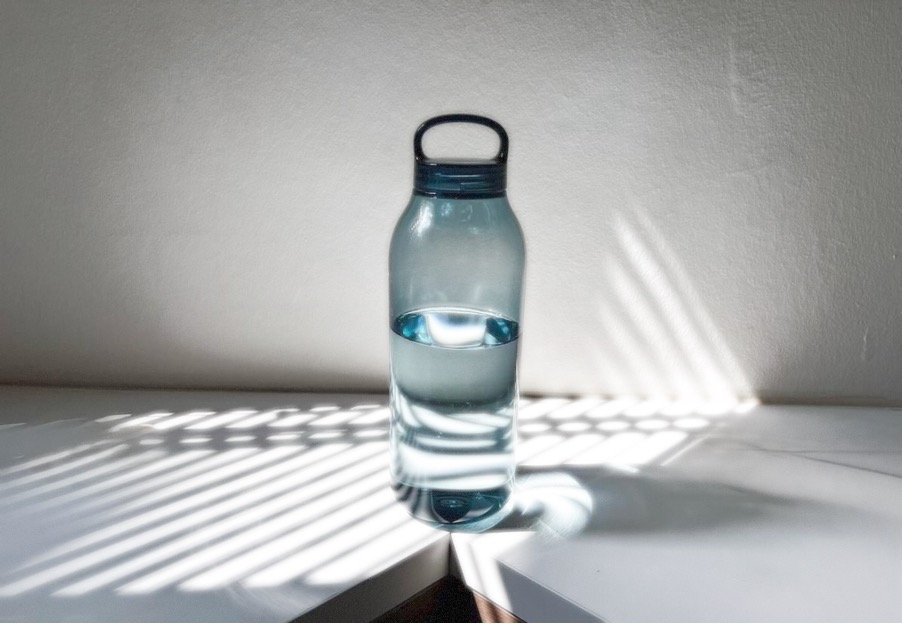
Indeed no other water bottle has caught my attention as the Kinto water bottle for its curved shapeliness that is, first of all, unique to say the least but also creating a seamless form from bottom to top analogous to a pottery piece deserving of display. Its plastic (made from recycled material) is sturdy and perspicuous like glass – that also comes in five colours (clear, amber, smoke, blue, green) and three sizes (300ml, 500ml, 950ml) – which paired up with its soft curves amplifies the pleasure of looking at the water contained within as if the water is at one with the bottle.
Kinto Water Bottles in five colours and three sizes (Image Source: Shopee)
Drinking water from the bottle also feels great due to its “practical size sprout” which apart from being designed for easy refilling and washing also enables one to drink comfortably, and exceptionally so I must say – no awkward contortion of lips to get a sip as we do for some water bottles! Also, the lid opens with just a few twists which – to my surprise – does aid in the ease of the drinking-water experience as does the handle moulded to the lid contributes greatly to the portability department in enabling one to pick up the bottle and to make carrying it around a breeze.
Ought “form follows function” or “function follows form” in the creation of everyday objects? I say, both are essential but the best marry both in perfect unity and harmony as in the case with this Kinto Water Bottle – as I would term it: Fluid Pottery.
*Featured Image Source: My Own
If you like click and purchase the Kinto Water Bottle here: https://amzn.to/43WuTN9. I may earn a small commission if you do so but at no additional costs to you. Thanks for your support, Cheers!
Generous. Thoughtful. Sincere and Cheerful – Those traits you have In common across.
You give, you give In season and out – Birthdays, Christmas, Festivities – But the ordinary day?… Now, that’s a surprise – with pleasantness, of course!
I won’t pretend that I cherish you, Your gifts and all, A hundred percent. For truth be told: My attitude falls short Of Your steadfast acts.
It is easy, you see, To overlook The familiar and constant, Where contempt is bred.
Yet in moments of silence I muse and I see, That it’s no small matter, To receive and receive.
For what have I got To warrant such grace? Flaws? Quirks? I have in galore – You know, you know – And still give away.
What more can I be then But thankful I am: So thank you and thank you For warming my heart – And if that’s not all, – you enrich my world!
Yes, through your gifts – as I would otherwise not have – I see, touch, smell, Hear and taste Anew and afresh Of the world’s good things.
Blessed is receiving But more blessed to give? What was the Rabbi thinking When he said it like that?
To give is to die, A sacrifice of sorts. But if dying is not living, Then how can you be Happy in pro-choice, ‘Dying’ away?
Love perhaps – As sacrifice no doubt – Might provide the clue To the answer we seek –
Or still perhaps, O Givers across – Teachers, Lovers, Family and Friends – That you can tell us:
As strange as it might be, all that I am about to describe is absolutely honest:
Never had a tissue paper elicited in me such delight and astonishment as to pause with wide-eyes and exclaim (to my giver), “Wow! What is this? It is so unbelievably soft!” I take a second look, exchanged glances with my (now chuckling) interlocutor, and stared again – at the wrinkled tissue which had just served its purpose in removing the food stains from my mouth, but more:
I utterly could not believe how a tissue could feel and be that way – it glides instead of scrubs (which was what I was accustomed to in “normal” tissues all my life hitherto), pampering flesh with its gentle touch. “This tissue is different”, and hurried my giver to show me the packaging where it came from.
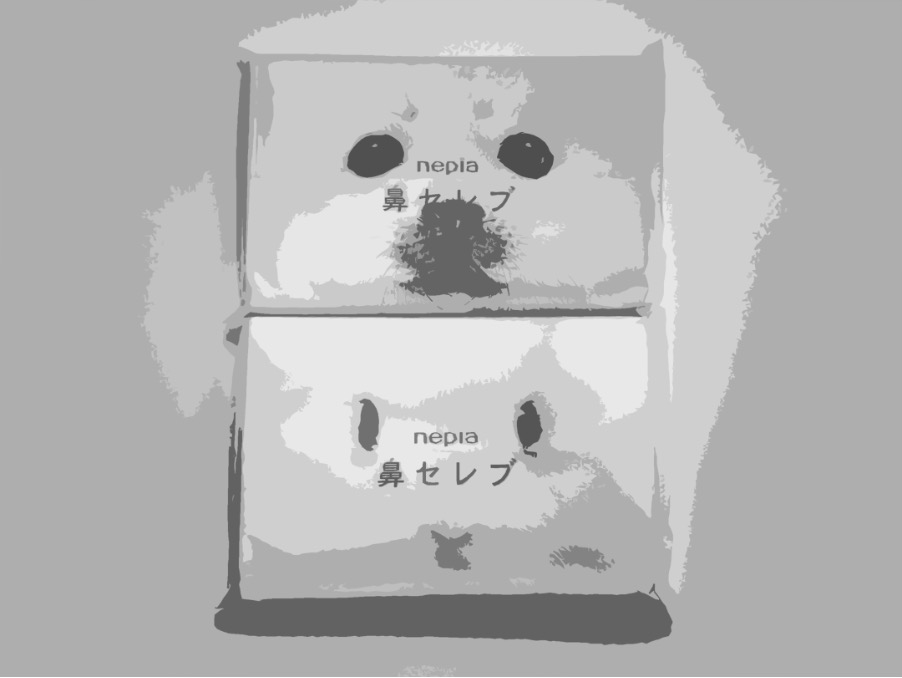
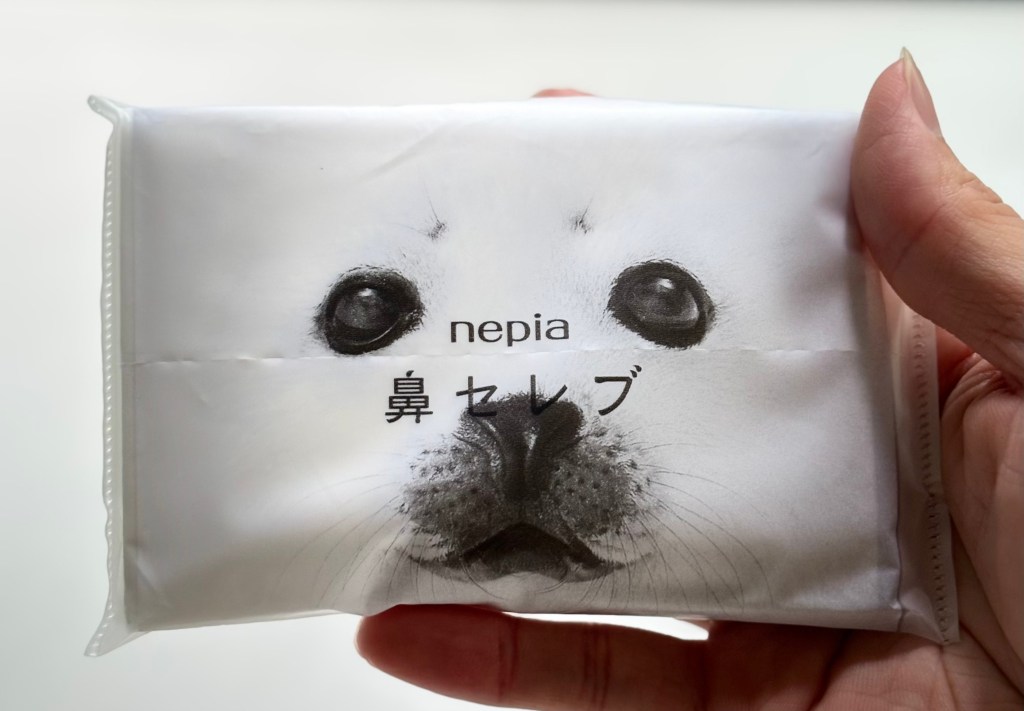
This is how it looks:
“Ah.. Japanese I see… 可愛い!”
Apart from the Ringed Seal, pictures of other cute white-fur animals (like the White Rabbit, see video below) adorn and blend well into the matte semi-opaque sleeve to exude a cute, sleek and premium look which – must be said – also feels great to touch!
The tissues themselves are scentless, 2-ply, and made from 100% fresh pulp (with no fluorescent dyes) which are ideal for delicate skin, leaving its users worry-free about chafing and reddening skin (think: red chapped noses). As to the secret to its otherworldly softness? According to Nepia, special “triple moisturising” ingredient and “plant-delivered squalane” contained in the tissue are key in making it moist and soft by absorbing moisture from the air (a sponge tissue? – amazing).
So, do the qualities of Nepia’s pocket tissue warrant her name, 鼻セレブ (“Nose Celebrity”)?
Well it does seem like a relatively popular choice for tissue buyers as evidenced from its rank of 7th in Amazon’s best-seller list of pocket tissues at this time of writing. And as far as I’m concerned, a product worthy is a product worth celebrating, and so it is for Nepia’s 鼻セレブ – highly recommended!
*Images and Video Source: My Own
If you like, click and purchase Nepia 鼻セレブ pocket tissues here: https://amzn.to/3Hx2CDU. I may earn a small commission if you do so but at no additional costs to you. Thanks for your support, Cheers!
At life’s inception, I opened them – A fuzz, a blur, a searing blaze… Blinking-wriggling, The need to progress, Blinking-wriggling, Shades of grey, Blinking-wriggling, On light’s first meet.
Shapes, Colours, Are next I saw – and movement, Yes, movement, here and there – From side to side, Front and back, Sometimes high, Sometimes low. A strange world materialising Before my eyes – Endlessly fascinating it must have been, But left me drained to heed sleep’s call.
Eyes, it’s said, Are windows to the soul. To encounter another is in no way slight. Look eye-to-eye and you might see…
Those haughty eyes who look down upon; Those cunning eyes who dart, wink, plot; Those seductive eyes who capture and charm, Eating away those unawares Their flesh and bones, All life unspared…
Shivers. Cold. A Nightmare.
Awake, Awake, Into the light! Expectantly look Into lovers’ eyes…
“Your eyes are doves.”
“With a glance, you ravished my heart.” “Avert them away, for they – your eyes – overwhelm me so!”
–
An abundance of love Expressed and felt In the softness of eyes With compassion aglow Assures the anxiety-laden Reinvigorates the weak.
So from eye to eye, As with torch to torch, Inflame one another Till the brim of light!
–
Light is sweet, And to see is a gift. But remember also Of the day to come:
When grey shades return, And visions go blur…
Blinking-breathing, The will to survive. Blinking-gasping, Fading light. Shut. Sleep. At the close –
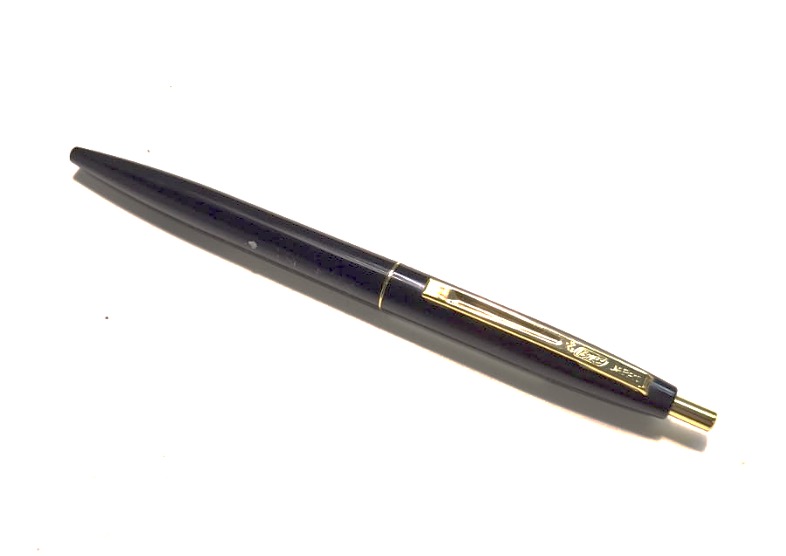
I have to admit that my first reception of these pens were like “oh, another hotel pen” – you know those black ballpoint pens (yes, I first received the black version) available on the reception desk often with a cable or string attached for visitors to use (before wide-spread digitalisation) or those found in hotel rooms with a notepad.
To which my giver retorted, “No, they are not! They are special and made-in-Japan.”
So I gave it a second look, and concluded still, “nah, it is ordinary”, until I started using it…
[Admittedly, this is not the first time that seemingly ordinary-looking objects “grew on me” (see The Bag My Friend Gave), and I wonder if there is always an element of hiddenness in the truly beautiful which requires time for the beholder to uncover and see.]
“The grip and feel of the pen actually feels great” was what I found myself thinking after a couple of days of usage. The smooth veneer of the pen is pleasurable to touch, glide – and swirl (if you’re into it too) – and the grip is comfortable to hold with fingers fitting nicely at the pen’s narrower tip. Clicking the pen also felt good in its firmness and slight pushback, and the tip leaves a fine (it has a 0.5mm ball diameter) unique greyish-black trace that does not smudge easily (which is a plus-point I like).
In the looks-department, adjectives such as “elegant”, “sleek”, and “classy” begin to replace “ordinary” in my mind’s judgement of the pen, and with it also a realisation of the increased frequency and duration of my glances, admiring its shapeliness and base colour against the gold trimmings and platings. And so it was in the midst of my enjoyment, that it had to happen:
I lost it.
Not in misplacing it but (this is rather embarrassing:) in swirling my (only) black “Clic Gold” pen out from my hands into the inaccessible recesses of the underside of immovable furniture, to oblivion. A sure case of tough luck, that is.
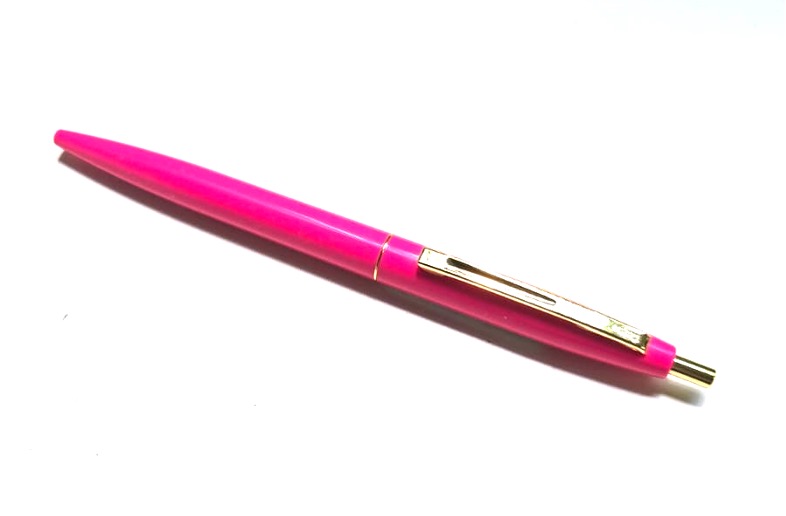
But – yes, but – as luck providence would have it, I needed to wait just a couple more months before receiving more “Clic Gold” pens from my empathetic and generous friend (who came to know of my dismay), and this time receiving back not only the black variation but also obtaining another colour variant: shocking pink (see below)!
Image Source: My Own
As I surmised and later discovered, the “Clic Gold” range does indeed contain a melange of colours which you can even mix-and-match with (visit here to experiment and see my video below)!
In all, the BiC Clic Gold pens are ballpoint pens suited for everyday usage with an affordable price but more: they remain one of my favourite (if not my favourite) ballpoint pens for its casing-feel, elegant-look, colour-variety, and reliable ink-trace. I highly commend them for personal use and/or gifts! And if anybody ever comments that they’re ordinary “hotel pens”, you can consider responding as such:
“No, they are not! They are special and made-in-Japan.”
*Featured Image Source: My Own
If you like, click and purchase the pens here: https://amzn.to/4jcuWIR. I may earn a small commission if you do so but at no additional costs to you. Thanks for your support, Cheers!
In this film inspired by a true story, Wing Chun martial arts master Ip Man (Donnie Yen) and his family are moving from Foshan, China, to Hong Kong, where Ip aspires to create a school so that he may teach his fighting techniques to a new generation. However, he finds resistance from an asthmatic Hung Ga master named Hong Zhen Nan (Sammo Hung). Soon, Ip is drawn into a treacherous world of corruption as well as a fateful showdown with a merciless boxer known as the Twister (Darren Shahlavi).
Thanks to Netflix streaming services, I am able to revisit old films and “Ip Man 2” (2010) has been a delight to watch again – and now to write about. At this point of writing, the “Ip Man” series has been concluded and although I have yet to watch the final series in the franchise (i.e. “Ip Man 4”), I would say hitherto “Ip Man 2” is my favourite (with it also amassing 6 wins and 10 nominations in film awards).
Certainly, it has lived out to its expectation of an action-martial arts movie with not just believable fight scenes set in an array of settings (from the rooftop to a fish market to a boxing ring) but also choreography that is creative, fresh but also true to the varied Chinese martial art forms (the table duel scene between Ip and the other kung fu masters comes especially to mind here). In short, the quality and quantity of kung fu action in this film will undoubtedly satisfy – at least – lovers of kung fu cinema, but if you are not one, there remains still another reason to watch and that is its heart.
“Ip Man 2” remains one of the few movies that inspires me to be a better person, and it achieves that through – no surprise here – Ip, the protagonist, as a model of mercy and respect (among other virtues of admiration such as his simplicity, modesty, prudence, and sincerity).
“To say that a person is merciful, is like saying that he is sorrowful at heart (miserum cor), that is, he is afflicted with sorrow by the misery of another as though it were his own.”
– Thomas Aquinas
How was Ip portrayed as merciful? There are quite many examples in the film ranging from the trite – in his aiding of the ailing laundry lady to hang out laundry; in his concession to his disciples’ demands to postpone paying their fees due to financial strain – to the unexpected, particularly in his lenient dealings with his retaliatory disciples who ended up costing Ip his martial arts studio place.
I must admit that I was taken aback as to how Ip dealt with his blameworthy disciples after the ruckus. Most of anyone (as I would expect) under Ip’s shoes would have reacted angrily, lashed out, and possibly evicted his disciples for causing an important part of his livelihood to be lost – not least, for their foolish acts. But instead Ip, sensing his disciples’ regret, gently dealt with them, only requiring them to transport his fighting equipment from the studio to his house.
Is that merciful act of Ip rather ‘foolish’ and was it even effective? Was he being too merciful to the extent of being soft and thus open to being taken advantage of?
Well, surely Ip or anybody could be taken advantage of for his mercy but also consider this: mercy shown-sown could also win, soften and mould the hardest of hearts (as with the case of Shun Leong, Ip’s charismatic but troublesome lead disciple), enoble, and also in turn merit mercy for ourselves (“Blessed are the merciful, for they shall receive mercy” teaches Jesus of Nazareth).
Shun Leong apologising to Ip Man in a scene (Photo capture)
But what of respect?
“Respect for the human person proceeds by way of respect for the principle that everyone should look upon his neighbor (without any exception) as another self, above all bearing in mind his life and the means necessary for living it with dignity.”
– Catechism of the Catholic Church (no. 1931)
Two scenes in particular stood out for me in the exemplification of respect in Ip.
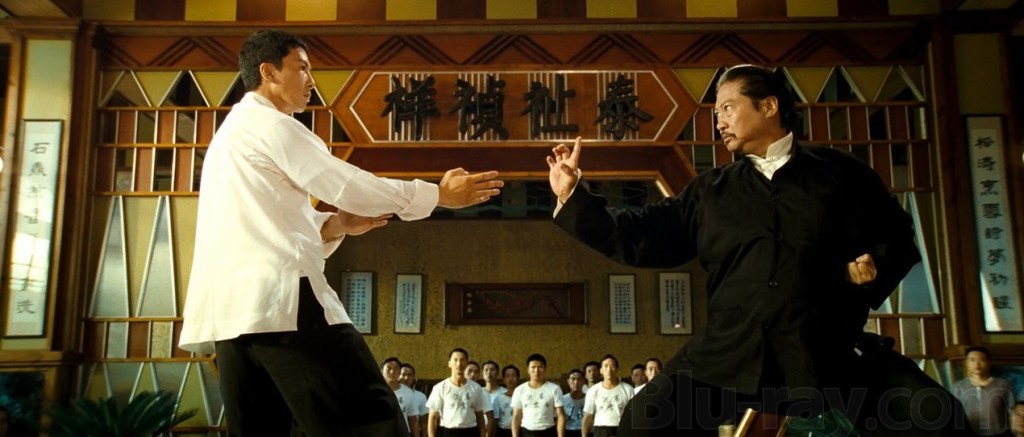
The first is the Ip-masters duel where the dignity of the competitors are upheld through bows (with the martial salute), formal addresses (“___ shi fu”, “Qing”), and deferential behaviour (“Thank you for letting me win”; not displaying excessive joy upon victory). The etiquette evinced in the Ip-masters duel is beautiful to witness no matter of it possibly being labelled as “old fashioned” or “overly formal” – no, courtesy and formality has its place and function in promoting respect that is both beautiful and needful (consider that rules not only prevent disorder but also shape character). Incidentally, the scene also led me to think of other such analogous display of respect present in other sports such as Sumo Wrestling, and tennis (Roger Federer‘s restrained behaviour in the Wimbledon locker room with Andy Roddick in sight come to mind here) which are pleasing to behold and hear about.
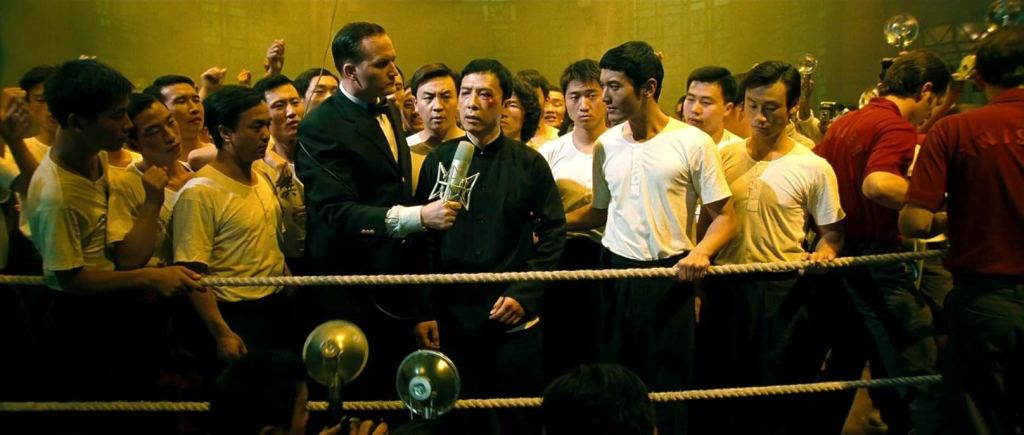
The other scene has to be the closing fight-and-speech sequence of Ip’s battle with Twister where respect (and also mercy) was beautifully expressed in deed (not annihilating Twister as the now-defeated boxer had previously done to master Hong) and in word:
Ip making his speech after the win against Twister (Image Source: IMDb)
“By fighting this match, I’m not trying to prove that Chinese martial arts is better than Western boxing. What I really want to say is though people may have different status in life, everybody’s dignity is the same. I hope that from this moment on, we can start to respect each other.”
Mercy and Respect, Though “soft” as they look, More than muscles and brawn, Are stronger yet still.
To break hard hearts, And to offer respite, To enoble others, And to keep the peace, Are all up for grabs, To all and at once.
Will you thus join, in the prevails of both, Simple yet strong, Mercy, Respect.
“… he had no form or majesty that we should look at him, nothing in his appearance that we should desire him.” – Isaiah 53:2
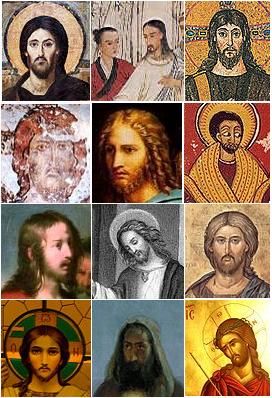
Jesus of Nazareth, certainly one of the most – if not the most – influential singular human figure in the history of humanity, ranks also objectively speaking one of the most – if not the most – beautiful of all men. But how so we may ask? We know neither the exact face of Jesus except through a myriad of depictions of him (see below) and the enigmatic shroud of Turin. The Bible too is silent about his looks less for his glorious and fearsome appearance in visions and epiphanies (e.g. Matthew 17:1-13, Revelation 1:9-18). In fact, as we read in the passage above from the Prophet Isaiah about Jesus, he was anything but good looking. So how is he beautiful? And why even bother about his beauty?
On the first inquiry, it must be somewhat obvious that our mentioning of the ‘beautiful’ here extends beyond mere bodily and facial appearance in form and countenance, to encompass the essence of human beauty which is that of body-and-soul: we are embodied souls-ensouled bodies. This salutary regard of human beauty, is to some extent (only that it is perhaps becoming increasingly difficult with the ascendancy and ubiquity of social media – and so, superficiality), considered in our “lookout for character” advice to singles and in the “thoughtful questions” segment of beauty pageants to draw out the wisdom of the ‘beauties’. Thus this valuation of human beauty should not be foreign to us (if not serving as a rightful reminder) and should lead us to uncover and discover Jesus’ beauty.
But first: what are we praising when we pronounce that someone is beautiful (remember: beyond mere looks1)? Quite invariably his/her virtues, attitude, words, mannerisms, actions. Or in other words, his/her qualities shone through his/her demeanour, actions and speech. But is that adequate to touch us enough to warrant a bestowment of “beautiful” upon him/her? No, I think not for something more is needed, and that is the factoring in of the situation in which the act takes place. To judge and heap “beautiful” on anybody who does charitable acts (e.g. donating money to a beggar in public) without considering the particular circumstances is rather foolish – yes, the charitable act can be perceived as beautiful but all you know he/she could be donating money in public to bolster his/her reputation, and hardly caring for the beggar at all – would we want then to praise him/her? So the situation is paramount along with the outward expressions of virtues in judging a person beautiful.
In relation to Jesus of Nazareth, his virtues were evidently present, documented and well-accepted. He was wise, temperate, passionate about advancing right, brave, devout, and loving. He worked (as a carpenter), taught, fasted, healed, fed, embraced the weak, washed feet, rebuked, acted on injustice, prayed, endured hardships, suffered, and died. Prostitutes, criminals, the rich, the powerful, the poor, the sick, outcasts, and children were drawn to him. But without taking into account of his situation, all his deeds, attitude, and words would not have the impact that it did. Because behind his service, he was poor, misunderstood, grieving, despised, and God.
“He was despised and rejected by others; a man of suffering and acquainted with infirmity; and as one from whom others hide their faces, he was despised, and we held him of no account.” – Isaiah 53:3
And
“For you know the generous act of our Lord Jesus Christ, that though he was rich, yet for your sakes he became poor, so that by his poverty you might become rich.” – 2 Corinthians 8:9
And
“In this is love, not that we loved God but that he loved us and sent his Son to be the atoning sacrifice for our sins.” – 1 John 4:10
I must admit that the phrase, “not that we loved God” by St John strikes a deep chord in relation to the contrasting love of God towards me-us. How often do we see an individual love an enemy who does them harm? Rarely, if ever. And if we do, to what extent does the individual love the hater? Offering forgiveness? Perhaps; avoiding slandering him/her? Difficult; helping him/her with a task? On good days; but sacrificing your life for your enemy to save his/hers? Preposterous.
And this very absurdity is precisely what God had done towards me-those who hate him through the willing hands and feet of the Nazarene, Jesus. From the most mundane acts of kindness to the extremity of sacrificing oneself for the good of another, this was what Jesus of Nazareth, had chose to do for haters, forgoing for a time his “riches” (i.e. his prestige, privileges and comforts) as the Son of God as St Paul states, to living a life of simplicity, poverty and service that he may reach all – yes, even the poorest. This had befuddled many a curious mind throughout the ages and still for some others, Jesus has touched their hearts through his goodness (virtues) and truth (situation) displayed in forms as beauty (actions, manner, and words).
As to why bother about the beauty of Jesus of Nazareth? I simply have this to answer: We love whom/what we find beautiful.









 withaestheticeyes.com